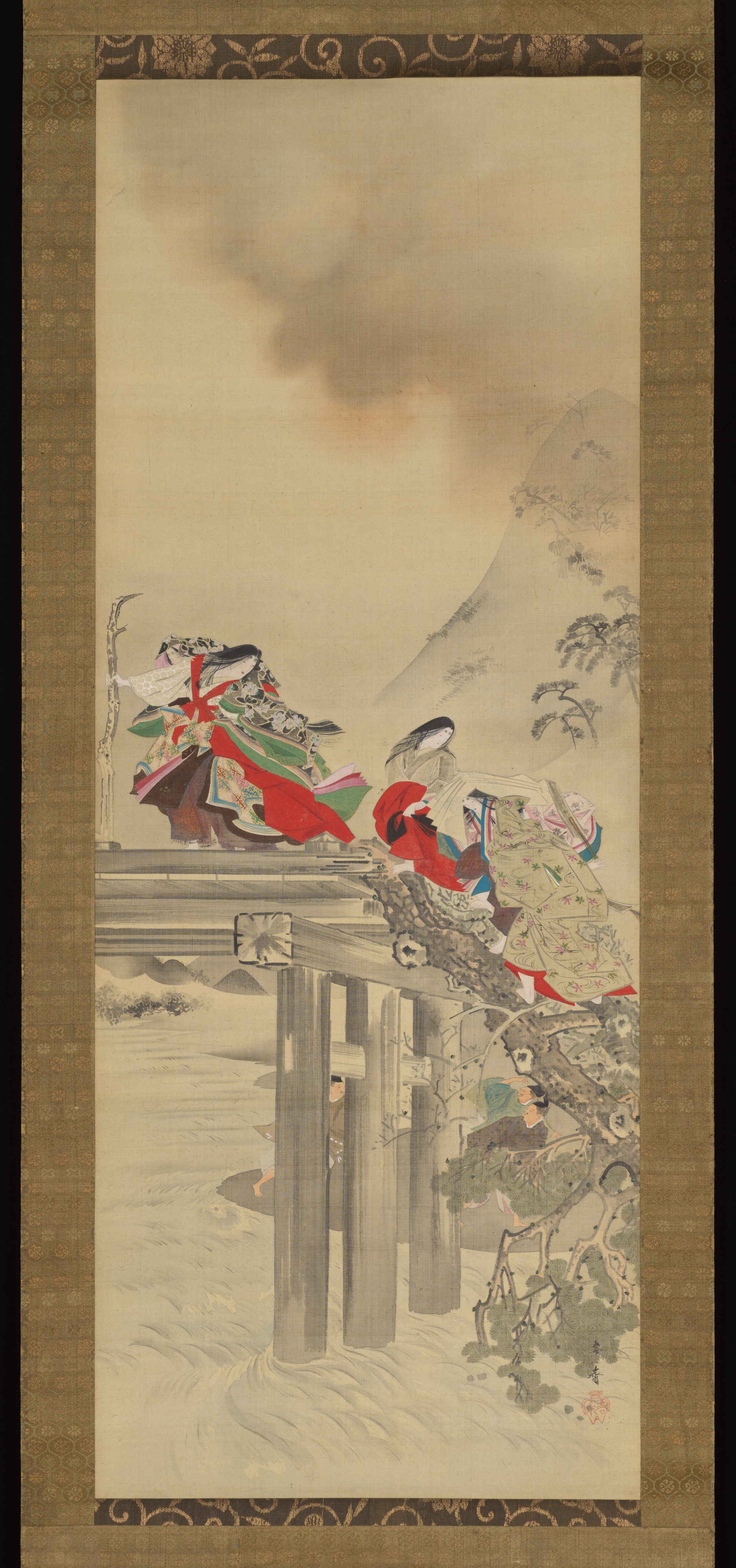
Lady Iga
伊賀局図
- Date:
- 1860s
- Medium:
- Hanging scroll; ink and color on silk
- Source:
- The Metropolitan Museum of Art
Description
Lady Iga is a hanging scroll in ink and color on silk by Kikuchi Yōsai (菊池容斎, 1788-1878), datable to the 1860s and held in the Metropolitan Museum of Art (accession 2023.583.33). The subject is Iga no Tsubone (Lady Iga), the lady-in-waiting and consort of Go-Daigo Tennō best known for an episode preserved in fourteenth-century chronicles: confronting the vengeful spirit of Sasaki Kiyotaka, said to have appeared as a demonic figure haunting the imperial palace, she addressed it with such composure and authority that the apparition withdrew. Yōsai treats the moment in the sober, drawing-led idiom that characterizes his mature historical work — Iga no Tsubone is shown in court robes of layered Heian construction, her posture upright and her expression set, the demon a deliberately controlled presence in the composition rather than a theatrical centerpiece. The scroll exemplifies the project that defined Yōsai's career: depicting figures from the Japanese past with archaeologically grounded attention to costume, hairstyle, and accoutrement, and with the moral weight appropriate to a Confucian-inflected historical iconography. The Met's catalogue records the work as ink and color on silk, with an image of 106.4 by 40.8 centimeters and an overall mounting of 192 by 57.6 centimeters; the museum source confirms both the attribution and the 1860s dating, placing the scroll firmly within the late phase in which Yōsai was completing his Zenken kojitsu and producing finished hanging scrolls drawn from the same iconographic research.
More Prints by Kikuchi Yōsai

Cherry Flowers
19th century
Woodblock print (surimono); ink and color on paper

Cuttle Fish
Early 19th century
Woodblock print (surimono); ink and color on paper
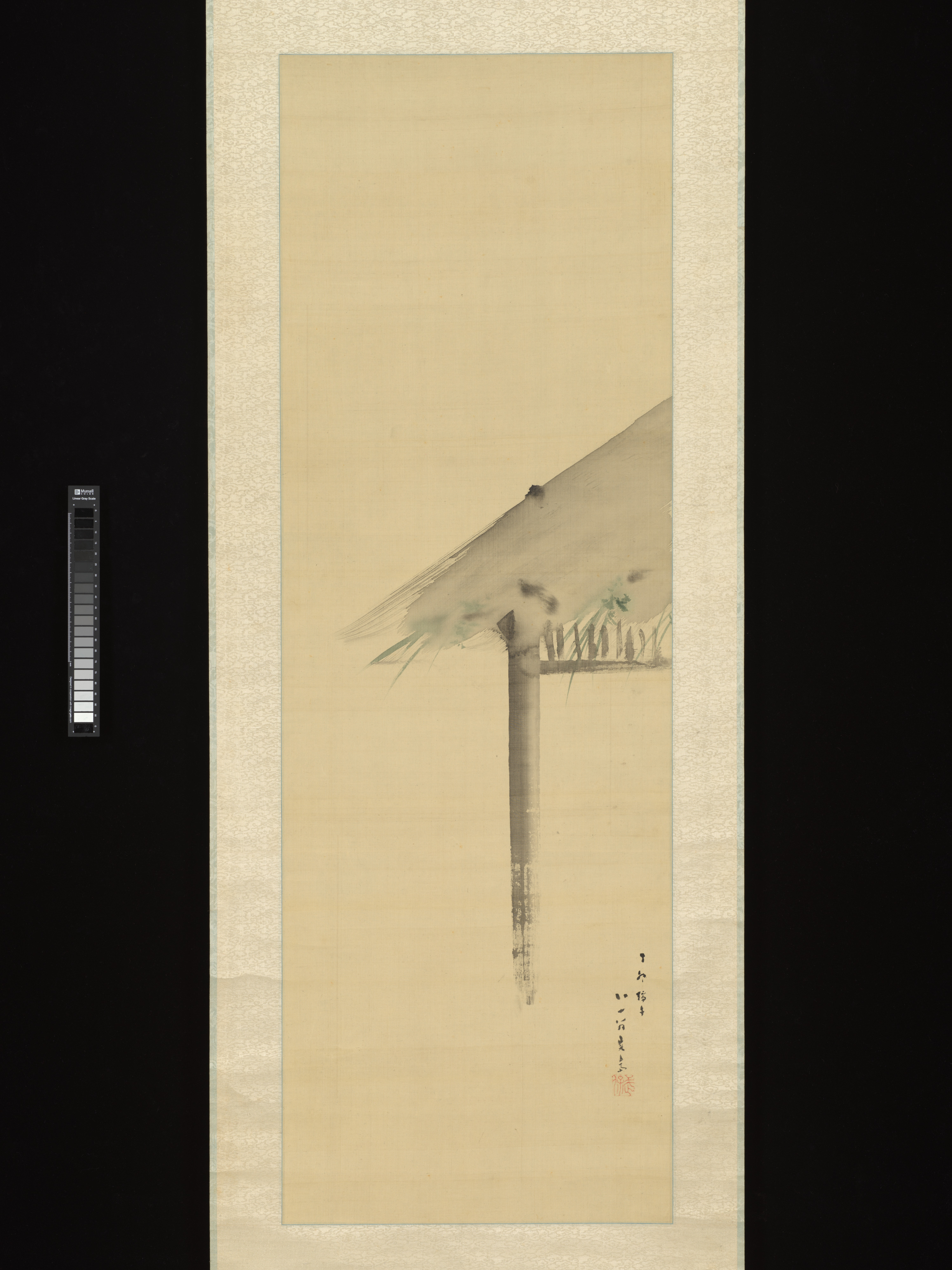
Eaves Decorated with Irises for the Tango Festival
1867
Hanging scroll; ink and color on silk
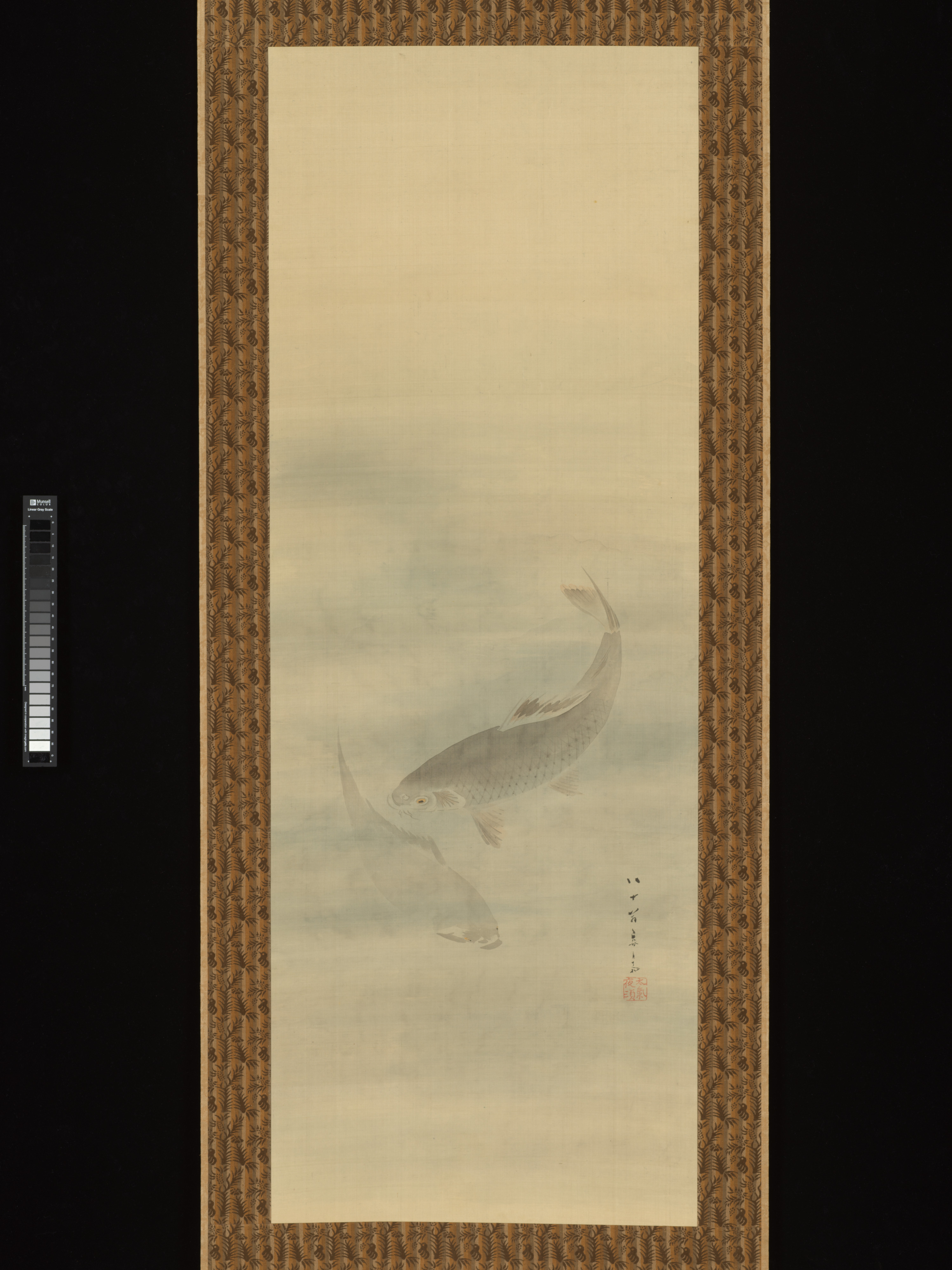
Two Carp
19th century
Hanging scroll; ink and color on silk
Frequently Asked Questions
Lady Iga (伊賀局図) was created by Kikuchi Yōsai (菊池容斎) in 1860s.