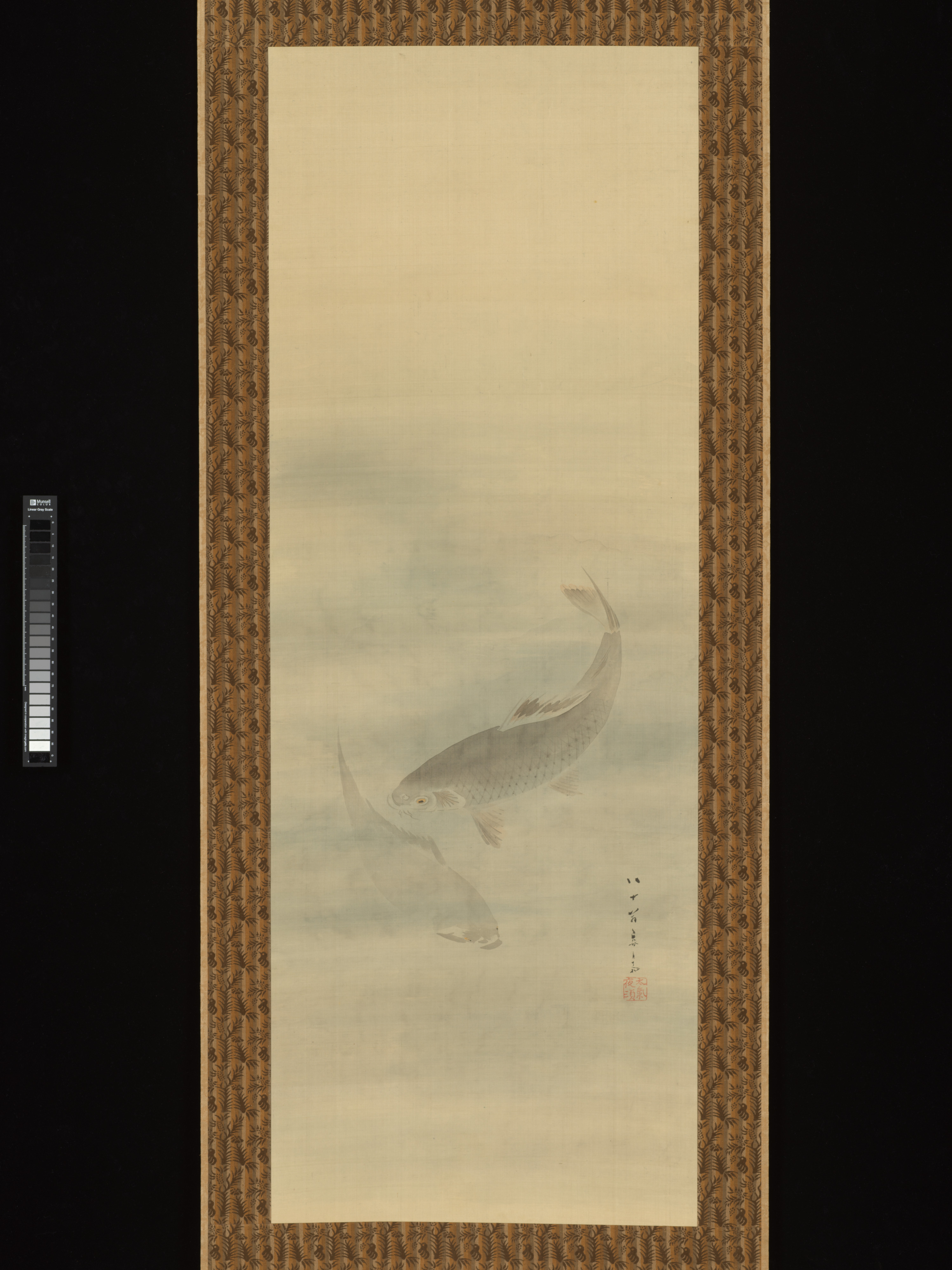
Two Carp
- Date:
- 19th century
- Medium:
- Hanging scroll; ink and color on silk
- Source:
- The Metropolitan Museum of Art
Description
Two Carp is a hanging scroll in ink and color on silk by Kikuchi Yōsai (菊池容斎, 1788-1878), held in the Metropolitan Museum of Art (accession 36.100.97) and catalogued within his nineteenth-century working life. The subject — a pair of carp ascending through water — sits in a long East Asian iconographic tradition associated with the carp's symbolic transformation into a dragon by ascending the falls of the Yellow River, and with the perseverance and filial virtue that the fish came to represent in both Chinese Confucian and Japanese seasonal cultures. Carp images were particularly closely associated with Tango no Sekku, the boys' festival of the fifth month, and Yōsai's hanging scroll belongs to the same broad area of seasonal and customary subjects as his Met companion piece Eaves Decorated with Irises. The scroll is rendered in the disciplined, drawing-led manner that defines his idiom: economical ink for the bodies and scales of the fish, restrained color, and a compositional clarity inherited from his Kanō training and from the naturalistic observation of the Maruyama-Shijō school he also studied. The Met records the work at 109.9 by 40 centimeters; the museum source confirms the attribution to Yōsai and places the painting within the body of mature ink-and-color scrolls he produced alongside his decades-long historical-portrait project.
More Prints by Kikuchi Yōsai

Cherry Flowers
19th century
Woodblock print (surimono); ink and color on paper

Cuttle Fish
Early 19th century
Woodblock print (surimono); ink and color on paper
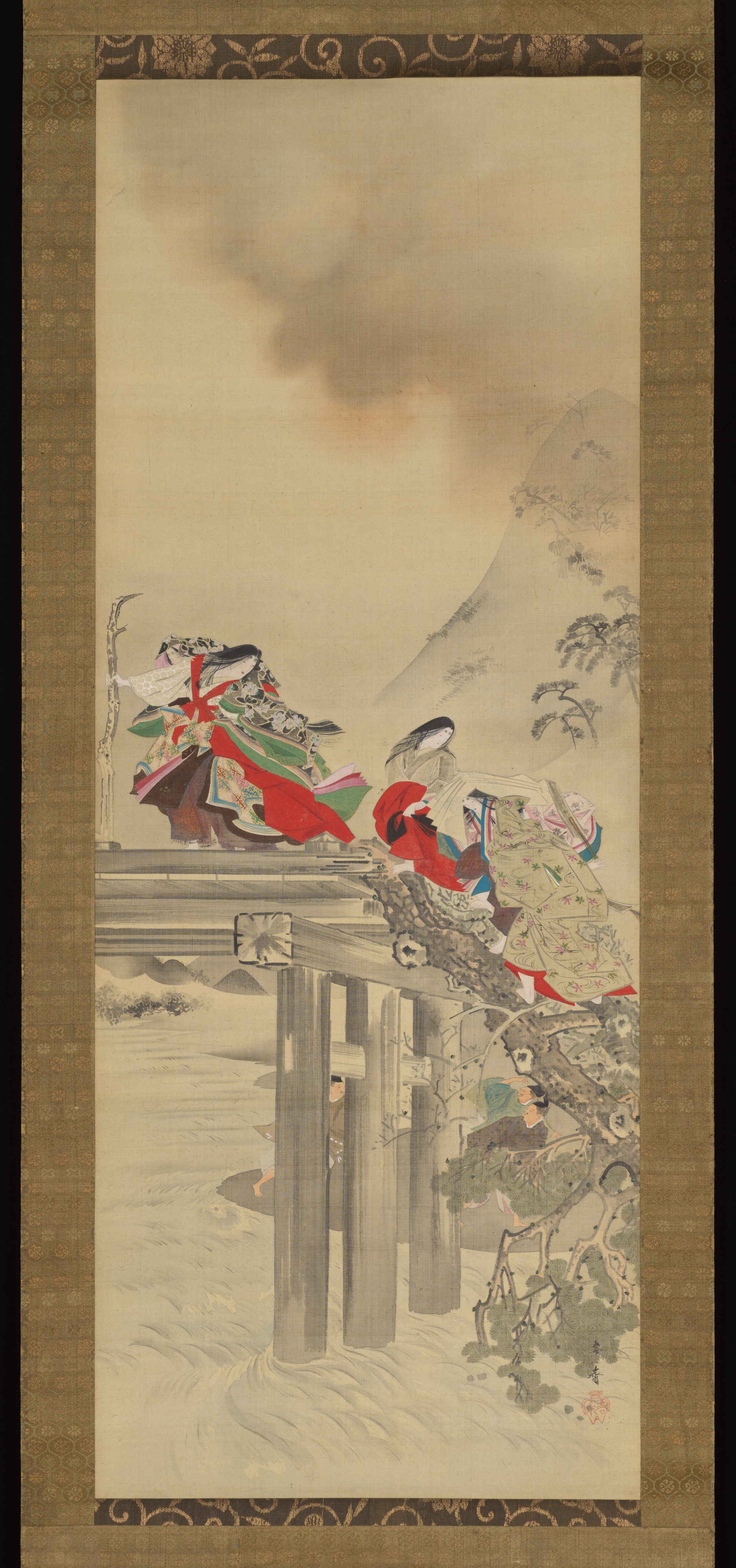
Lady Iga
伊賀局図
1860s
Hanging scroll; ink and color on silk
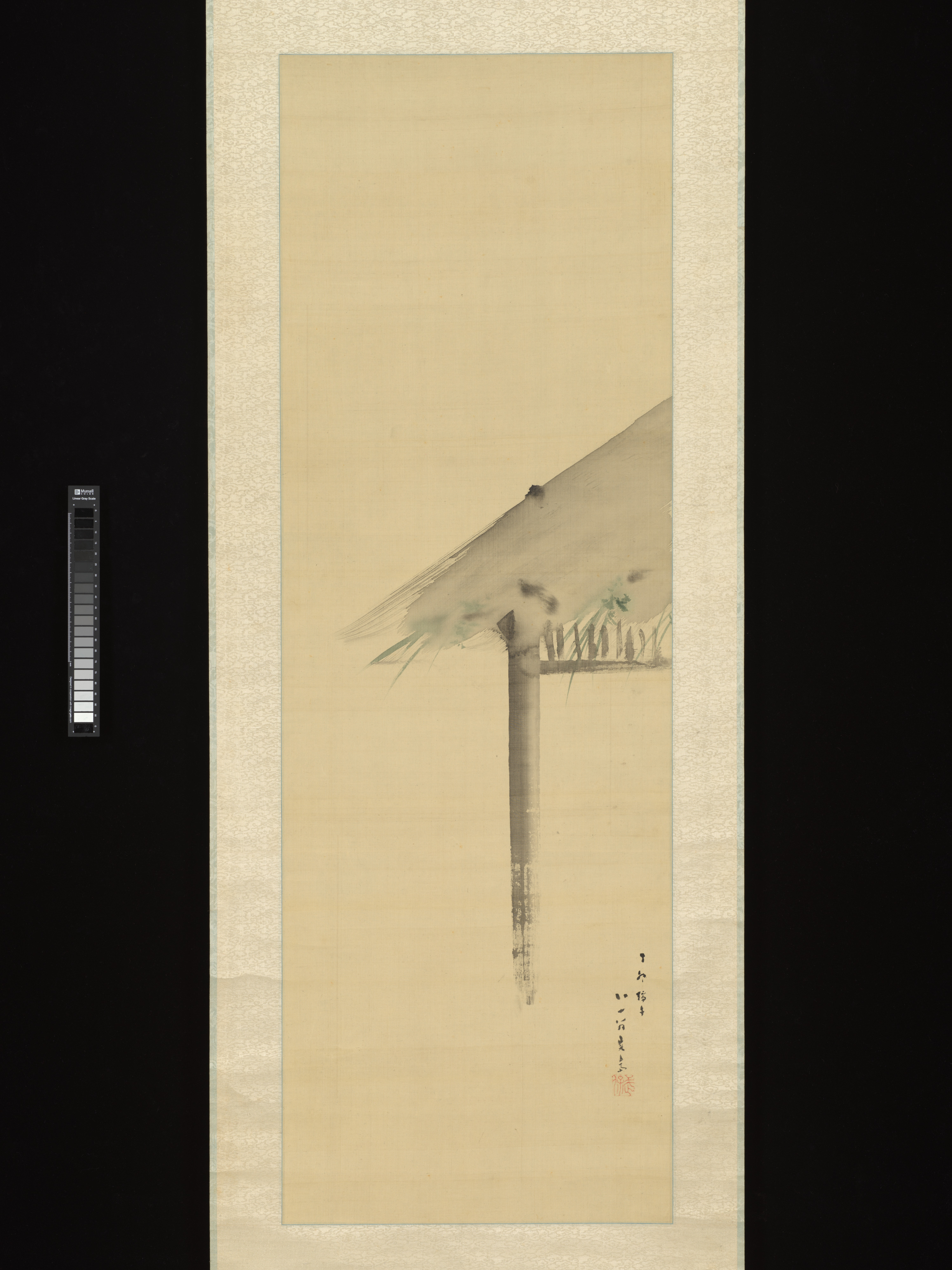
Eaves Decorated with Irises for the Tango Festival
1867
Hanging scroll; ink and color on silk
More Fish Prints


Frequently Asked Questions
Two Carp was created by Kikuchi Yōsai (菊池容斎) in 19th century.
Two Carp depicts fish.