
Elegant Pleasures: The Scent of Flowers, left (Furyu hana no ka asobi, ge)
- Date:
- c. 1783
- Medium:
- Color woodblock print; left sheet of oban diptych
- Format:
- Oban
- Source:
- Art Institute of Chicago
Description
"Elegant Pleasures: The Scent of Flowers, left" is a ukiyo-e nature study by Kitagawa Utamaro, created during the Edo period.
More Prints by Kitagawa Utamaro
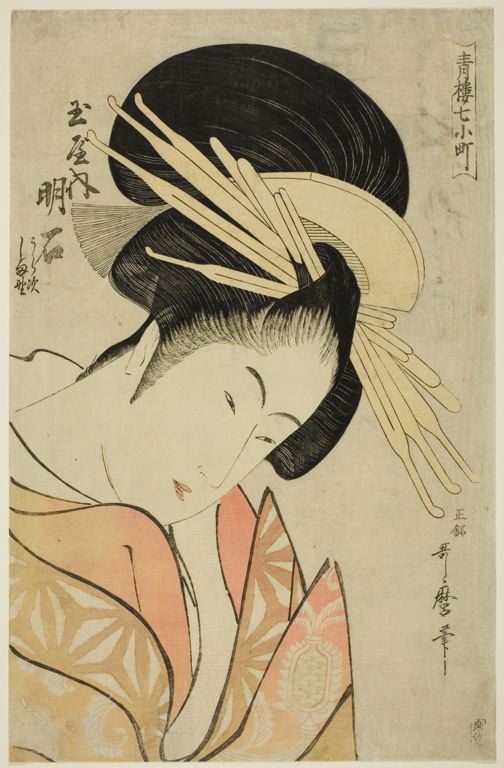
Akashi of the Tamaya, from the series Seven Komachis of Yoshiwara (Seiro nana Komachi) (Tamaya uchi Akashi, Uraji, Shimano)
Woodblock print
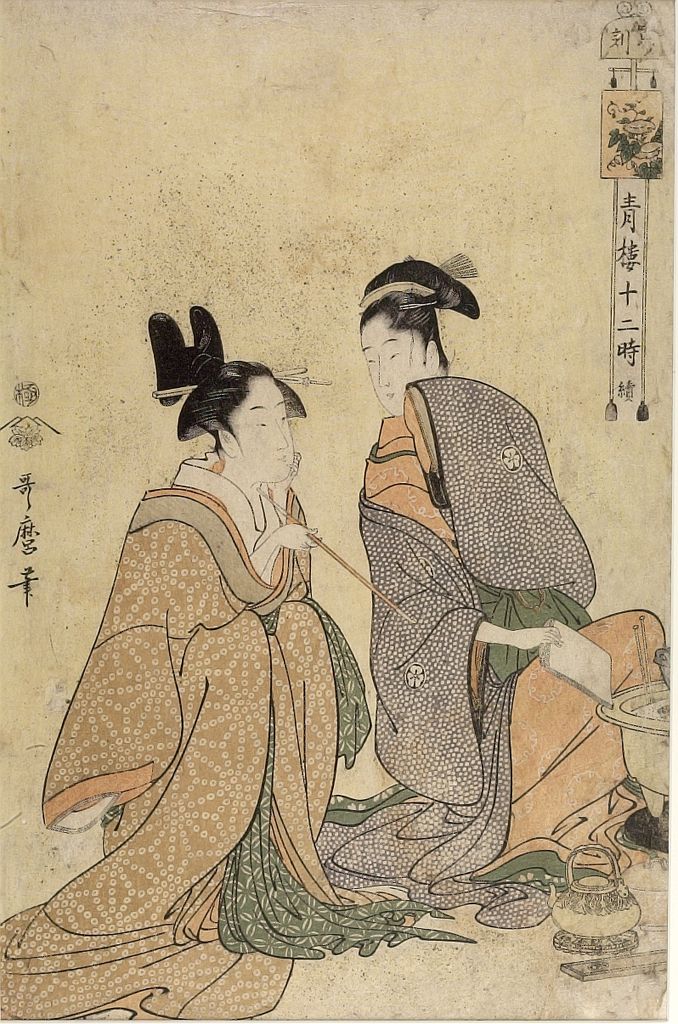
Hour of the Tiger (Tora no koku = 4 AM) from the series Twelve Hours in Yoshiwara (Seirô jûni toki tsuzuki), Late Edo period, circa 1794
Woodblock print
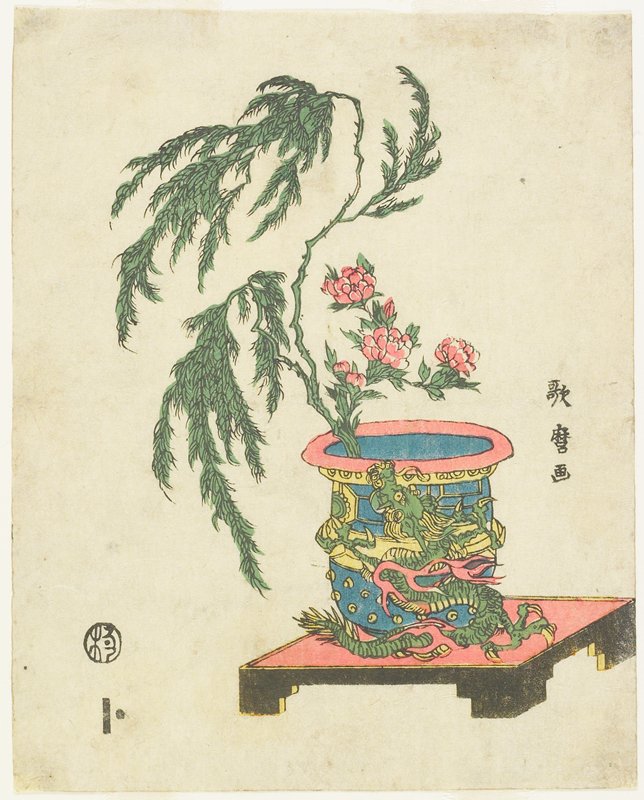
Ikebana arrangement of Peony and Willow in Dragon Pot
1781–1806
Woodblock print (nishiki-e), ink and color on paper
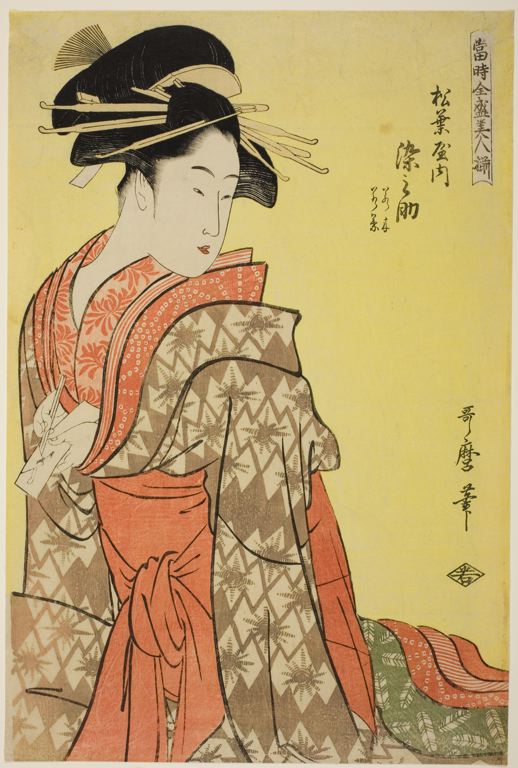
The Greatest Beauties of Our Time (Toji zensei bijin zoroe): Somenosuke of the Matsubaya with Attendants Wakagi and Wakaba
Woodblock print
More Birds & Flowers Prints
Featured in Collections
Curated cross-cuts that include this print.
Frequently Asked Questions
Elegant Pleasures: The Scent of Flowers, left (Furyu hana no ka asobi, ge) was created by Kitagawa Utamaro (喜多川歌麿) in c. 1783.
Elegant Pleasures: The Scent of Flowers, left (Furyu hana no ka asobi, ge) depicts birds & flowers, figures, and bijin-ga.