
Hanamurasaki of the Tamaya, (kamuro:) Shirabe, Teriha, Flowers from the series Snow, Moon and Flowers in Yoshiwara (Seiro setsugekka) (Tamaya uchi Hanamurasaki, Shirabe, Teriha)
- Date:
- 1793
- Medium:
- Color woodblock print; oban
- Source:
- Art Institute of Chicago
Description
Kitagawa Utamaro's Hanamurasaki of the Tamaya, (kamuro:) Shirabe, Teriha, Flowers from the series Snow, Moon and Flowers in Yoshiwara (Seiro setsugekka), is in the Art Institute of Chicago (artwork 24030). Like its companion sheets in the Seiro setsugekka series, the print maps the classical aesthetic triad of setsugekka, snow, moon, and flowers, onto named Yoshiwara courtesans. This impression assigns Flowers to Hanamurasaki of the Tamaya, accompanied by her kamuro, the young attendants Shirabe and Teriha. The flower allusion is reinforced by Hanamurasaki's name itself, which incorporates the syllable hana, flower, in a typical onomastic game that publishers and viewers enjoyed. Utamaro's composition is a multi-figure group in his mature Edo bijin-ga manner: the adult Hanamurasaki dominates the sheet, while the kamuro flank her with smaller, more rounded bodies and distinct juvenile hairstyles, supplying both household hierarchy and visual rhythm. The series belongs to the most prestigious tier of Utamaro's Yoshiwara portraits, attaching named, ranked courtesans to classical aesthetic categories drawn from waka and Chinese poetic tradition. By doing so, Utamaro effectively claims that the women of the licensed quarter are themselves the modern equivalents of snow, moon, and flowers, the conventional touchstones of beauty. The Art Institute of Chicago's holding offers a useful reference for studying the structure of high-ranking courtesan households in Yoshiwara through visual evidence. For collectors of ukiyo-e and students of Edo bijin-ga, the Seiro setsugekka series is among the most important groups in Utamaro's career, both for its formal achievement and for its insight into the social organization of the pleasure quarter.
More Prints by Kitagawa Utamaro
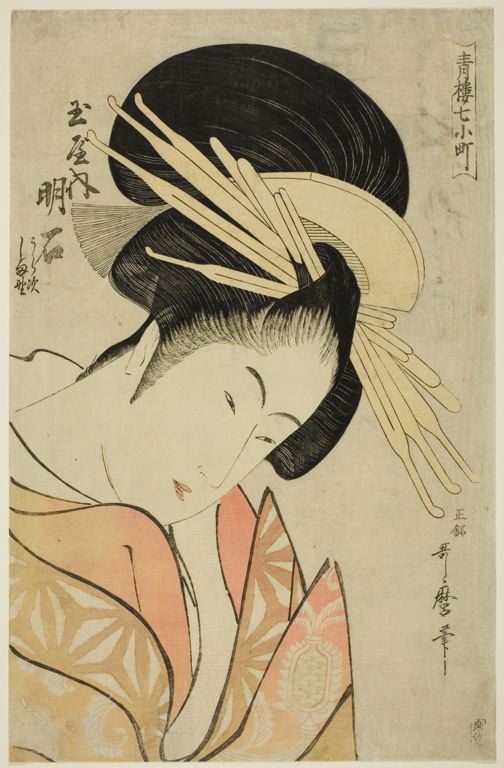
Akashi of the Tamaya, from the series Seven Komachis of Yoshiwara (Seiro nana Komachi) (Tamaya uchi Akashi, Uraji, Shimano)
Woodblock print
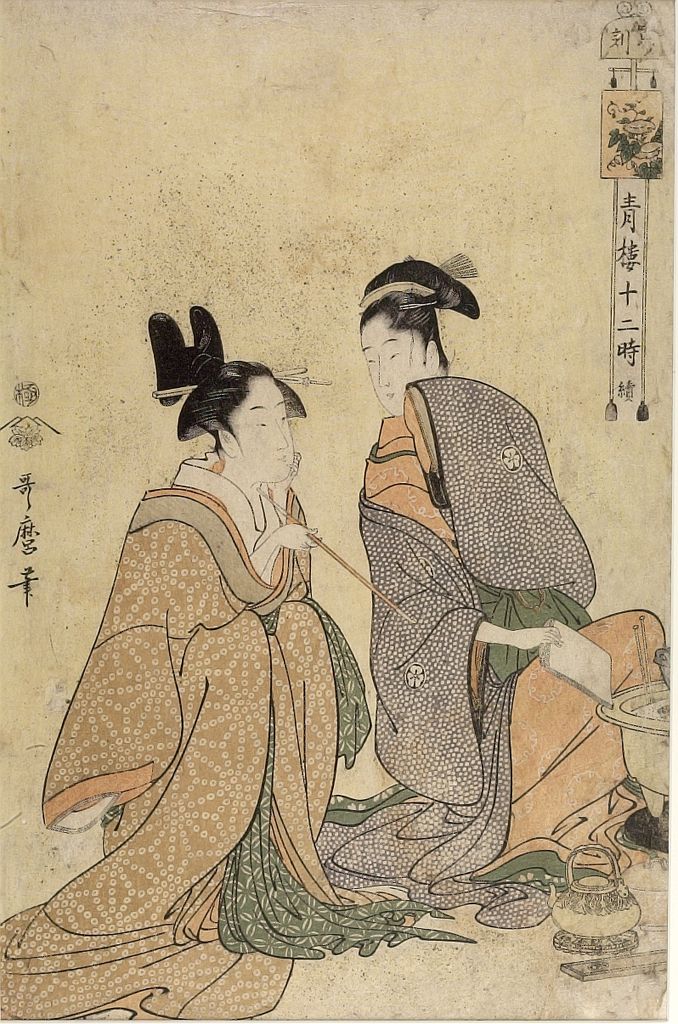
Hour of the Tiger (Tora no koku = 4 AM) from the series Twelve Hours in Yoshiwara (Seirô jûni toki tsuzuki), Late Edo period, circa 1794
Woodblock print
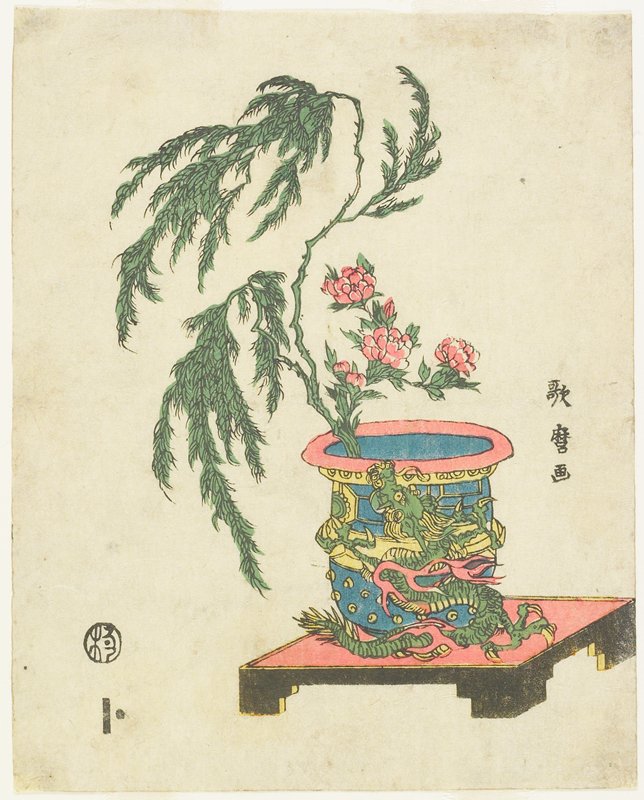
Ikebana arrangement of Peony and Willow in Dragon Pot
1781–1806
Woodblock print (nishiki-e), ink and color on paper
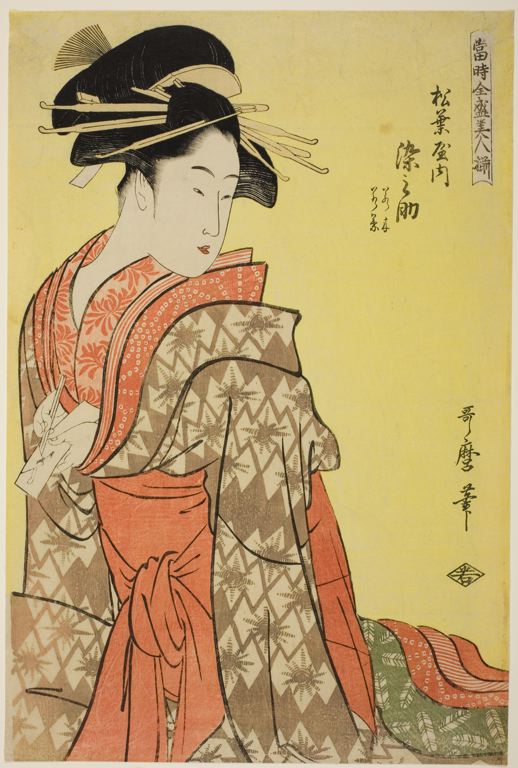
The Greatest Beauties of Our Time (Toji zensei bijin zoroe): Somenosuke of the Matsubaya with Attendants Wakagi and Wakaba
Woodblock print
More Birds & Flowers Prints
Featured in Collections
Curated cross-cuts that include this print.
Frequently Asked Questions
Hanamurasaki of the Tamaya, (kamuro:) Shirabe, Teriha, Flowers from the series Snow, Moon and Flowers in Yoshiwara (Seiro setsugekka) (Tamaya uchi Hanamurasaki, Shirabe, Teriha) was created by Kitagawa Utamaro (喜多川歌麿) in 1793.
Hanamurasaki of the Tamaya, (kamuro:) Shirabe, Teriha, Flowers from the series Snow, Moon and Flowers in Yoshiwara (Seiro setsugekka) (Tamaya uchi Hanamurasaki, Shirabe, Teriha) depicts birds & flowers, snow scenes, and bijin-ga.