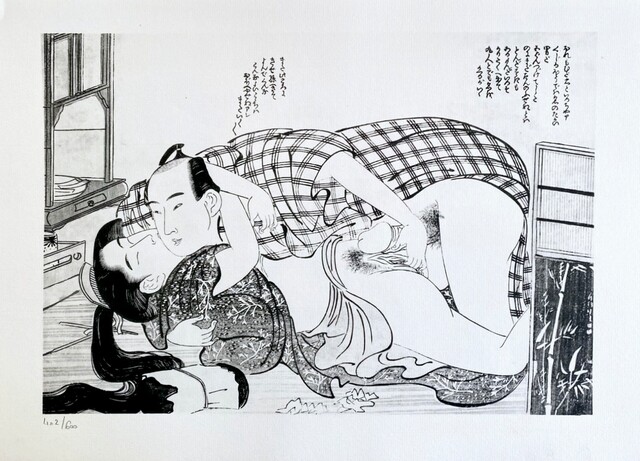
Japanese Shunga
- Date:
- 1961
- Medium:
- Facsimile on Ingres d'Arches paper
- Image courtesy of
- Artsy
Description
Japanese Shunga, a print associated with Kitagawa Utamaro and carrying a publication date of 1961 in the Artsy reference listing (https://www.artsy.net/artwork/kitagawa-utamaro-japanese-shunga-18), belongs to the genre of erotic ukiyo-e known as shunga, literally 'spring pictures,' which formed a substantial and largely clandestine component of the Edo print market across the eighteenth and early nineteenth centuries. Shunga circulated alongside Utamaro's better-known bijin-ga of Yoshiwara courtesans and teahouse beauties, often produced anonymously or under pseudonyms to evade the periodic Tokugawa sumptuary edicts that restricted explicit imagery, and Utamaro himself contributed to several celebrated shunga albums during his years working under the publisher Tsutaya Juzaburo, the most famous of which is the Utamakura, or Poem of the Pillow, of 1788. The 1961 date on the Artsy record indicates that this impression is a twentieth-century posthumous printing or reproduction of an earlier Utamaro design rather than an original Edo-period sheet, a distinction that affects both the historical reading and the modern collecting valuation of the print. Without a museum provenance, an inscribed title, or visible compositional details in the source listing, the specific subject cannot be securely identified within Utamaro's documented shunga output, which encompassed both album sheets paired with kyoka comic verse and standalone designs depicting lovers in domestic, theatrical, and Yoshiwara settings. Utamaro's shunga manner is distinguished from that of his contemporaries by an unusually attentive treatment of facial expression, by careful articulation of patterned textile and bedding, and by the same refined keyblock line that defines his public bijin-ga, applied here to compositions whose erotic content was offset by literary inscription and visual play. Modern collecting context distinguishes original Edo impressions, which command substantial prices in specialist auctions and remain the subject of dedicated scholarship at institutions such as the Honolulu Museum of Art and the British Museum, from twentieth-century reproductions, which serve primarily as study material for the iconography of late-Edo erotic ukiyo-e.
More Prints by Kitagawa Utamaro
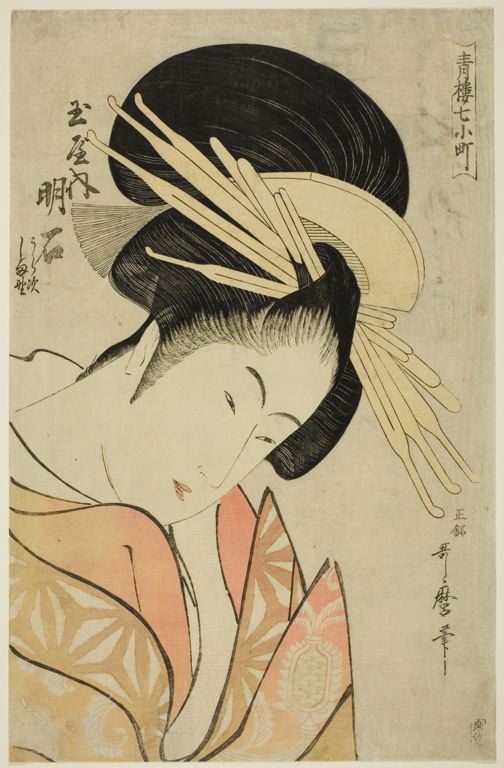
Akashi of the Tamaya, from the series Seven Komachis of Yoshiwara (Seiro nana Komachi) (Tamaya uchi Akashi, Uraji, Shimano)
Woodblock print
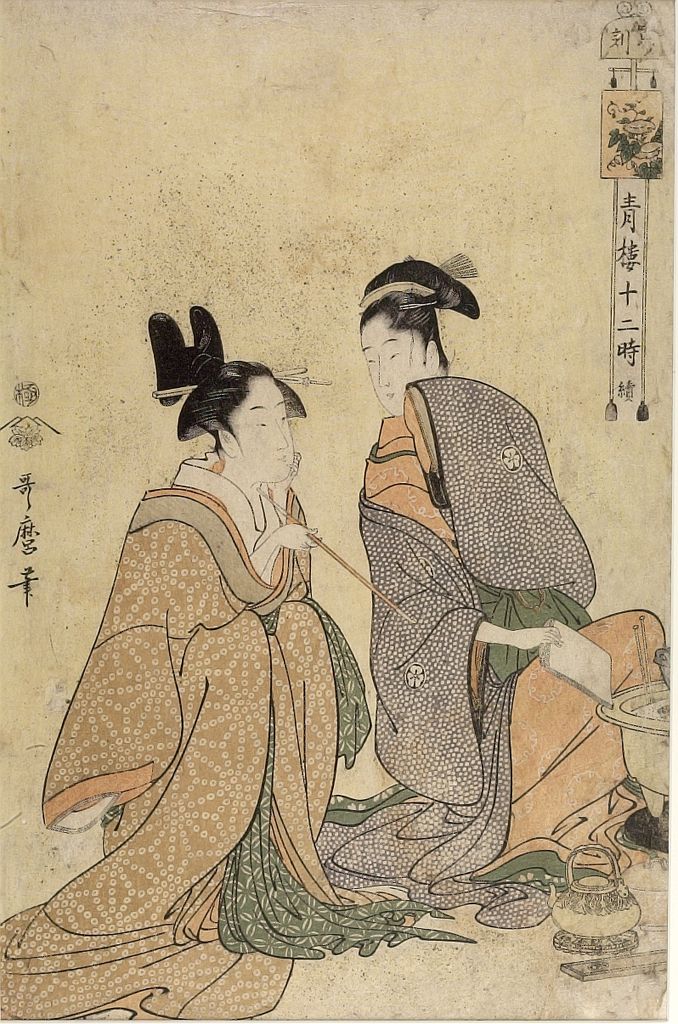
Hour of the Tiger (Tora no koku = 4 AM) from the series Twelve Hours in Yoshiwara (Seirô jûni toki tsuzuki), Late Edo period, circa 1794
Woodblock print
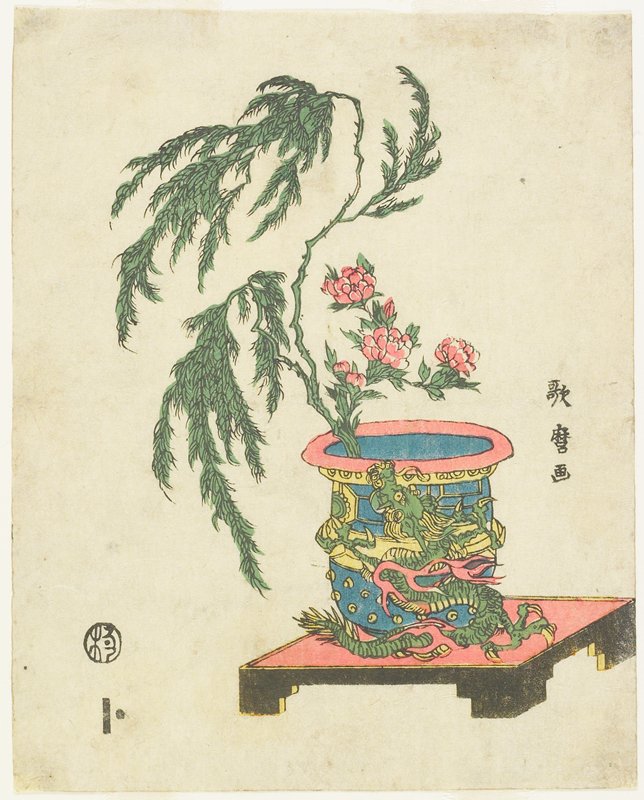
Ikebana arrangement of Peony and Willow in Dragon Pot
1781–1806
Woodblock print (nishiki-e), ink and color on paper
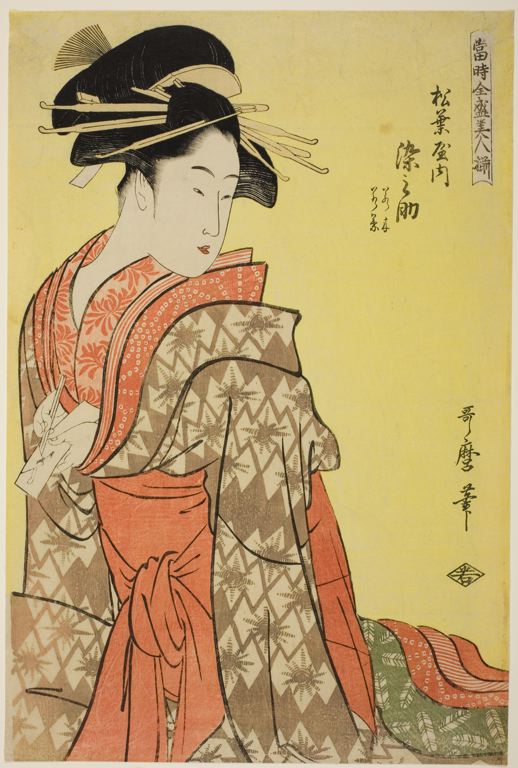
The Greatest Beauties of Our Time (Toji zensei bijin zoroe): Somenosuke of the Matsubaya with Attendants Wakagi and Wakaba
Woodblock print
More Shunga Prints

Evening Glow for Date no Yosaku and Seki no Koman (Date no Yosaku Seki no Koman Sekisho), from the series Eight views of Traveling Lovers from Joruri Plays (Michiyuki hakkei)
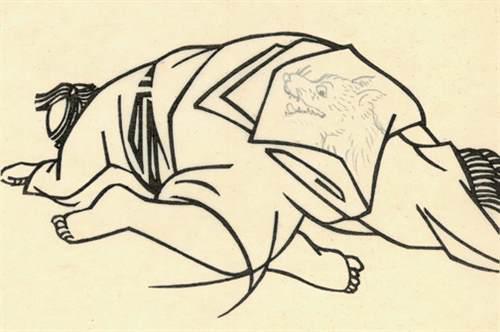
Zodiac Series of Erotica: Dog
Showa - Contemporary 1970's
Drawing
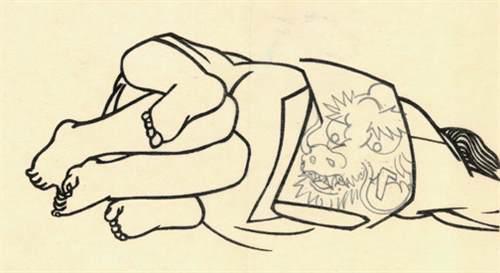
Zodiac Series of Erotica: Dragon
Showa - Contemporary 1970's
Drawing
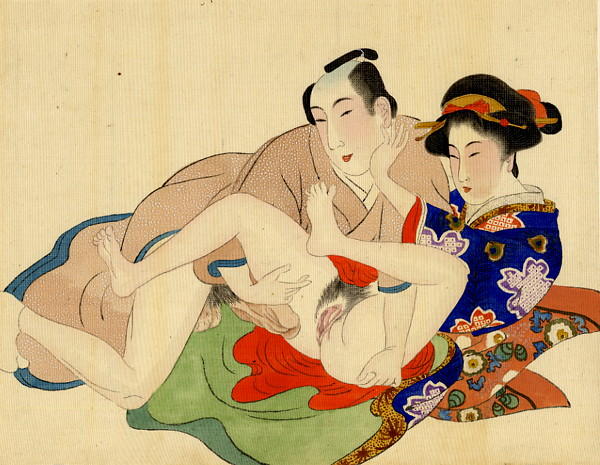
Shunga 1
1900
Woodblock print
Frequently Asked Questions
Japanese Shunga was created by Kitagawa Utamaro (喜多川歌麿) in 1961.
Japanese Shunga depicts shunga.