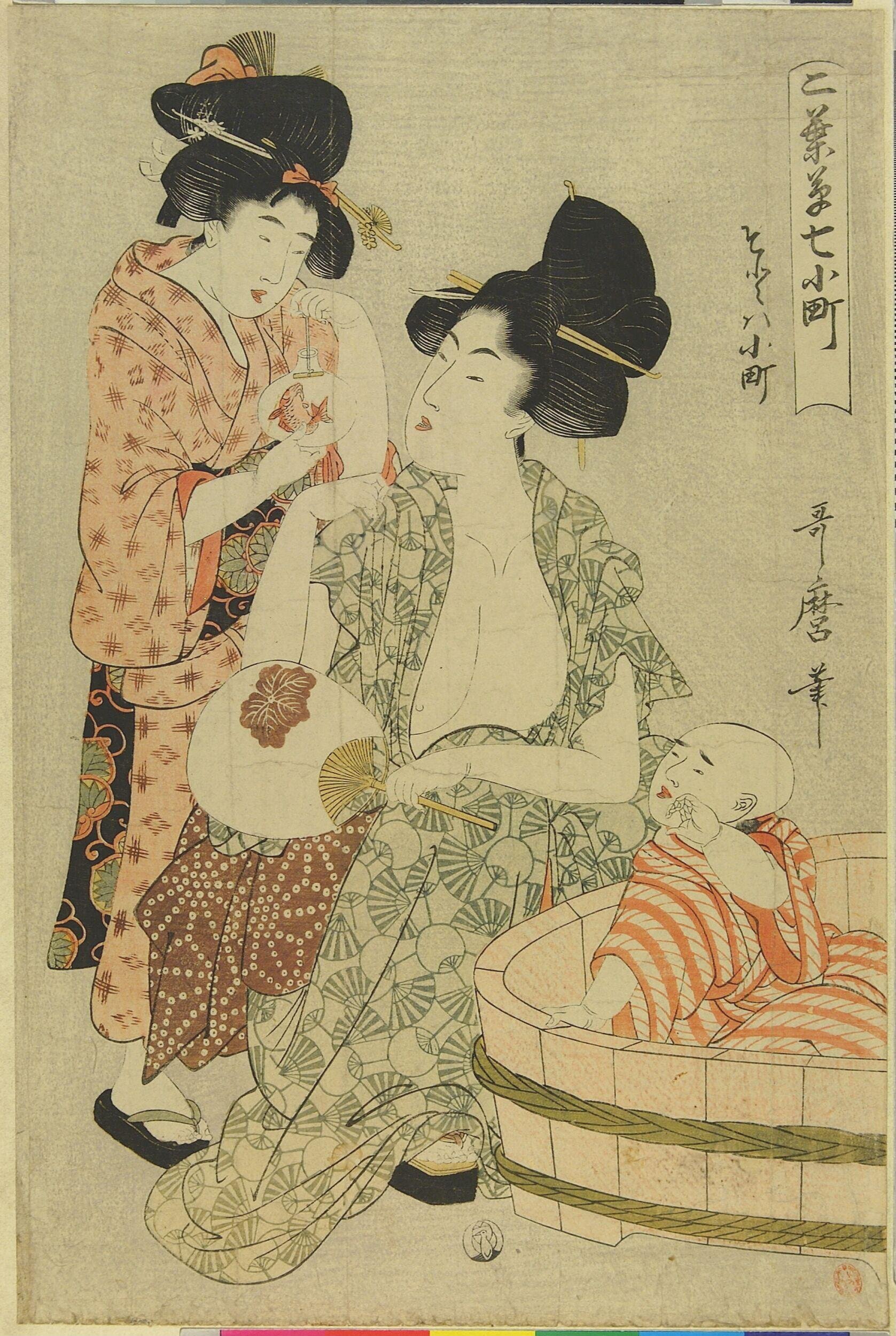
Summer Bath
- Date:
- ca. 1804-1807
- Medium:
- Source:
- Victoria and Albert Museum
Description
Summer Bath, a Kitagawa Utamaro design of about 1804 in the Victoria and Albert Museum, returns to one of his recurrent subjects: a woman caught in a private moment of cooling herself. The bath, whether a private tub at home or a more public sento, was a powerful theme in Edo bijin-ga because it allowed designers to depict the female body with relative directness, governed by the long pictorial tradition of bathing scenes rather than by erotic explicitness. Utamaro stages his figure with the calm assurance of his mature ukiyo-e style: the body is partially clothed or wrapped in a light yukata, the hair pinned up against the summer heat, the gesture of pouring or wiping water carrying most of the action. The setting is sketched with restraint, just enough architecture or vessel to fix the scene as summertime ablutions. Within his late oeuvre, prints like Summer Bath show Utamaro using bodily presence and seasonal context to push Edo bijin-ga toward a kind of sensual quietness that still respects social conventions. The Victoria and Albert Museum's impression of the work allows comparison with other Utamaro bathing subjects in international collections, and helps trace how he moved between the celebrity courtesan portrait and these more universal depictions of women at the everyday boundary between body and dress. For collectors of Kitagawa Utamaro, the print exemplifies his late, more atmospheric handling of intimate subject matter.
More Prints by Kitagawa Utamaro
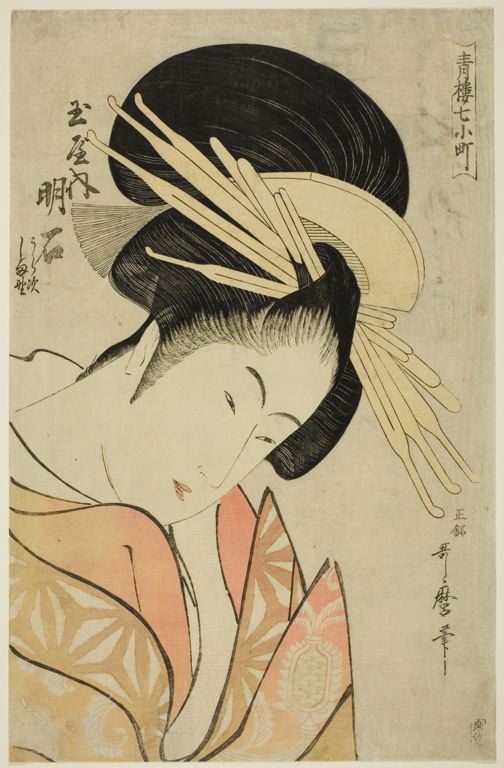
Akashi of the Tamaya, from the series Seven Komachis of Yoshiwara (Seiro nana Komachi) (Tamaya uchi Akashi, Uraji, Shimano)
Woodblock print
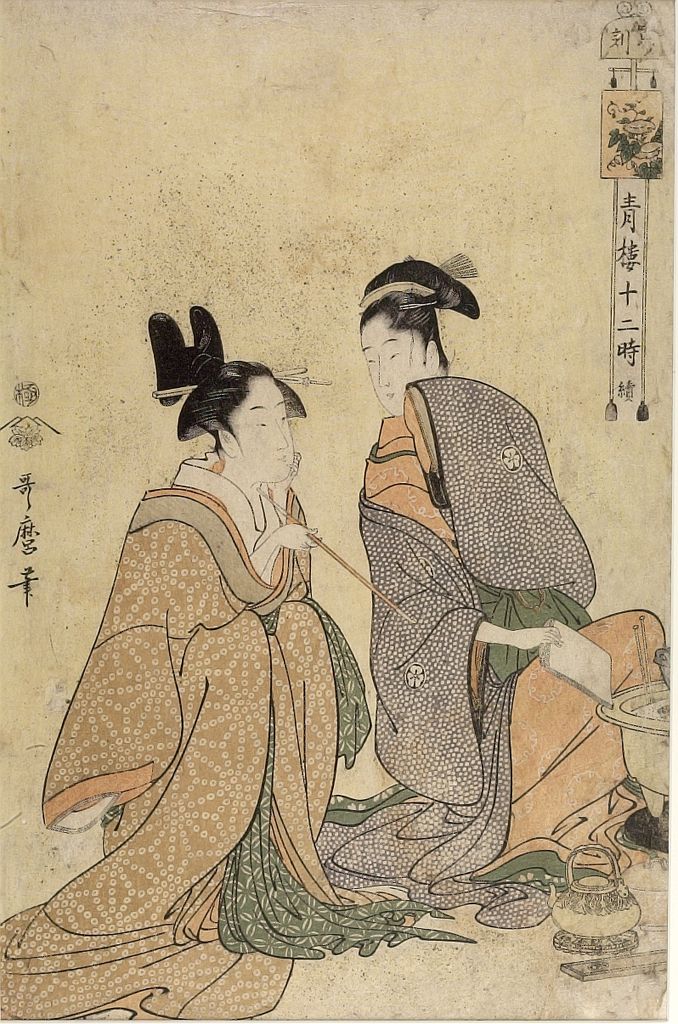
Hour of the Tiger (Tora no koku = 4 AM) from the series Twelve Hours in Yoshiwara (Seirô jûni toki tsuzuki), Late Edo period, circa 1794
Woodblock print
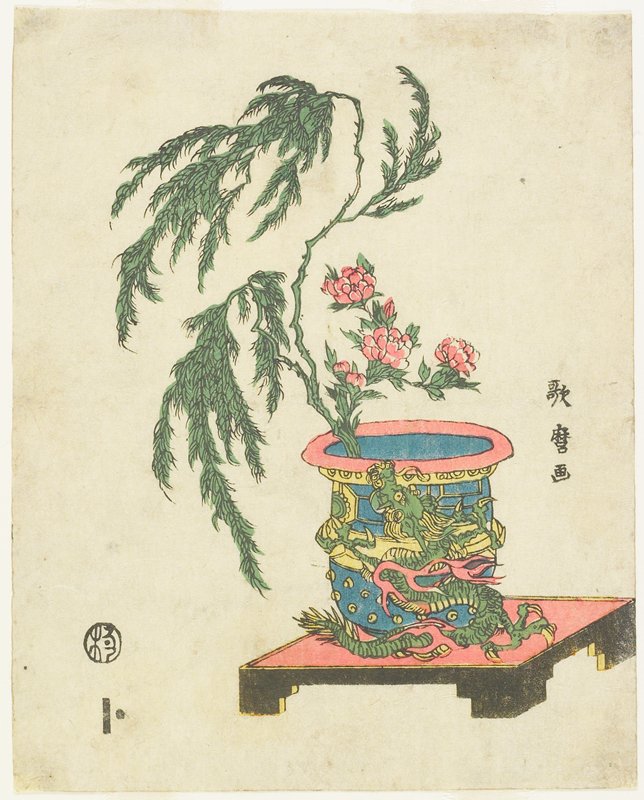
Ikebana arrangement of Peony and Willow in Dragon Pot
1781–1806
Woodblock print (nishiki-e), ink and color on paper
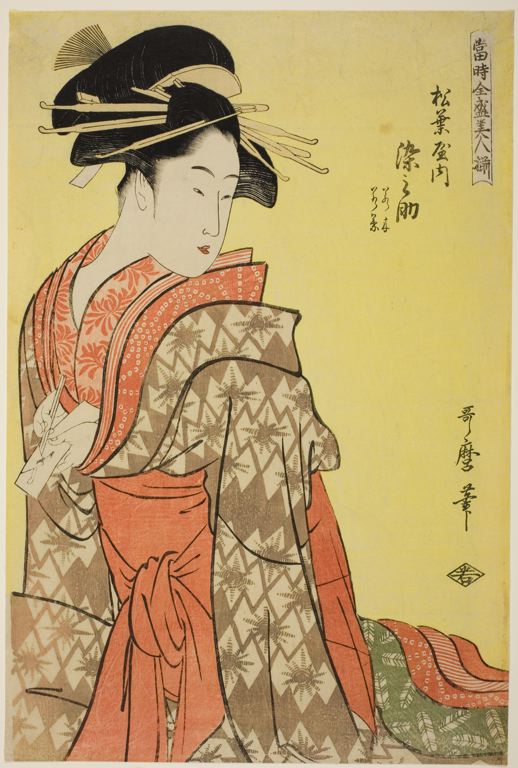
The Greatest Beauties of Our Time (Toji zensei bijin zoroe): Somenosuke of the Matsubaya with Attendants Wakagi and Wakaba
Woodblock print
More Summer Prints
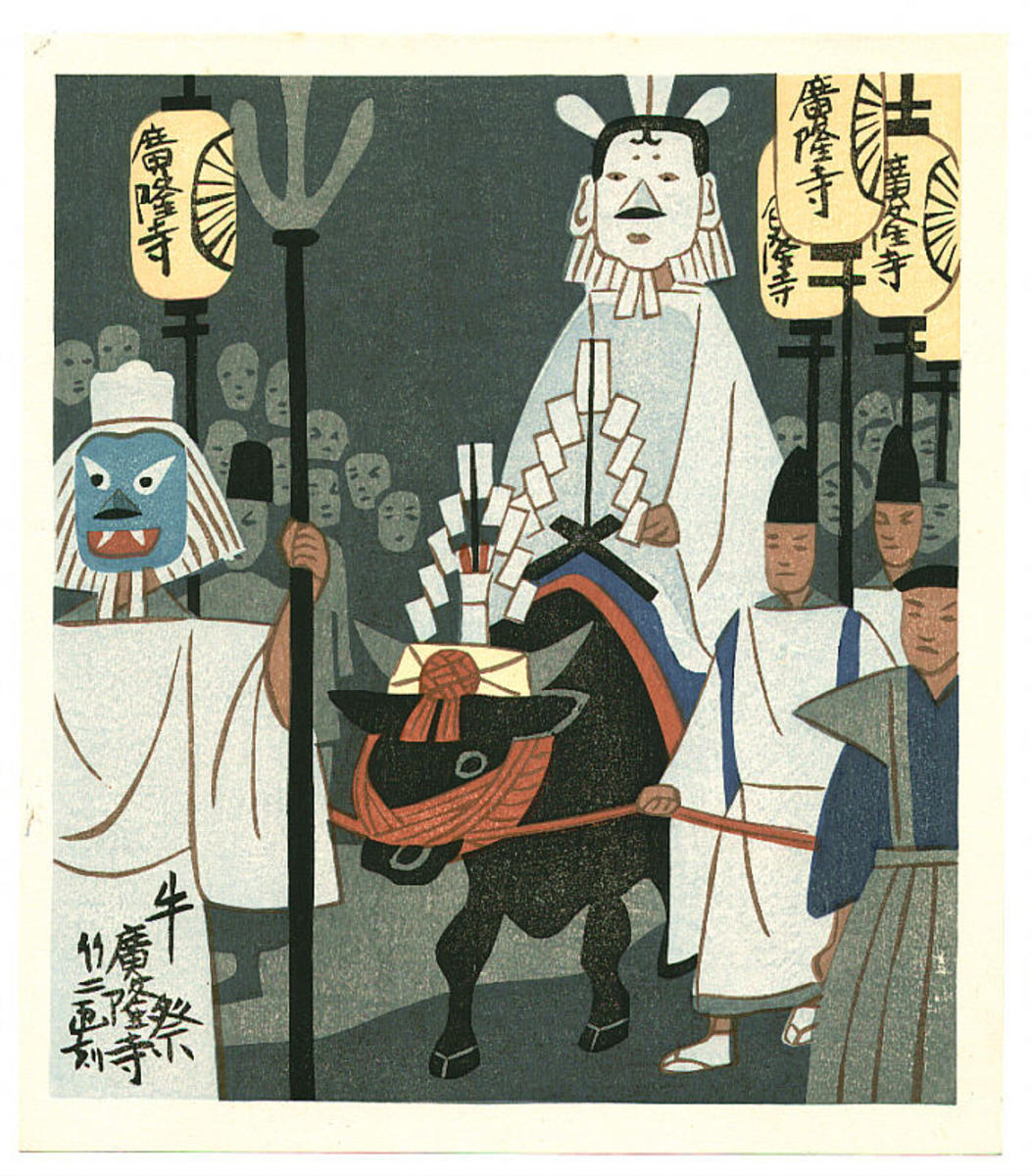
Bull Festival at Koryuji
広隆寺牛祭
Woodblock print
February (The Annual Festival of the Fushimi Inari)
二月 (伏見稲荷大社祭)
second half 20th century
Woodblock print, ink and color on paper

July (Gorgeous Procession of Yama-hoko or the Floats at the Gion Festival)
七月 (祇園祭山鉾巡行)
second half 20th century
Woodblock print, ink and color on paper

August (The Bonfire Festival of the Daimonji Hill Viewed from the Sanjo Bridge)
八月 (三条大橋より大文字)
second half 20th century
Woodblock print, ink and color on paper
Frequently Asked Questions
Summer Bath was created by Kitagawa Utamaro (喜多川歌麿) in ca. 1804-1807.
Summer Bath depicts summer.