
City View (Posthumous woodcut of a Kiyochika painting)
- Medium:
- Woodblock print
- Source:
- Honolulu Museum of Art
- Image courtesy of
- Honolulu Museum of Art
Description
Translated from an original Kiyochika painting into woodblock form after the artist's death, this city view exemplifies the posthumous edition practice common in the Japanese print trade. The translation from painting to woodblock requires the carver to interpret brushwork as carved line and area, inevitably producing a work that is both derivative of and formally distinct from its painted source. Kiyochika's painted city views would have emphasized atmospheric perspective and the play of artificial light on urban surfaces — gaslit streets, illuminated shop fronts, lantern-lit waterways — qualities that the woodblock medium renders through bokashi gradation and color layering rather than brushstroke. The print preserves Kiyochika's compositional vision while documenting the conventions of posthumous reproduction in Meiji and Taisho-era print publishing.
More Prints by Kobayashi Kiyochika
More Urban Scenes Prints
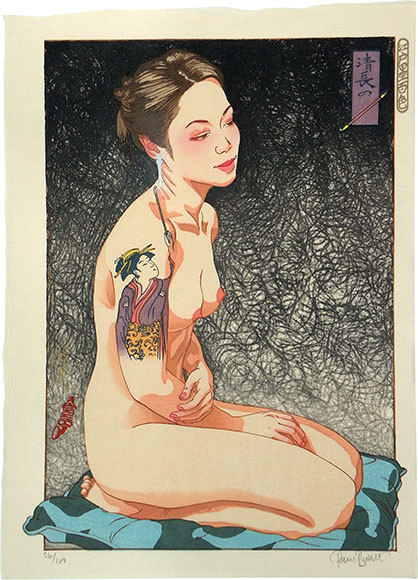
A Hundred Shades of Ink of Edo: Kiyonaga's Pipe (Edo zumi hyaku shoku: Kiyonaga no kiseru)
Woodblock print

View of Kabuki Theater from Matsuya (Ginza Matsuya yori Kabukiza), no. 3 from the series "Pictures of Ginza, First Series (Gashu Ginza dai isshu)"
1928
Color lithograph

Distant View of Mitsukoshi Movie Theater in Shinjuku from the Sixth Floor of Hoteiya (Hoteiya rokkai kara Shinjuku Mitsukoshi Musashi no kan enbo zu), no. 1 from the series "Scenery of Shinjuku (Gashu Shinjuku fukei)"
1930
Color lithograph
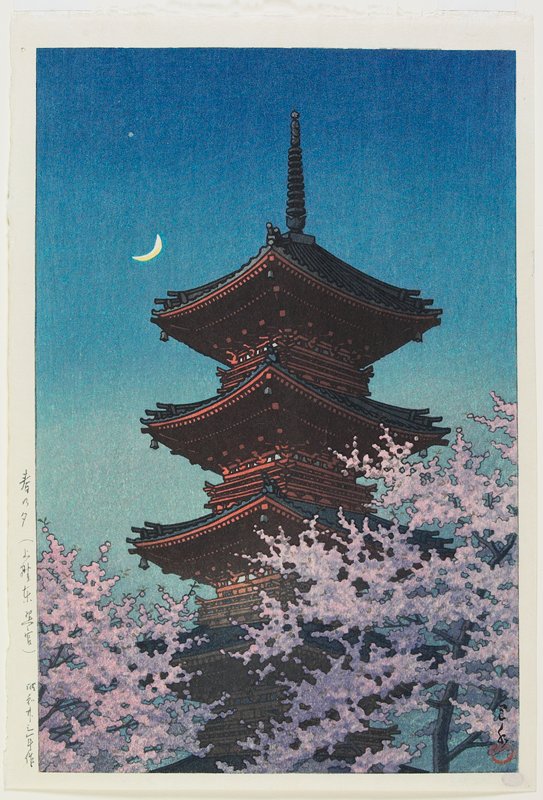
Spring Dusk at the Tōshō Shrine in Ueno
1948
Woodblock print, ink and color on paper
Frequently Asked Questions
City View (Posthumous woodcut of a Kiyochika painting) was created by Kobayashi Kiyochika (小林清親).
City View (Posthumous woodcut of a Kiyochika painting) depicts urban scenes.