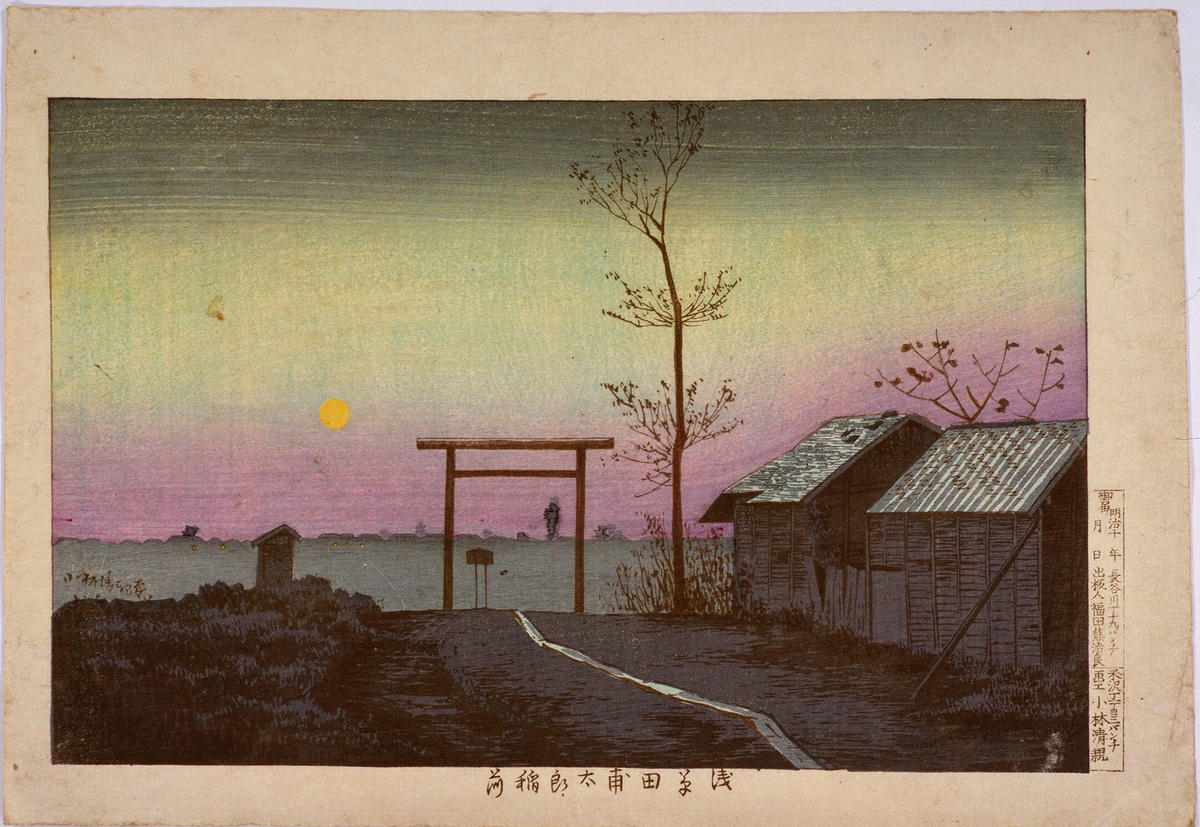
Taro Inari Shrine at the Asakusa Ricefields — 浅草田甫太郎稲荷
- Medium:
- Woodblock print
- Source:
- Japanese Art Open Database
- Image courtesy of
- Japanese Art Open Database
Description
This print depicts the Taro Inari fox-deity shrine set among the paddy fields on the northern outskirts of Asakusa, an area that retained its rural character well into the Meiji era. Kiyochika renders the flat agricultural landscape with an atmospheric quality characteristic of his kosen-ga approach, likely contrasting the modest shrine precincts against an expansive sky rendered through delicate bokashi gradations. The composition belongs to his celebrated survey of Tokyo's changing districts, recording semi-rural sites soon to be absorbed by urban expansion. Inari shrines, marked by vermillion torii gates and fox guardian figures, were common features of the rice-growing districts, and Kiyochika uses the low horizon and open sky to emphasize the spatial contrast between the quiet, traditional countryside and the modernizing city encroaching from the south.
More Prints by Kobayashi Kiyochika
More Snow Scenes Prints
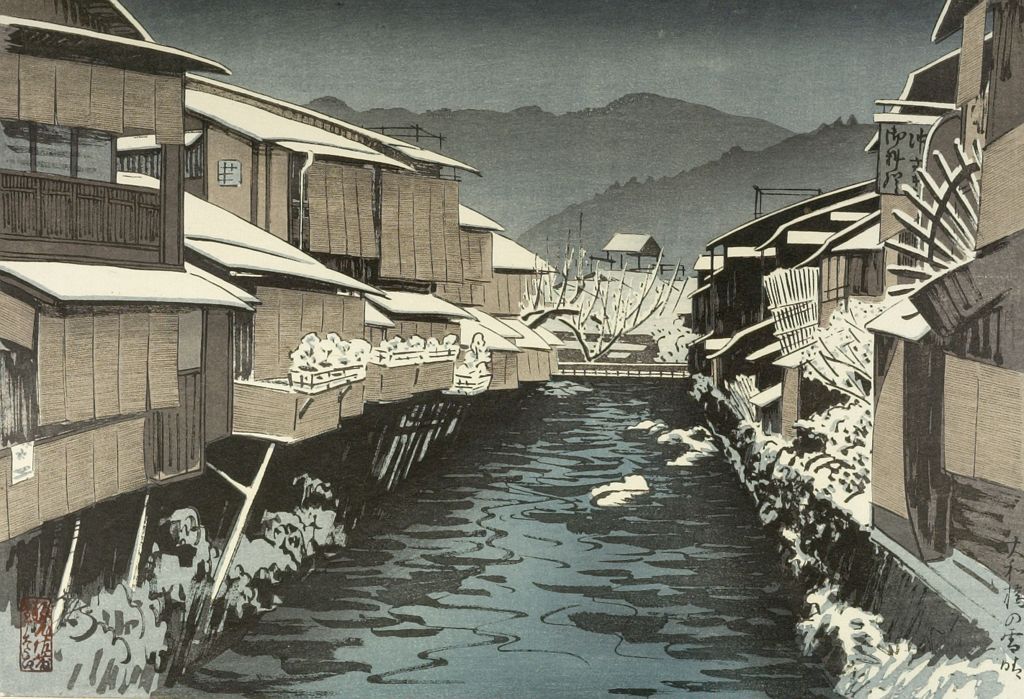
Fair Weather After Snow at Yamato Bridge, Kyoto (Yamato bashi no yukibare), Taishô period, dated 1924
Woodblock print

The Compound of the Tenman Shrine at Kameido in the Snow (Kameido Tenmangu keidai no yuki), from the series "Famous Places in the Eastern Capital (Toto meisho)"
c. 1832/38
Color woodblock print; oban

Miyajima in Snow (Yuki no Miyajima)
Yuki no Miyajima
1929
Color woodblock print; oban
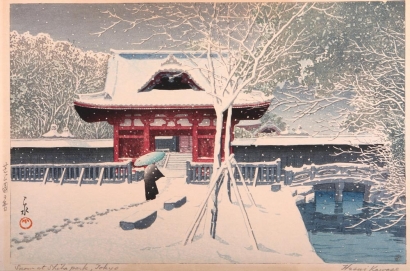
Evening Snow at Shiha Park, Tokyo
1932
Woodblock print
Frequently Asked Questions
Taro Inari Shrine at the Asakusa Ricefields — 浅草田甫太郎稲荷 was created by Kobayashi Kiyochika (小林清親).
Taro Inari Shrine at the Asakusa Ricefields — 浅草田甫太郎稲荷 depicts snow scenes.