
Chrysanthemums
菊花図
- Date:
- early 20th century
- Medium:
- Ink and color on silk
Description
Chrysanthemums (菊花図, Kikuka-zu) is a painting by Konoshima Ōkoku in ink and color on silk, now in the collection of the Sen-oku Hakukokan Museum, the Sumitomo Family museum in Kyoto that has long been a principal repository of his work. The composition presents a study of chrysanthemums — the imperial flower of Japan and the most prestigious of all autumn motifs in the classical kachō-e tradition. Ōkoku draws the petals and stems with the precise botanical observation he had cultivated under his teacher Imao Keinen, while the brushwork on the leaves uses the kind of graduated ink wash that distinguishes his mature painting. The chrysanthemum carried a particularly rich set of associations for early twentieth-century Japanese painters: it was simultaneously the emblem of the Imperial Household, a symbol of moral steadfastness drawn from classical Chinese painting and poetry, and a standard test of any senior nihonga painter's command of the seasonal repertoire. Ōkoku had become an Imperial Court Painter in 1917, and the chrysanthemum subject can be read both as a routine exercise in the kachō-e tradition and as a quietly political affirmation of his place within the official art establishment of Taishō and Shōwa Japan. The Sen-oku Hakukokan's holdings of his paintings became the focus of the major retrospective exhibitions of 2013 and 2018 that re-established him as one of the central nihonga painters of his generation.
More Prints by Konoshima Ōkoku

Studies of Cats
猫図
early 20th century
Ink on paper

Spring of a Main Road (Umayaji no Haru), left screen
駅路之春 左隻
1913
Ink and color on silk; folding screen

Spring of a Main Road (Umayaji no Haru), right screen
駅路之春 右隻
1913
Ink and color on silk; folding screen
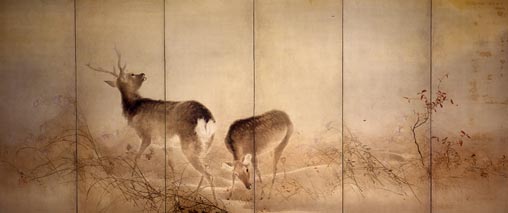
Shower (Yūdachi), left screen
驟雨 左隻
1907
Ink and color on silk; folding screen
Frequently Asked Questions
Chrysanthemums (菊花図) was created by Konoshima Ōkoku (木島桜谷) in early 20th century.