
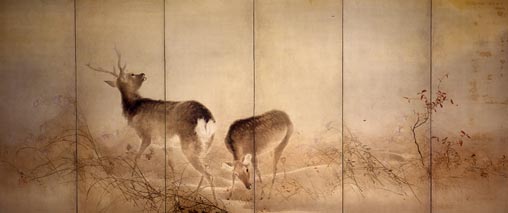
Hardness of Travelers' Ways, left screen
行路難 左隻
- Date:
- 1922
- Medium:
- Ink and color on silk; folding screen
Description
Hardness of Travelers' Ways (行路難, Kōrokunan), the left screen of a pair of folding screens dated 1922, takes its title from the famous Tang-dynasty poem of the same name by Li Bai (Li Po), one of the central works of Chinese classical poetry on the theme of life's hardships and the moral perseverance required to endure them. The Tang poem was a standard reference in the Japanese literati-painting tradition, and Konoshima Ōkoku — who had received a thorough Chinese-classics education at the Heian Kangaku-kan in Kyoto — would have been intimately familiar with both the text and its long pictorial tradition. The left screen handles the landscape side of the composition: a mountain road winding through harsh terrain, treated in ink wash with restrained color and with the kind of long diagonal organization characteristic of the Maruyama-Shijō school. The pair belongs to Ōkoku's late Bunten and Teiten years, a period in which he repeatedly returned to poetic subjects from Tang and Song literature, treating them with the atmospheric restraint of his mature painting style.
More Prints by Konoshima Ōkoku

Studies of Cats
猫図
early 20th century
Ink on paper

Spring of a Main Road (Umayaji no Haru), left screen
駅路之春 左隻
1913
Ink and color on silk; folding screen

Spring of a Main Road (Umayaji no Haru), right screen
駅路之春 右隻
1913
Ink and color on silk; folding screen
Shower (Yūdachi), left screen
驟雨 左隻
1907
Ink and color on silk; folding screen
Frequently Asked Questions
Hardness of Travelers' Ways, left screen (行路難 左隻) was created by Konoshima Ōkoku (木島桜谷) in 1922.