
Lion
獅子図
- Date:
- early 20th century
- Medium:
- Ink and color on silk; folding screen
Description
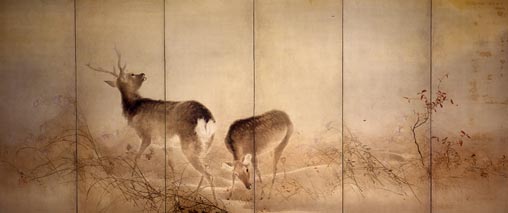
Lion (獅子図, Shishi-zu) is a folding-screen painting by Konoshima Ōkoku in ink and color on silk, depicting a single lion in the long East Asian tradition of shishi (lion or guardian-lion) imagery that descends from Tang-dynasty Buddhist sculpture and Chinese decorative painting. The lion was not a native Japanese subject but had entered the East Asian decorative repertoire centuries earlier as a protector figure associated with Buddhist temples, and by the early twentieth century it was a standard subject for nihonga painters working at large scale. Ōkoku's treatment combines the close anatomical observation he had brought to his deer, fox, and monkey paintings with the more stylized iconographic conventions of the shishi tradition. The painting reflects his interest in large mammals as subjects suitable for the formal screen format that the Bunten and Teiten salons encouraged, and it represents one of the strands of his animal-painting practice less often reproduced than the famous fox and deer works but no less central to his identity as a painter of beasts. The work survives as one of the publicly accessible examples of his painting in the public domain through Japanese copyright law and has been widely reproduced through Wikimedia Commons.
More Prints by Konoshima Ōkoku

Studies of Cats
猫図
early 20th century
Ink on paper

Spring of a Main Road (Umayaji no Haru), left screen
駅路之春 左隻
1913
Ink and color on silk; folding screen

Spring of a Main Road (Umayaji no Haru), right screen
駅路之春 右隻
1913
Ink and color on silk; folding screen
Shower (Yūdachi), left screen
驟雨 左隻
1907
Ink and color on silk; folding screen
Frequently Asked Questions
Lion (獅子図) was created by Konoshima Ōkoku (木島桜谷) in early 20th century.