
Peacock
孔雀図
- Date:
- early 20th century
- Medium:
- Ink and color on silk; folding screen
Description
Peacock (孔雀図, Kujaku-zu) is a folding-screen painting by Konoshima Ōkoku depicting a peacock displayed in full plumage. The peacock had been a standard subject of East Asian decorative painting since the Tang dynasty and remained one of the most prestigious bird subjects for Meiji and Taishō nihonga painters, prized for the colorist's challenge of rendering the tail feathers and for the symbolic associations of beauty and dignity that surrounded the bird in both Buddhist and secular iconography. Ōkoku approaches the subject with the close anatomical observation he had absorbed under his teacher Imao Keinen, combined with the graduated washes and careful negative-space placement of the Maruyama-Shijō tradition. The painting belongs to the strand of his career devoted to birds — alongside his famous eagle and falcon compositions — and demonstrates his ability to apply the careful naturalism of his kachō-e training to the formal painting format of the folding screen rather than to the smaller hanging scrolls and printed albums of his teacher's generation. The work survives in the public domain through Japanese copyright law and is widely reproduced.
More Prints by Konoshima Ōkoku

Studies of Cats
猫図
early 20th century
Ink on paper

Spring of a Main Road (Umayaji no Haru), left screen
駅路之春 左隻
1913
Ink and color on silk; folding screen

Spring of a Main Road (Umayaji no Haru), right screen
駅路之春 右隻
1913
Ink and color on silk; folding screen
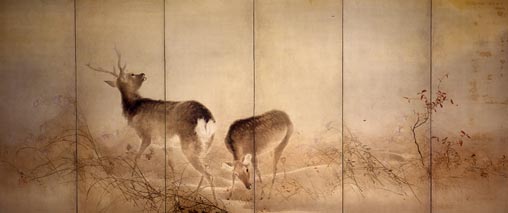
Shower (Yūdachi), left screen
驟雨 左隻
1907
Ink and color on silk; folding screen
Frequently Asked Questions
Peacock (孔雀図) was created by Konoshima Ōkoku (木島桜谷) in early 20th century.