
Revived Ginza street
by Kosaka Gajin
- Medium:
- Mokuhanga (Japanese woodblock)
- Image courtesy of
- Saru Gallery
Description
Revived Ginza Street depicts Tokyo's Ginza district in the period of postwar reconstruction. The title's qualifier is significant: Ginza was heavily damaged in the 1945 air raids that also destroyed Gajin's home and his entire prewar oeuvre, forcing his relocation to Sendai. Returning to the subject of the rebuilt street is therefore both topographical and personal. The print applies his late monochrome idiom — soft outlines absorbed into dampened washi — to an urban subject, an unusual pairing given that the technique is more often associated with landscape and contemplative scenes. Buildings, signage, and figures are likely reduced to economical line work rather than the densely detailed cityscapes typical of Meiji-era views or shin-hanga urban prints by Kawase Hasui. The work belongs to the small group of Gajin's Sendai-period images that document Japan's physical recovery, and it reflects the sosaku-hanga ethos of the artist as sole author — designing, carving, and printing a personal response to a changed city.
More Prints by Kosaka Gajin


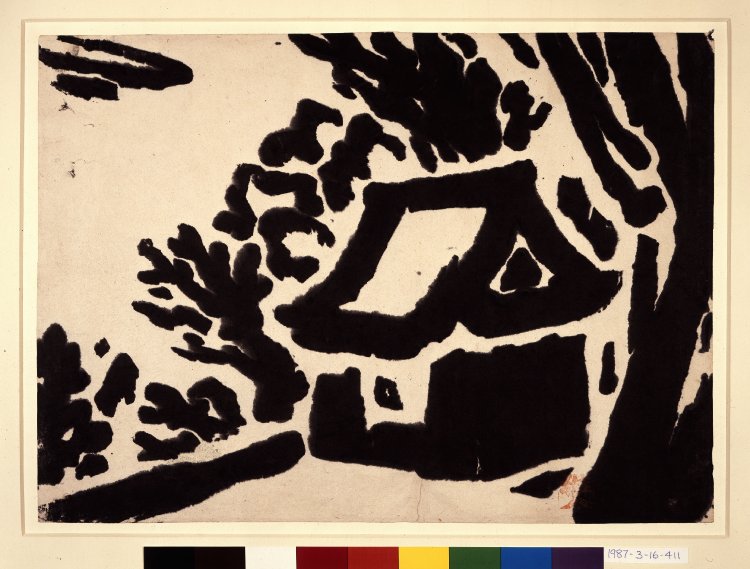

More Urban Scenes Prints
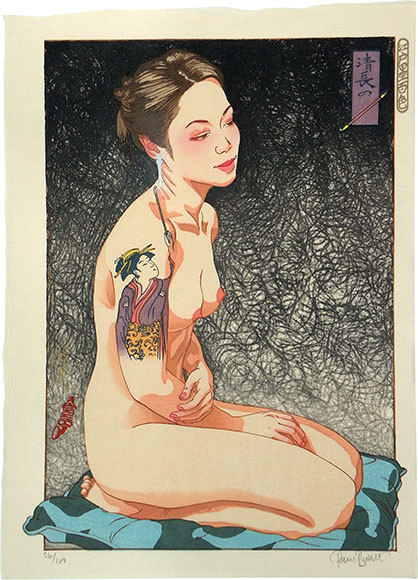
A Hundred Shades of Ink of Edo: Kiyonaga's Pipe (Edo zumi hyaku shoku: Kiyonaga no kiseru)
Woodblock print

View of Kabuki Theater from Matsuya (Ginza Matsuya yori Kabukiza), no. 3 from the series "Pictures of Ginza, First Series (Gashu Ginza dai isshu)"
1928
Color lithograph

Distant View of Mitsukoshi Movie Theater in Shinjuku from the Sixth Floor of Hoteiya (Hoteiya rokkai kara Shinjuku Mitsukoshi Musashi no kan enbo zu), no. 1 from the series "Scenery of Shinjuku (Gashu Shinjuku fukei)"
1930
Color lithograph
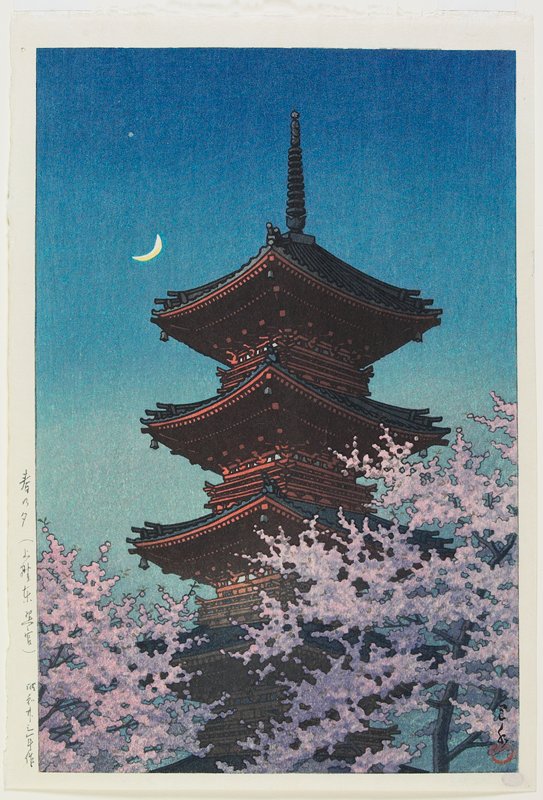
Spring Dusk at the Tōshō Shrine in Ueno
1948
Woodblock print, ink and color on paper
Featured in Collections
Curated cross-cuts that include this print.
Frequently Asked Questions
Revived Ginza street was created by Kosaka Gajin (上坂雅人).
Revived Ginza street depicts urban scenes.