Dahlias
- Medium:
- Mokuhanga (Japanese woodblock)
- Image courtesy of
- Saru Gallery
Description
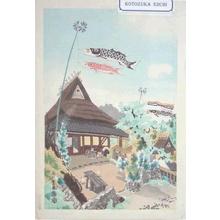
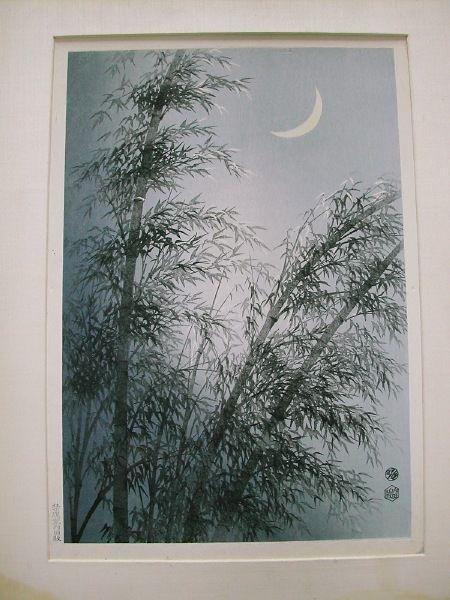
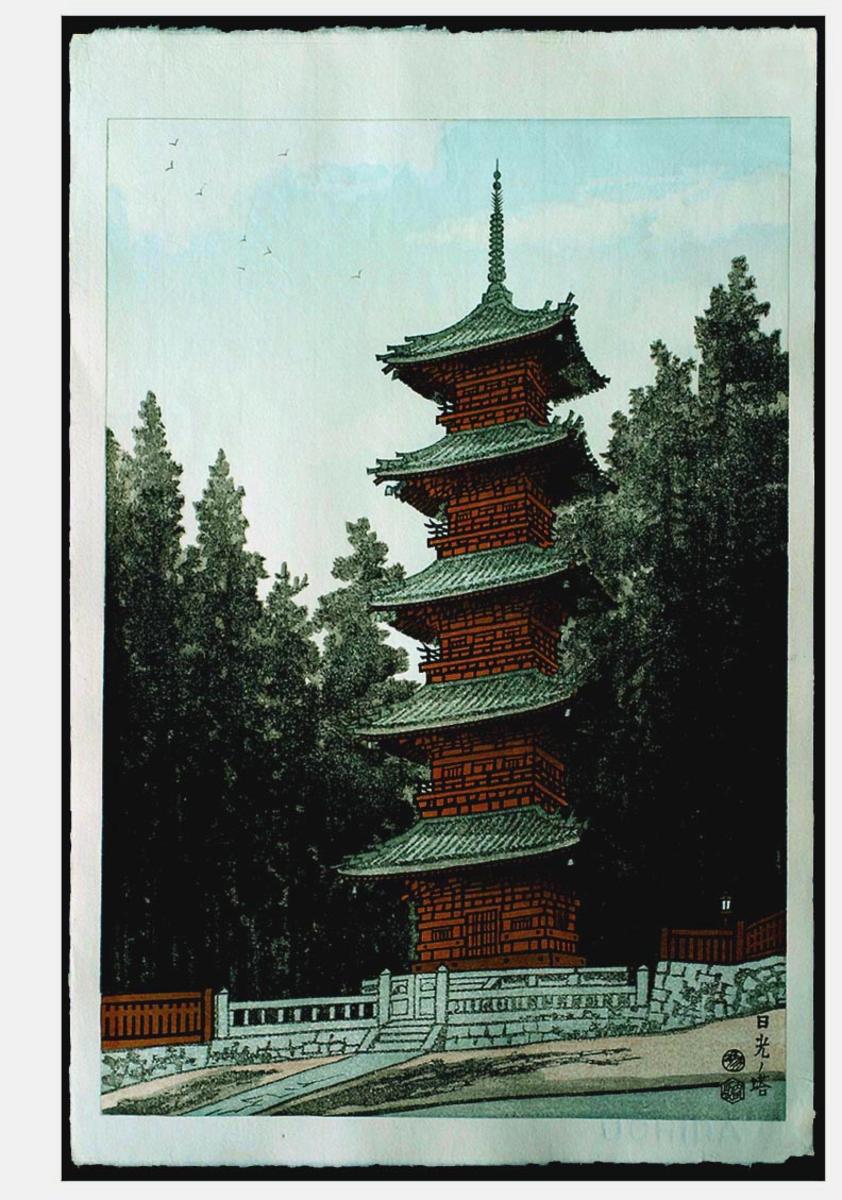
Dahlias, introduced to Japan from Mexico in the nineteenth century, became a regular subject of twentieth-century [kacho-e](/glossary/kacho-e) despite their non-native origin, and Kotozuka's print here is a botanical study of the flower rather than one of his characteristic Kyoto landscapes. The composition is likely close-cropped, with one or two heavy blooms and their serrated foliage filling the sheet against a flat or lightly graded ground -- a format inherited from the kacho-e tradition of Hokusai and Hiroshige and continued in the [shin-hanga](/glossary/shin-hanga) period by artists such as Ohara Koson. The dense, layered petals of a dahlia demand careful color separation: each tonal step within a single bloom must be cut as its own block, and the gradations across the petals are produced by [bokashi](/glossary/bokashi) at the printing bench rather than by overprinting. The subject is unusual within Kotozuka's output, which is otherwise dominated by the temples, shrines, and seasonal views of Kyoto, and stands as a discrete excursion into the flower-print genre rather than part of a sustained kacho-e series.