
Ichikawa Ebijurō I as Kezori Kuemon and Arashi Tomisaburō as the Courtesan Kojorō (from Yamato kotoba Suikoden)
- Date:
- c. 1822
- Medium:
- Color woodblock print from an album of 104 sheets
- Source:
- British Museum
Description
This circa 1822 yakusha-e by Utagawa Kunihiro, held by the British Museum (registration number 1983,0523,0.1.48-49) as part of an album of 104 sheets, depicts a pair of Osaka kabuki actors in the roles of Kezori Kuemon and the courtesan Kojorō, characters drawn from the play Yamato kotoba Suikoden (a kamigata-e adaptation of the Suikoden cycle of outlaw narratives). Ichikawa Ebijurō I, one of the dominant Osaka male leads of the 1820s, takes the role of Kezori Kuemon, while Arashi Tomisaburō plays the courtesan Kojorō, an onnagata (female-role) part typical of the cross-gender performance tradition that animated Osaka kabuki. The print belongs to an album of 104 kamigata-e yakusha-e sheets acquired by the British Museum in 1983, a substantial collection that gives an unusually dense view of Osaka actor portraiture in the early Bunsei period. The composition shows the two figures in the half-length format characteristic of Osaka yakusha-e, with role and actor names inscribed directly on the sheet. The pairing of the outlaw Kezori with the courtesan Kojorō is typical of the moral and social entanglements that drove Osaka domestic dramas, and Kunihiro's image is a representative document of the city's theatrical culture during one of the most productive decades of kamigata-e production.
More Prints by Utagawa Kunihiro

The Actor Arashi Kitsusaburō I as Nagai Genzaburō
1821
Color woodblock print (nishiki-e), yakusha-e
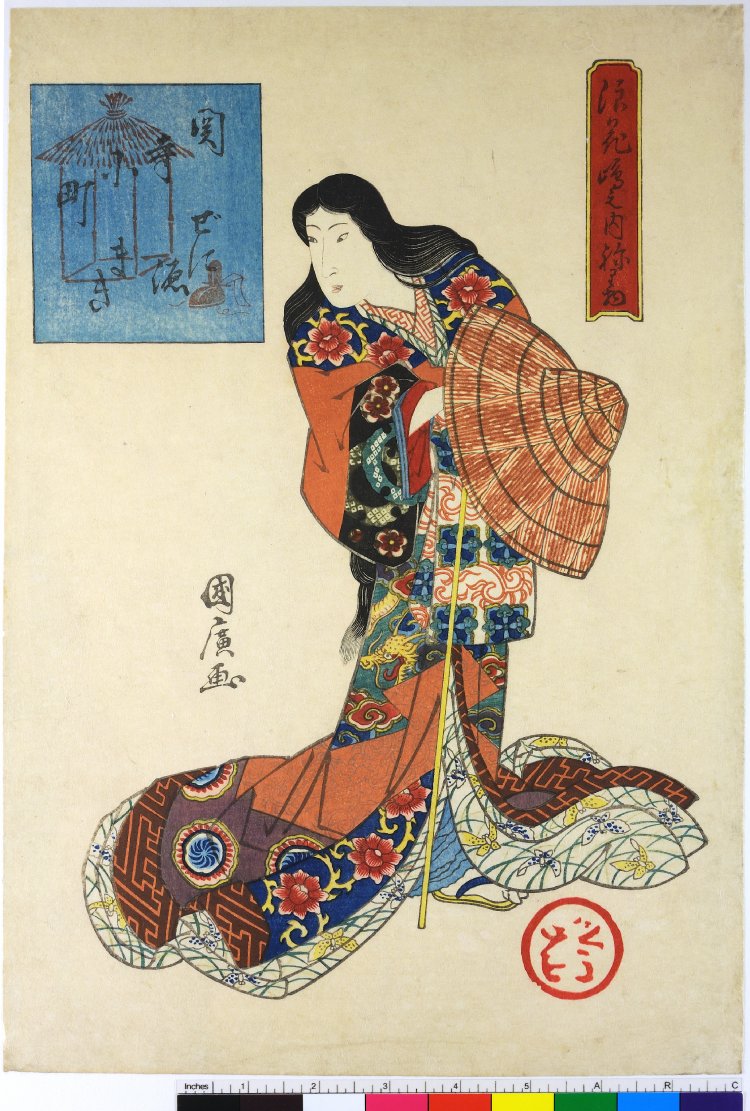
Naniwa Shima-no-uchi nerimono: Sekidera Komachi
c. 1815-1820
Color woodblock print
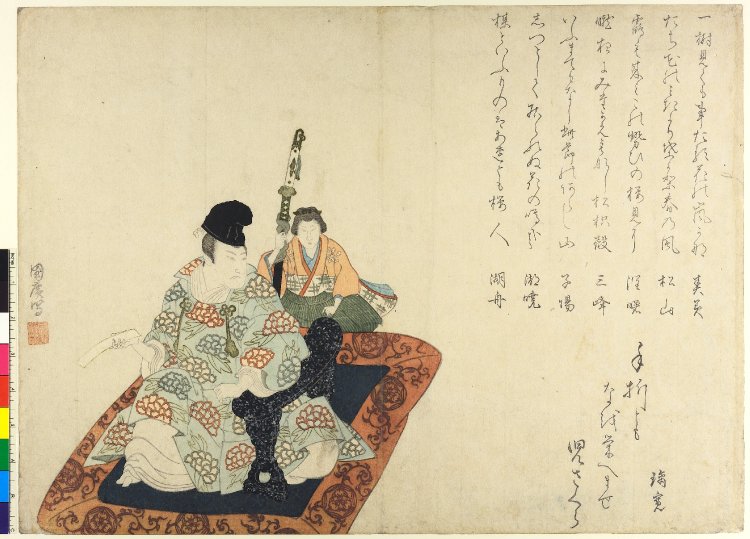
Surimono: Portrait of Arashi Kichisaburō II Commemorating Name Change to Kitsusaburō I
c. 1820
Color woodblock surimono with applied lacquer and mother-of-pearl

Actor Arashi Rikan as Miyamoto Musashi, Journeying through the Snow with his Boy Attendant
c. 1815-1830
Color woodblock print (yakusha-e)
Frequently Asked Questions
Ichikawa Ebijurō I as Kezori Kuemon and Arashi Tomisaburō as the Courtesan Kojorō (from Yamato kotoba Suikoden) was created by Utagawa Kunihiro (歌川国広) in c. 1822.