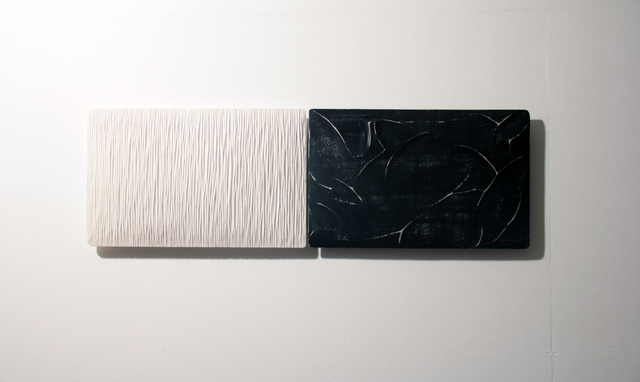
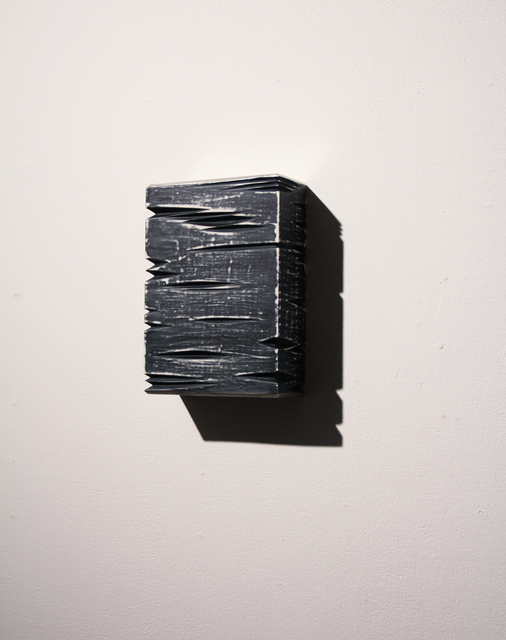
the wall of self_gsnhf1
- Date:
- 2015
- Medium:
- Gesso, pigment, glue on basswood
- Image courtesy of
- Artsy
Description
the wall of self_gsnhf1, dated 2015, is one of Masayuki Tsubota's variants within his complementary the wall of self cycle, documented on Artsy at https://www.artsy.net/artwork/masayuki-tsubota-the-wall-of-self-gsnhf1. Tsubota (born 1947) has worked across two interrelated long-form bodies of work, the layer of self and the wall of self, both pursuing the contemporary mokuhanga medium's capacity for accumulated, process-based abstraction. Where the layer of self phrase emphasizes the temporal stacking of impressions, the wall of self phrase signals a related but distinct concern with the print as a constructed plane, a vertical field whose surface registers both the carved geometry of the blocks and the cumulative density of the printed layers. The image belongs to the sosaku-hanga tradition of single-handed authorship inherited from Yamamoto Kanae and Onchi Koshiro and extended through Hagiwara Hideo and the contemporary international mokuhanga community in which Tsubota is an active participant, alongside Japanese peers including Hiroki Morinoue, Katsutoshi Yuasa, and Keiko Hara and an expanding international cohort sustained through the International Mokuhanga Conference series founded in 2011. The working method depends on traditional mokuhanga materials, water-based mineral pigment, Japanese hosho or comparable paper, and the hand baren, used to print successive blocks in registration; the resulting surface gains its depth from the relations between layers rather than from any external subject. The alphanumeric suffix gsnhf1 functions within the artist's catalogue as a variant identifier, distinguishing this iteration from neighboring sheets within the same body of work. The 2015 dating places the sheet in a productive mid-decade window of Tsubota's career, when the recursive logic of the wall of self series was being refined as a counterpart to the parallel the layer of self investigations. Together the two cycles function as paired vehicles for the artist's working argument that the woodblock print is the record of its own making, an inheritance from the postwar sosaku-hanga claim that the print is properly authored by the hand that carves and pulls each impression and not merely designed for execution by others.
More Prints by Masayuki Tsubota
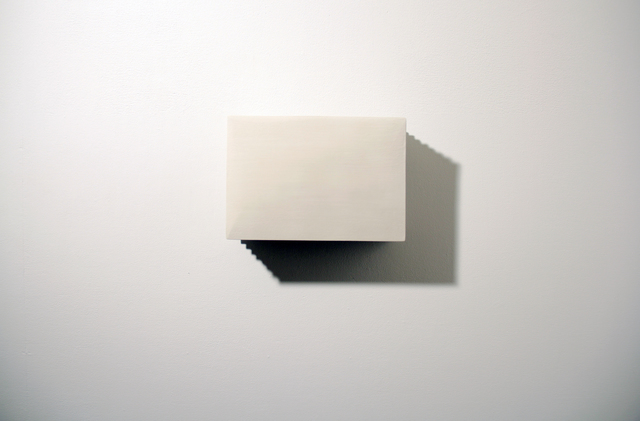
the layer of self_gfidl1
2015
Gesso, powdered mineral pigments , glue on MDF
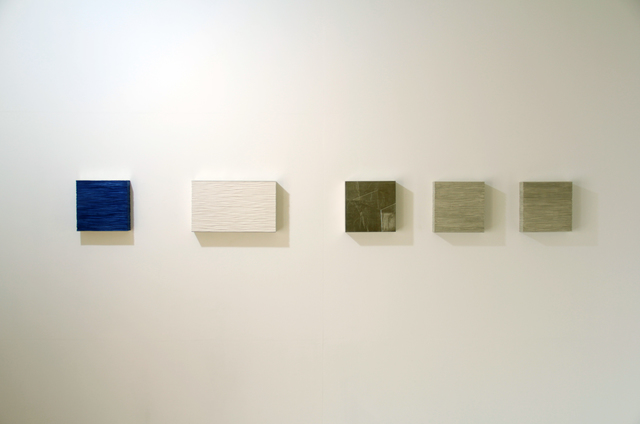
the wall of self_idgswtfigl2
2014
Gesso, powdered mineral pigments, glue on basswood, tin foil
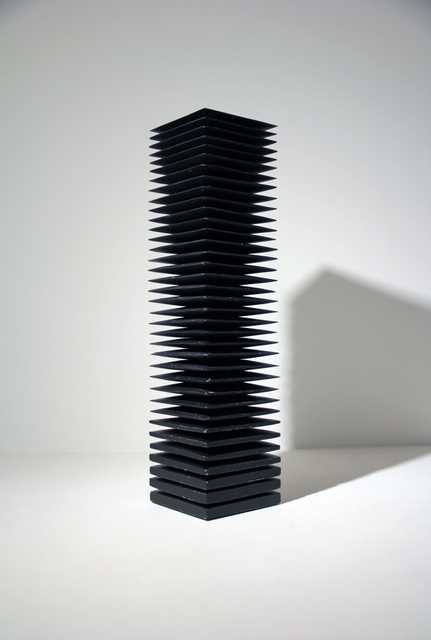
the layer of self_gfkkl
2015
Gesso, powdered mineral pigments, glue on basswood
the wall of self_inddks2
2015
Gesso, powdered mineral pigments, glue on basswood, tin foil
Frequently Asked Questions
the wall of self_gsnhf1 was created by Masayuki Tsubota (坪田昌之) in 2015.