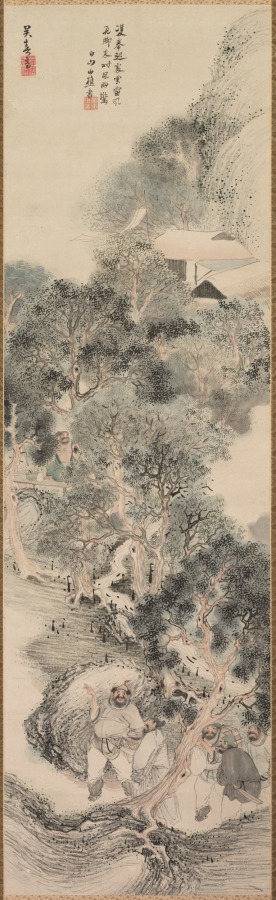
Happy Forest, from Water Margin
水滸伝快活林図
- Date:
- late 1700s
- Medium:
- Hanging scroll; ink and color on paper
- Source:
- Cleveland Museum of Art
Description
Happy Forest, from Water Margin is a hanging scroll in ink and color on paper by Matsumura Goshun (Cleveland Museum of Art, 1986.95), dated to the late eighteenth century. The subject is drawn from the Chinese vernacular novel Shuihu zhuan (The Water Margin, Japanese: Suikoden), the great Ming-period romance of one hundred and eight outlaws who gather at Mount Liang under the leadership of Song Jiang in defiance of the corrupt Song-dynasty government. The Water Margin entered Japan through Chinese editions in the early Edo period and became a major source for Japanese popular literature, drama, and pictorial art, particularly after Takebe Ayatari's vernacular Japanese translation of the early 1750s and the Suikoden illustrations of Katsushika Hokusai in the early nineteenth century. The 'Happy Forest' episode involves the outlaw Wu Song's drunken fight with the bullying Jiang Menshen in a tavern called the Happy Forest, and Goshun's treatment captures the loose, almost theatrical energy of the scene in the calligraphic line and color washes characteristic of the Shijō figure-painting manner. The scroll entered the Cleveland Museum in 1986 and is among the museum's earlier-period examples of Japanese painting on Chinese literary themes, a vein that became central to nineteenth-century nanga painting in Kyoto and elsewhere.
More Prints by Matsumura Goshun
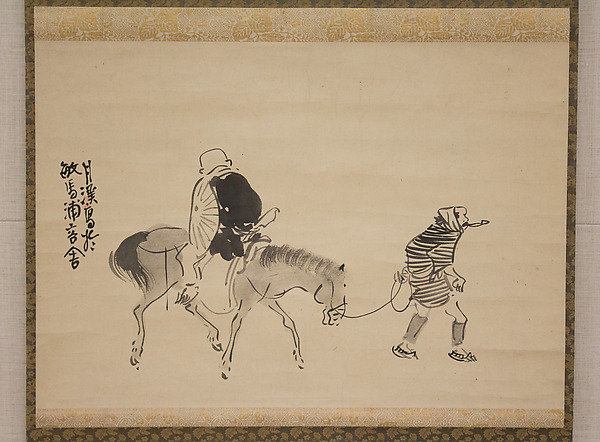
Monk Renshō Riding His Horse Backwards
蓮生法師逆乗馬図
after 1782, ca. 1784
Hanging scroll; ink on paper
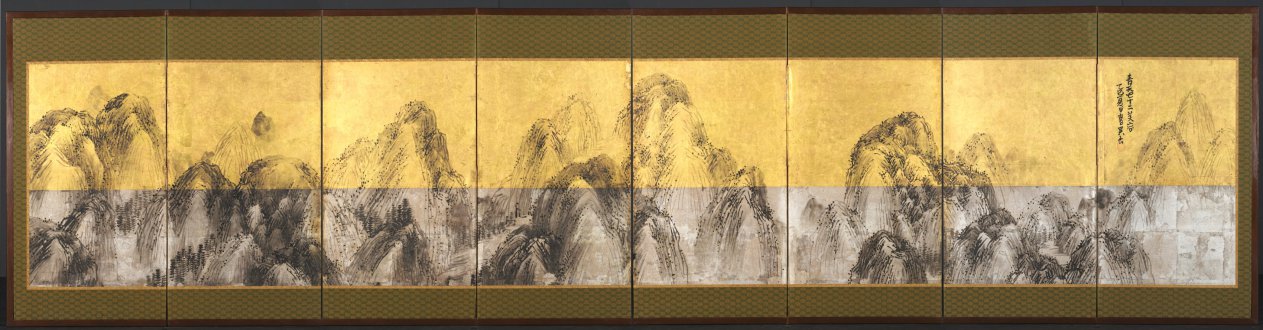
Seventy-Two Peaks Under the Blue Sky with Mount Furong
芙蓉峰青天七十二峰図
1785
Eight-panel folding screen; ink with gold and silver foil on paper
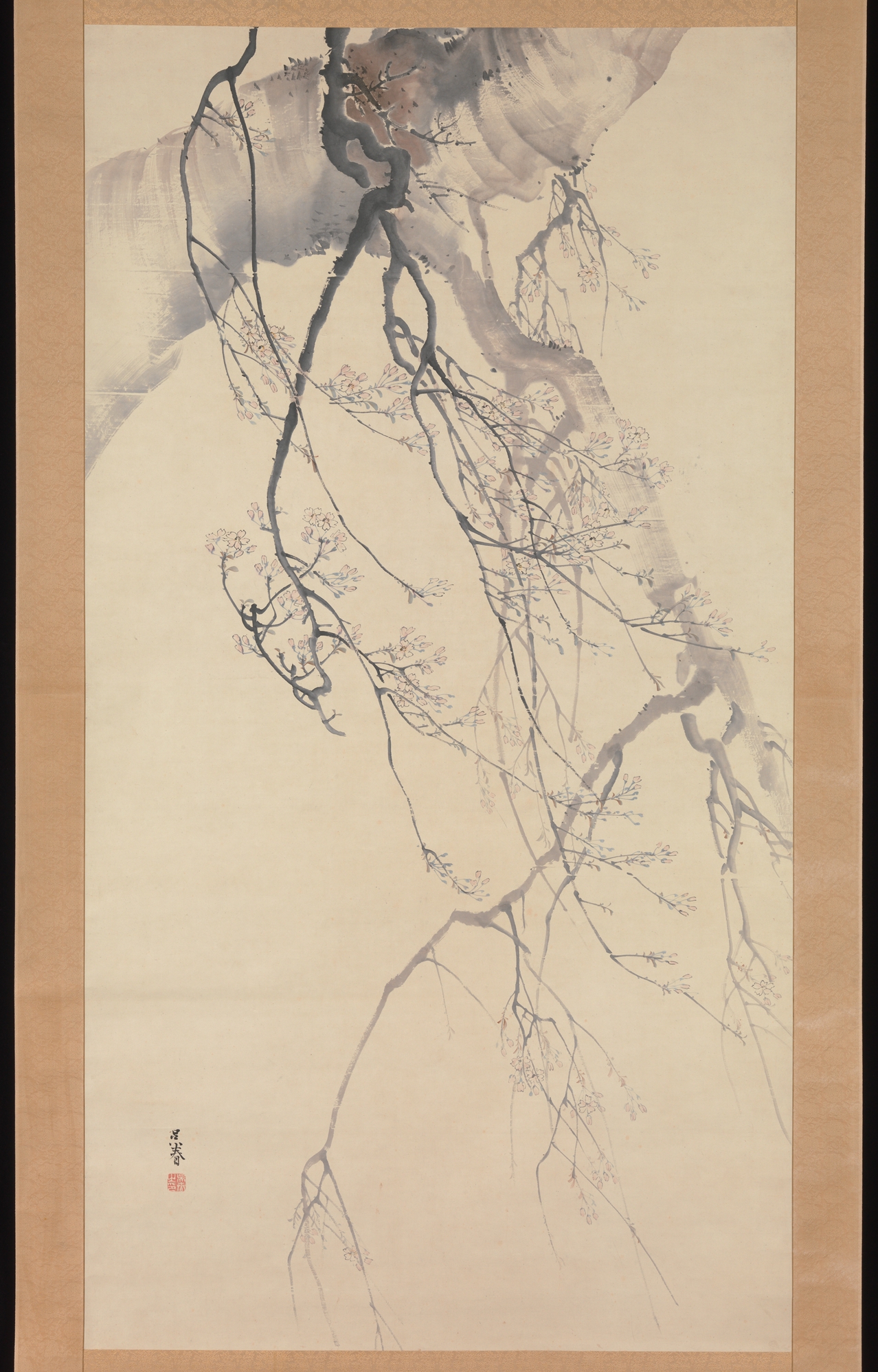
Cherry Blossoms
桜花図
late 18th century
Hanging scroll; ink and color on paper
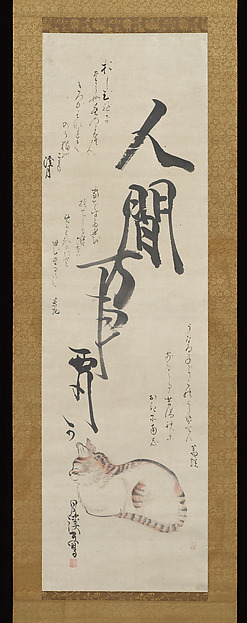
Cat with Poems: Pictorial Parody of Priest Saigyo's Legend
西行物語見立猫図
18th century
Hanging scroll; ink and color on paper
Frequently Asked Questions
Happy Forest, from Water Margin (水滸伝快活林図) was created by Matsumura Goshun (松村呉春) in late 1700s.