Matsumura Goshun
松村呉春
1752–1811
Japan
Biography
Matsumura Goshun (1752-1811) was the founder of the Shijō school of Japanese painting and one of the central figures in Kyoto art at the close of the eighteenth century. The school he established — named after the Shijō (Fourth Avenue) district of Kyoto, where he kept his studio — combined the literary and ink-painting refinement of the haikai poet-painter Yosa Buson with the close observation from life (shasei) of Maruyama Ōkyo, producing a distinctive synthesis that would dominate Kyoto painting through the nineteenth century and remain the foundation of Meiji-period nihonga in the Kansai region.
Goshun was born in Kyoto on the fifteenth day of the third month of the second year of Hōreki (28 April 1752), into a comfortable family with ties to the Kinza (the official mint of the shogunate); he himself entered the Kyoto mint as a young man. He later took numerous studio names, of which Goshun (呉春) became the most lasting, adopted around 1781 and formed by joining the character 呉 (Go, the Chinese surname Wu) with 春 (spring). As a young man he studied haikai poetry and painting with Yosa Buson (1716-1784), one of the supreme masters of the Japanese nanga (literati painting) tradition, and Goshun's early work clearly belongs to Buson's circle: ink landscapes in the literati manner, figure paintings based on Chinese subjects, and collaborative haiga (haiku paintings) developed in tandem with poetic composition. He was also active as a haikai poet and was known as well by the name Gekkei, and his lifelong involvement with poetry would remain visible in the inscriptions, calligraphic style, and literary subject matter of his later painting.
In 1781 Goshun's life was disrupted by a series of family tragedies — the death of his father and the death of his wife in close succession — and he withdrew from Kyoto to Ikeda, a small town in present-day Osaka Prefecture, where he lived for several years in the country, supporting himself by painting and by association with the local haikai community. Buson died at the start of 1784; over the following years Goshun came into contact with the studio of Maruyama Ōkyo (1733-1795), the most important Kyoto painter of the period, whose new manner of detailed observation from living models — applied to birds, animals, plants, and human figures with an empirical care that drew on imported Western perspectival ideas as well as on Chinese realist precedents — was transforming the city's painting scene. The two painters never formed a strict master-and-pupil relationship; rather, Goshun joined Ōkyo's circle as a respected senior collaborator. He and Ōkyo worked side by side on a major commission to decorate the Daijō-ji temple in Hyōgo Prefecture in 1787, where the fluency of Goshun's brushwork brought a softer, more lyrical sensibility to the rigorously observational manner that the Maruyama studio had codified, and around 1789 he moved his residence back to Kyoto.
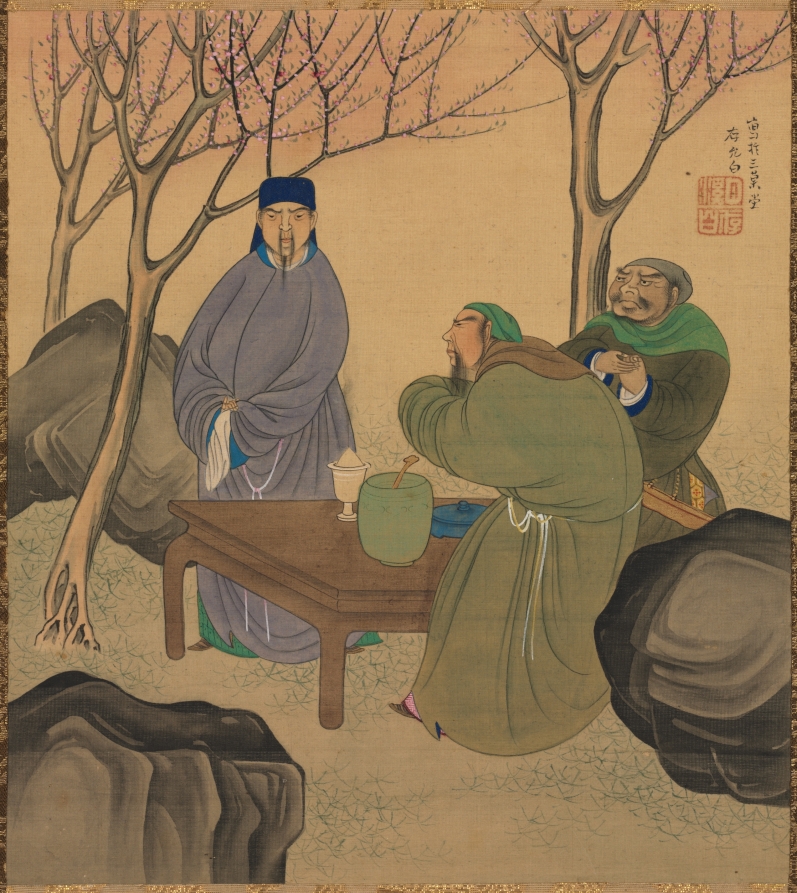
After Ōkyo's death in 1795, Goshun emerged as the leading painter of Kyoto and the central figure of what came to be called the Shijō school, a network of painters trained either directly under him or through close association with his studio. The name refers to the location of his house and studio along Shijō street, but it also captures a stylistic and pedagogical orientation: a willingness to sketch directly from nature in the Maruyama manner, but tempered by the lyrical brushwork, literary subject matter, and atmospheric ink wash that Goshun had inherited from Buson and from the broader nanga tradition. His works of the 1790s and 1800s display the full range of the mature style: bird-and-flower paintings (kachō-ga) such as the Met's Nightingale on Willow Branch and Bush Clover, Grass and Cricket, with closely observed natural detail set into open compositions full of carefully calibrated negative space; figure paintings in the literati manner like the Met's Monk Renshō Riding His Horse Backwards or the Cleveland Museum's Oath of the Peach Garden and Happy Forest, drawn from Chinese literary and historical sources; large-scale screen compositions such as the Met's Woodcutters and Fishermen (ca. 1790-95) and the Cleveland Museum's Seventy-Two Peaks Under the Blue Sky (1785), the latter a panoramic ink-and-gold treatment of an imagined Chinese mountainscape; and the auspicious figure subjects such as Shōki the Demon Queller (Art Institute of Chicago), which Goshun handled with the kind of inventive freedom that distinguishes Shijō painting from the more standardized treatments of the older Kanō and Tosa schools.
Goshun trained many of the painters who would carry the Shijō manner into the nineteenth century, including his younger brother Matsumura Keibun (1779-1843), who became one of the school's most prolific and widely copied exponents, along with Okamoto Toyohiko (1773-1845) and Shibata Gitō (1780-1819), among others. Through these pupils and their own students — including, in succession, painters such as Shiokawa Bunrin (1808-1877), Kōno Bairei (1844-1895), Mochizuki Gyokusen (1834-1913), Suzuki Hyakunen (1825-1891), Kishi Chikudō (1826-1897), and ultimately the major Meiji and Taishō Kyoto painters Imao Keinen (1845-1924) and Takeuchi Seihō (1864-1942) — the Shijō lineage shaped the entire trajectory of Kyoto painting from the late Edo into the modern nihonga of the twentieth century. Goshun himself remained in Kyoto until his death on the seventeenth day of the seventh month of the eighth year of Bunka (4 September 1811), at the age of fifty-nine.
Goshun is rarely encountered today as a printmaker in the strict sense — his medium was overwhelmingly ink and color on silk and paper — but his work appears in the printed record through several routes that make him a foundational figure for any collector of Edo-Meiji Japanese art on paper. His designs and those of his immediate Shijō pupils were reproduced in woodblock-printed painting manuals (gafu) and miscellany books such as the Met's Garden of Pictures by Kyoto Artists (Keijō gaen, 1814), published shortly after his death, and Kinkadō's Album of Drawings by Keibun (1898), in which the Maruyama-Shijō manner was disseminated to amateur painters and collectors throughout Japan. His direct paintings — hanging scrolls, folding screens, fan paintings, and album leaves — are held by the Metropolitan Museum of Art, the Cleveland Museum of Art, the Art Institute of Chicago, the Museum of Fine Arts Boston, the Minneapolis Institute of Art, the Honolulu Museum of Art, the British Museum, the Tokyo National Museum, and many other major collections. Together they document one of the central inflection points of Japanese painting: the moment when the literary inheritance of nanga and the empirical observation of the Maruyama school were brought together into a single working method that gave Kyoto painting its distinctive character for the next century and a quarter.
Key Facts
- Active Period
- 1752–1811
- Nationality
- 🇯🇵Japan
- Works Indexed
- 12
Frequently Asked Questions
Matsumura Goshun (1752-1811) was the founder of the Shijō school of Japanese painting and one of the central figures in Kyoto art at the close of the eighteenth century. The school he established — named after the Shijō (Fourth Avenue) district of Kyoto, where he kept his studio — combined the literary and ink-painting refinement of the haikai poet-painter Yosa Buson with the close observation from life (shasei) of Maruyama Ōkyo, producing a distinctive synthesis that would dominate Kyoto painting through the nineteenth century and remain the foundation of Meiji-period nihonga in the Kansai region.
Matsumura Goshun was active from 1752 to 1811.
Matsumura Goshun's prints frequently feature spring, fish, cats.
Original prints by Matsumura Goshun can be found in collections including Cleveland Museum of Art, Metropolitan Museum of Art, Art Institute of Chicago.
Woodblock Prints by Matsumura Goshun (12)
Oath of the Peach Garden, from Romance of the Three Kingdoms
三国志桃園結義図
c. 1780
Hanging scroll; ink and color on silk
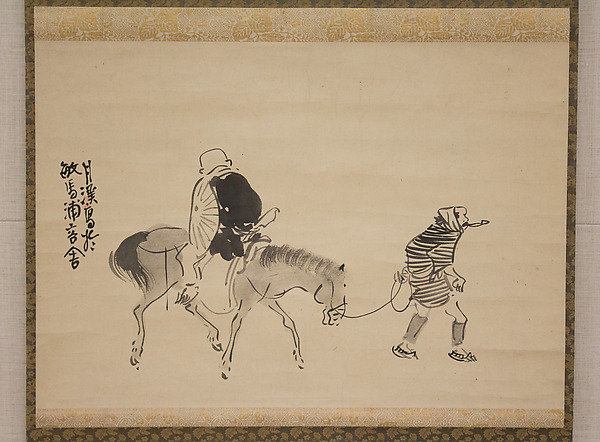
Monk Renshō Riding His Horse Backwards
蓮生法師逆乗馬図
after 1782, ca. 1784
Hanging scroll; ink on paper
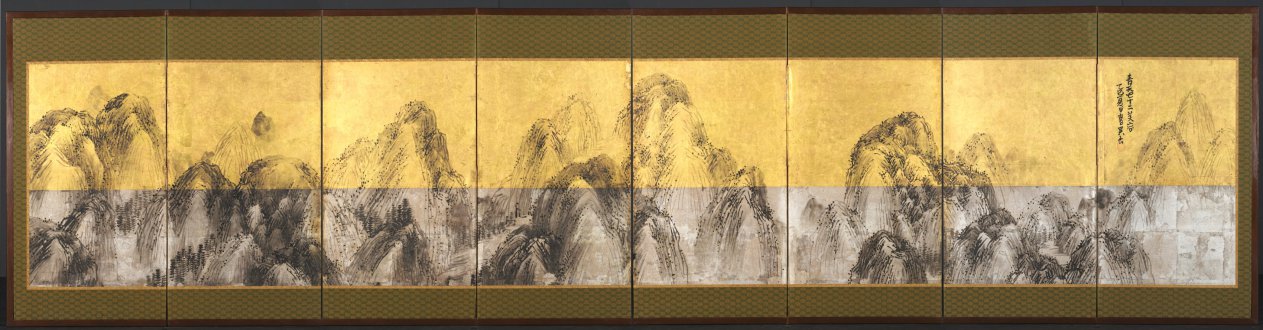
Seventy-Two Peaks Under the Blue Sky with Mount Furong
芙蓉峰青天七十二峰図
1785
Eight-panel folding screen; ink with gold and silver foil on paper
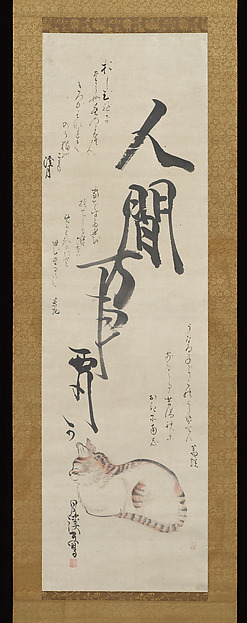
Cat with Poems: Pictorial Parody of Priest Saigyo's Legend
西行物語見立猫図
18th century
Hanging scroll; ink and color on paper
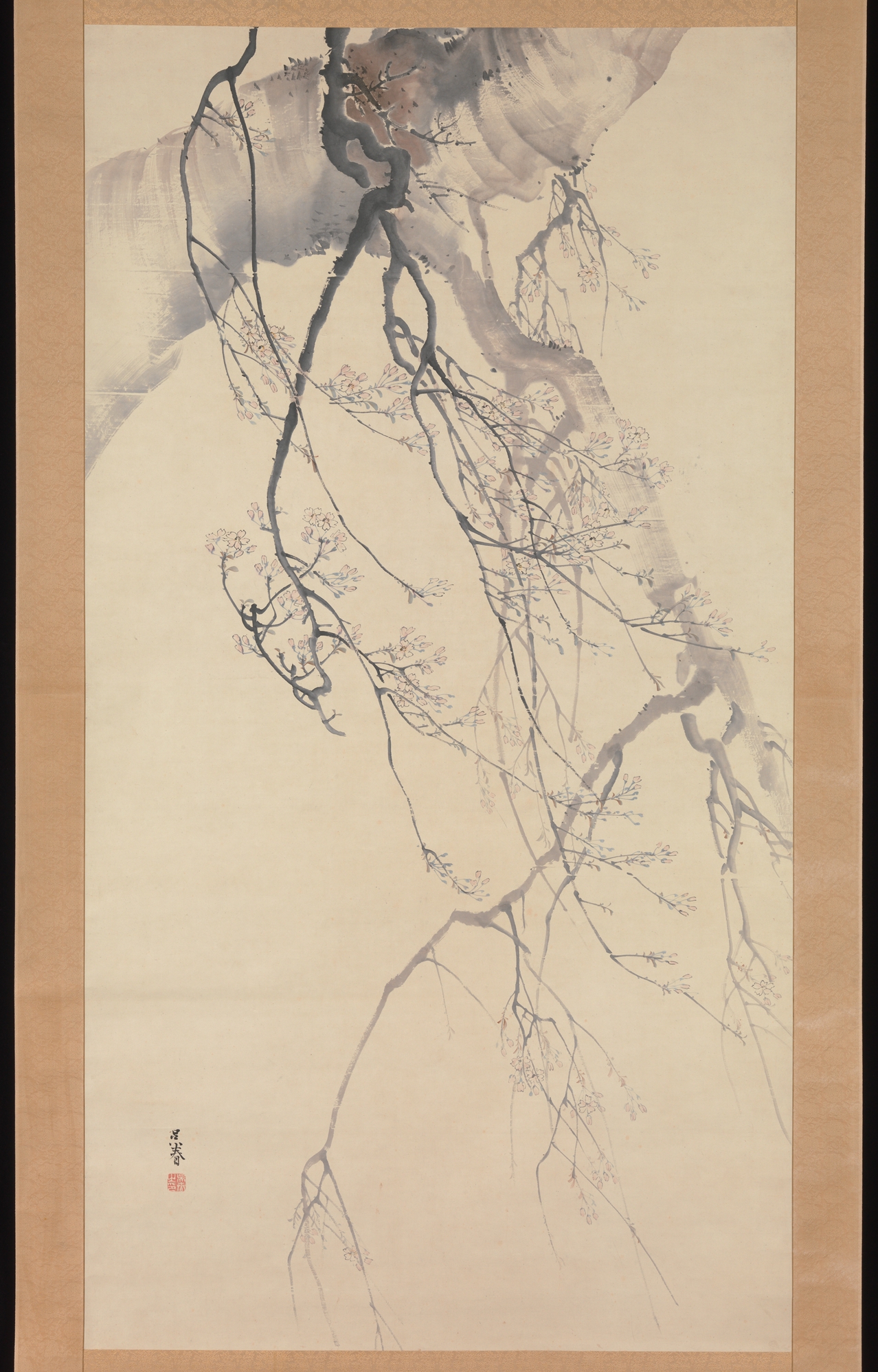
Cherry Blossoms
桜花図
late 18th century
Hanging scroll; ink and color on paper
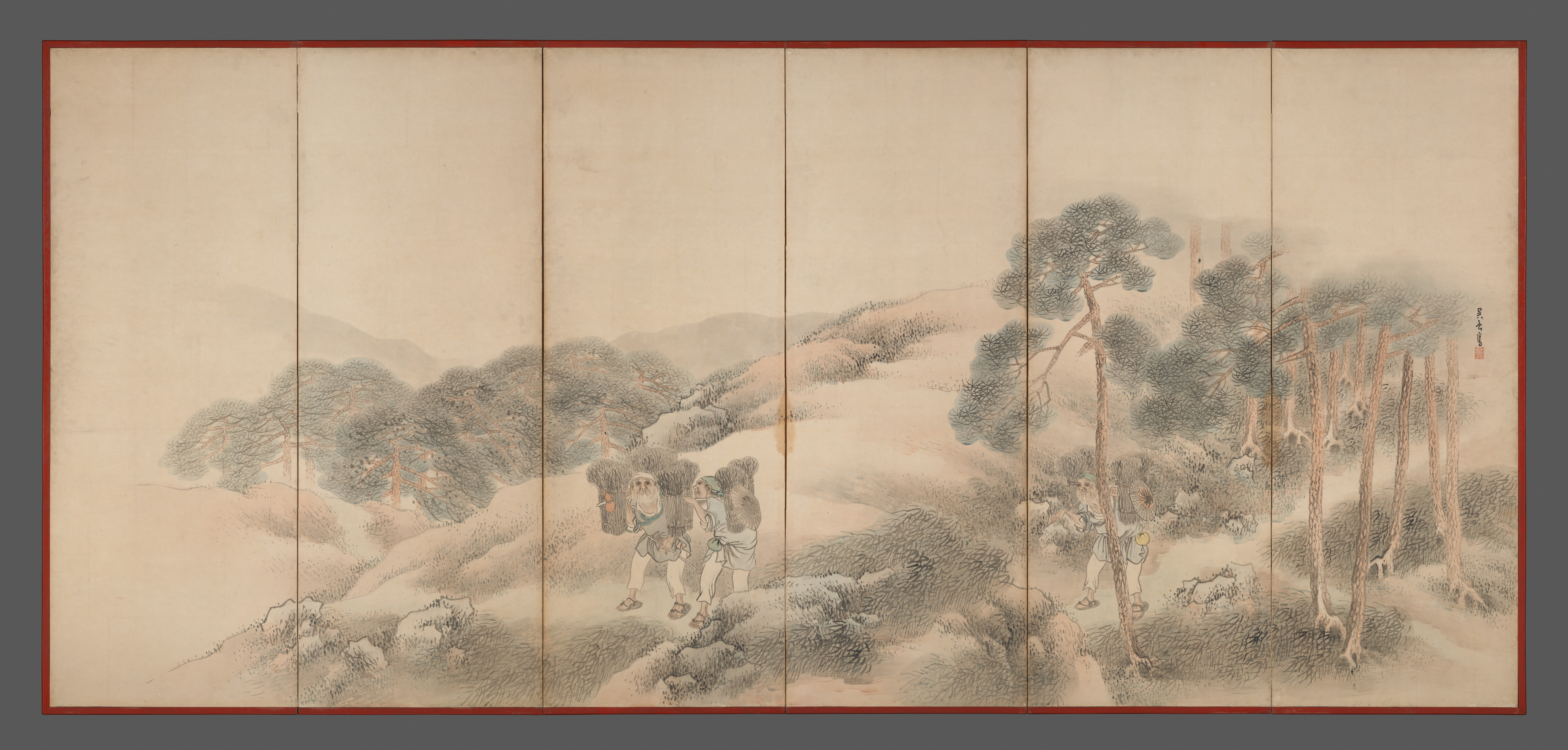
Woodcutters and Fishermen
山樵漁夫図屏風
ca. 1790–95
Pair of six-panel folding screens; ink and color on paper
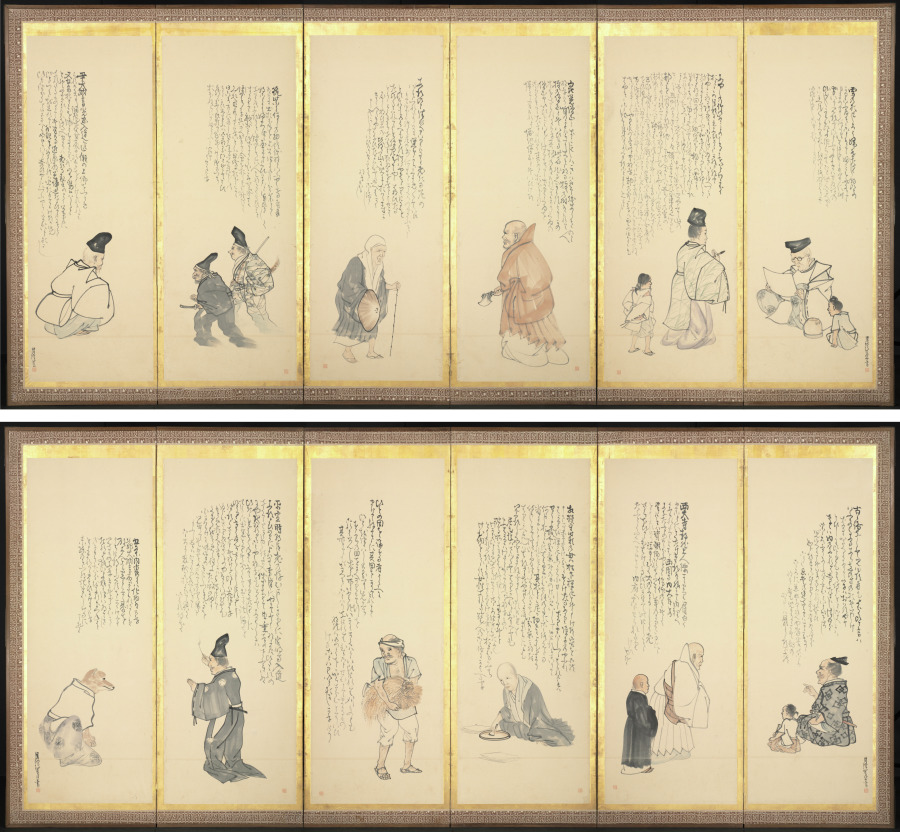
Scenes from Essays in Idleness (Tsurezuregusa)
徒然草図屏風
late 1700s–early 1800s
Pair of six-panel folding screens; ink and color on paper
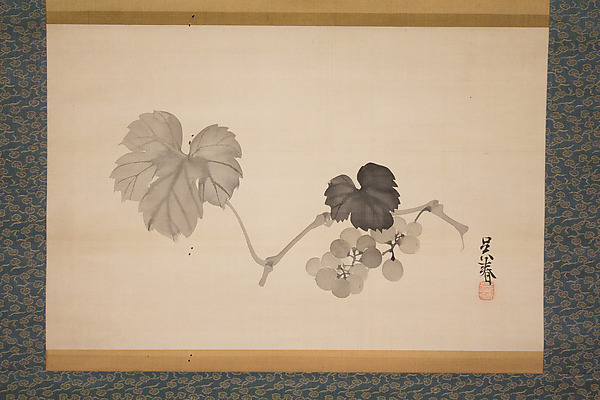
Grapevine
葡萄図
after 1790
Hanging scroll; ink on silk

Shōki the Demon Queller
鍾馗図
late 18th century
Hanging scroll; ink and color on paper
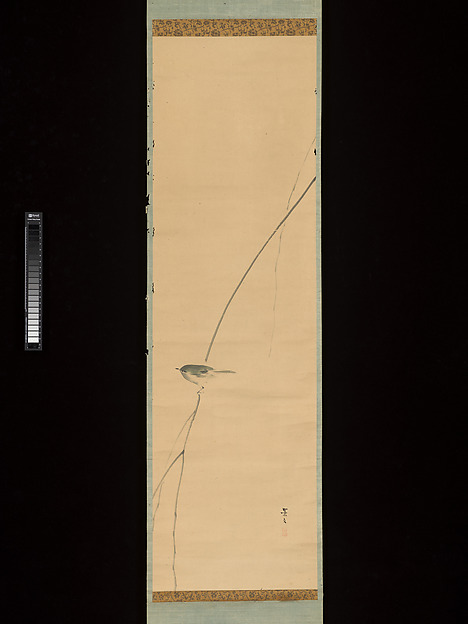
Nightingale on Willow Branch
柳に鶯図
Edo period
Hanging scroll; ink and color on paper
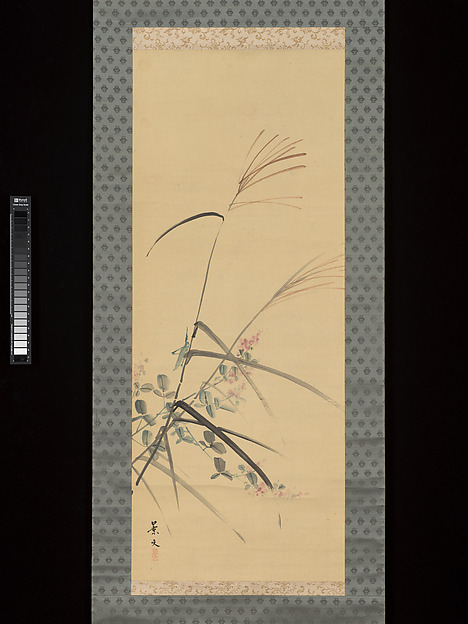
Bush Clover, Grass and Cricket
萩草虫図
Edo period
Hanging scroll; color on paper
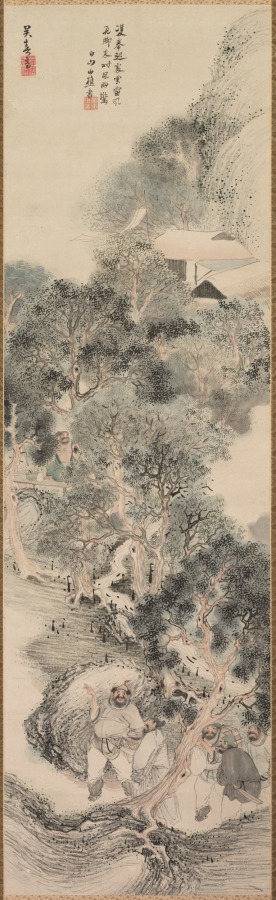
Happy Forest, from Water Margin
水滸伝快活林図
late 1700s
Hanging scroll; ink and color on paper