
Bush Clover, Grass and Cricket
萩草に蟋蟀図
- Date:
- early 19th century
- Medium:
- Hanging scroll; ink and color on silk
Description
Slender curving grass blades sweep upward from the lower left in dark, calligraphic ink strokes, their fine trailing tips fanning out against a plain, undefined ground. A small cricket clings to one stalk near the base, and a spray of bush clover with rounded leaflets and tiny blossoms grows low across the composition. The palette is muted and monochrome-toned overall, with the artist's signature and seal in the lower left corner; this hanging scroll in ink and color on silk by Matsumura Keibun is dated 1830 and titled *Bush Clover, Grass and Cricket*.
More Prints by Matsumura Keibun

Bird on a Branch
枝に小鳥図
Early–mid-19th century
Hanging scroll; ink and color on paper

Lotus in the Rain
雨中蓮図
1832
Hanging scroll; ink and color on silk

Tree Peonies and Chinese Poem on Peonies
牡丹図
ca. 1830s
Pair of hanging scrolls; ink and color on silk
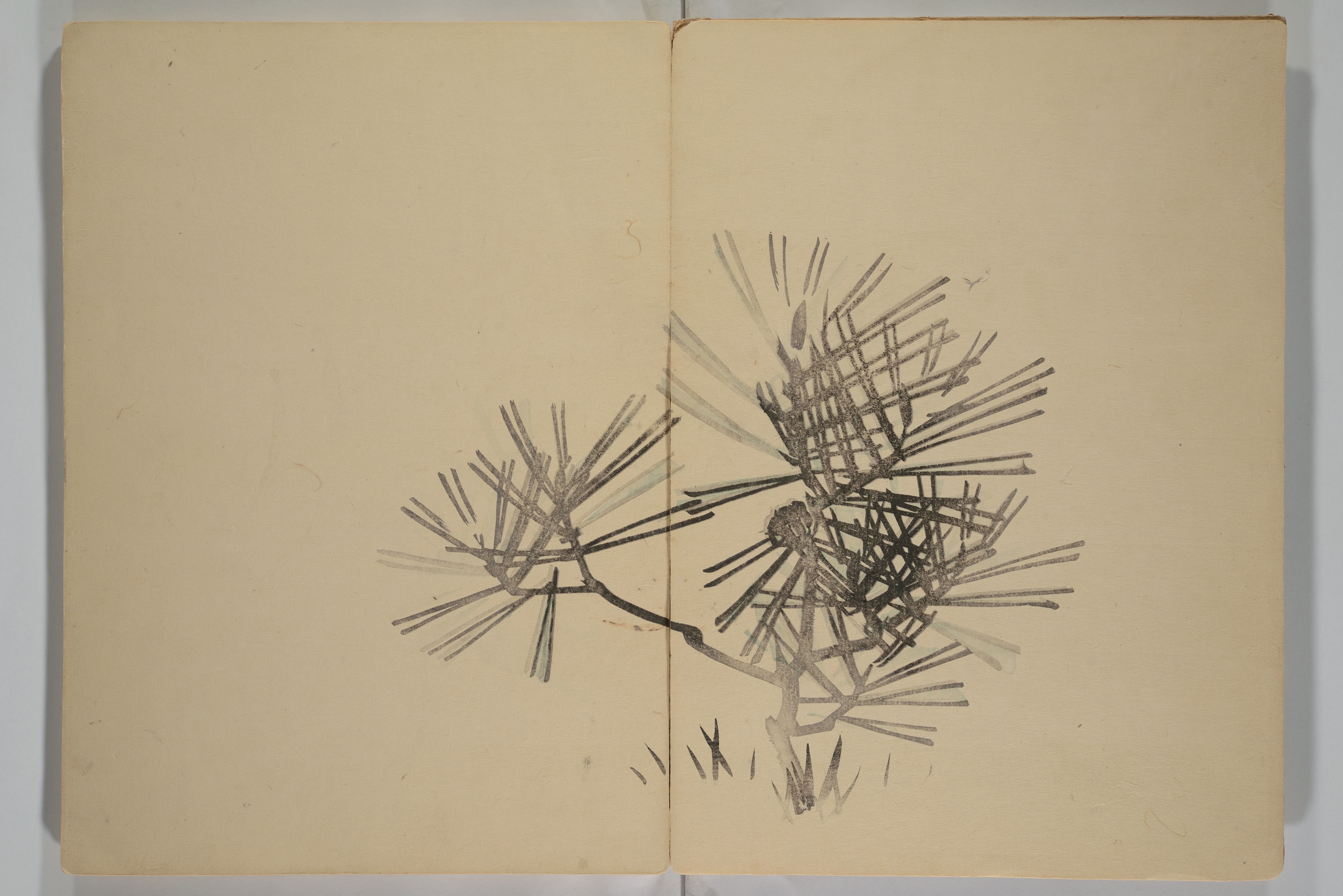
Kinkadō's Album of Drawings by Keibun (Keibun Kinka chō)
景文錦華帖
1898, seventh month (Meiji 31)
Woodblock-printed book (orihon, accordion-style); ink and color on paper
Frequently Asked Questions
Bush Clover, Grass and Cricket (萩草に蟋蟀図) was created by Matsumura Keibun (松村景文) in early 19th century.