
Lotus in the Rain
雨中蓮図
- Date:
- 1832
- Medium:
- Hanging scroll; ink and color on silk
Description
Lotus in the Rain is a hanging-scroll painting by Matsumura Keibun, dated 1832 and held by the Minneapolis Institute of Art (accession 2013.30.3). The lotus (hasu, ren) is one of the canonical flower subjects of East Asian painting: associated with Buddhist iconography (the lotus rising untainted from muddy water is a standard emblem of enlightenment in Mahāyāna doctrine), with summer in the seasonal painting cycle, and with the contemplative literati tradition that had grown up around the flower in both China and Japan. Keibun's treatment foregrounds the encounter between the flower and the weather: lotus leaves and blossoms are placed against an atmospheric ground rendered with the soft washes of ink that the Shijō school had developed for handling rain, mist, and other weather effects. The painting is signed and sealed in the painter's standard fifty-three-year-old maturity, when he was at the center of Kyoto bird-and-flower painting and was producing some of his most finished pictorial work. The composition's combination of close observation (the leaf veining, the angle of the flower head against the stem) with atmospheric ground (the rain falling through the empty ground around the plant) is a good example of how Keibun adapted the Maruyama school's shasei discipline to the softer, more emotionally charged subjects his elder brother had brought into Shijō practice from Yosa Buson.
More Prints by Matsumura Keibun

Bush Clover, Grass and Cricket
萩草に蟋蟀図
early 19th century
Hanging scroll; ink and color on silk

Bird on a Branch
枝に小鳥図
Early–mid-19th century
Hanging scroll; ink and color on paper

Tree Peonies and Chinese Poem on Peonies
牡丹図
ca. 1830s
Pair of hanging scrolls; ink and color on silk
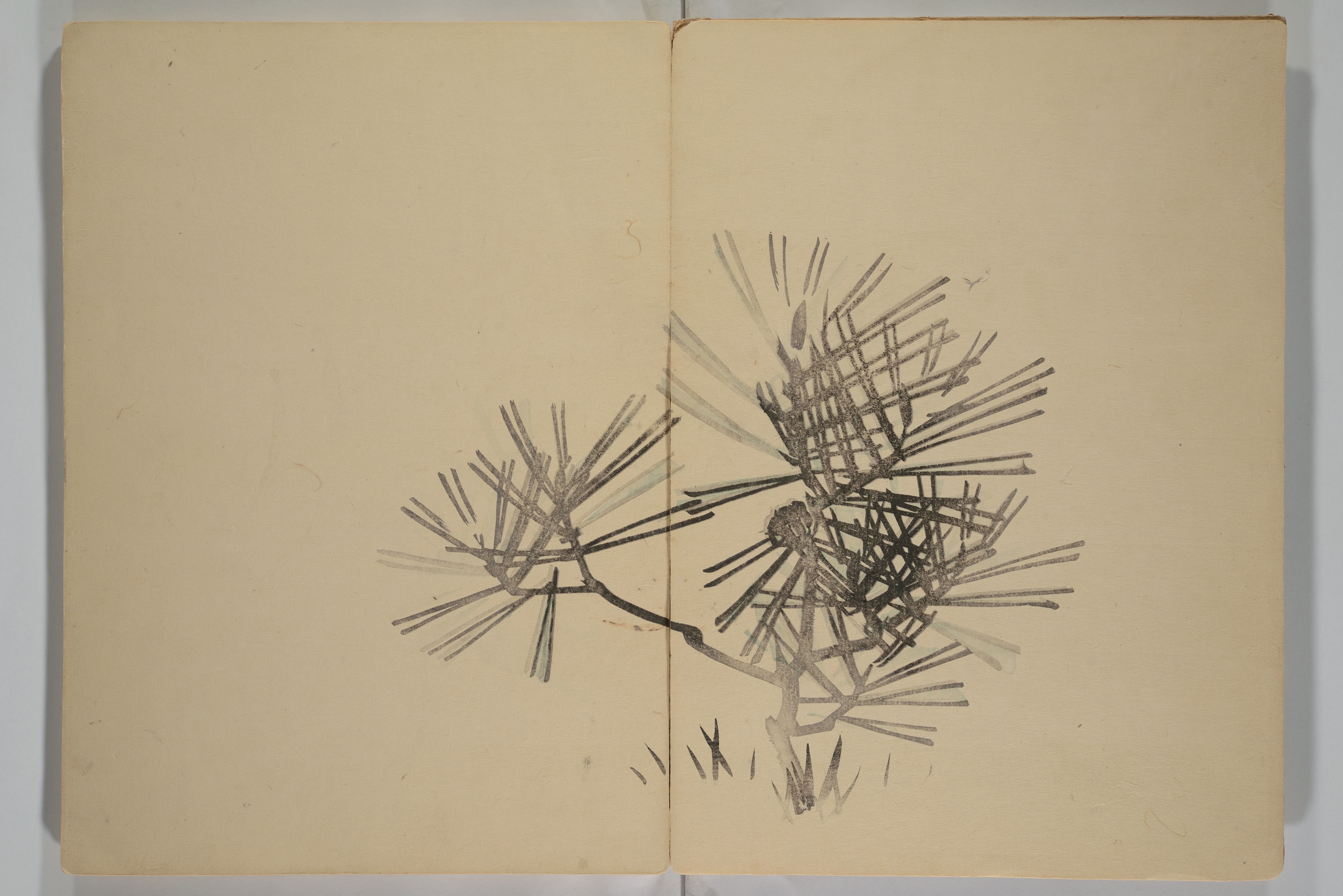
Kinkadō's Album of Drawings by Keibun (Keibun Kinka chō)
景文錦華帖
1898, seventh month (Meiji 31)
Woodblock-printed book (orihon, accordion-style); ink and color on paper
More Rain Prints

Rain Shower at Shо̄no, from the series Fifty-three Stations of the Tо̄kaidо̄ (Tо̄kaidо̄ gojusan tsugi)
1962
Woodblock print, ink and color on paper

Shōno: Driving Rain (Shōno hakuu), from the series Fifty-three Stations of the Tōkaidō (Tōkaidō gojūsan tsugi no uchi), also known as the First Tōkaidō or Great Tōkaidō
c. 1833-36
Woodblock print (nishiki-e); ink and color on paper

Omiya in Rain (Ame no Omiya)
Ame no Omiya
1930
Color woodblock print; oban

Evening Shower at Teradomari (Teradomari no yau), from the series "Souvenirs of Travel, Second Series (Tabi miyage dai nishu)"
Teradomari no yau
1921
Color woodblock print; oban
Frequently Asked Questions
Lotus in the Rain (雨中蓮図) was created by Matsumura Keibun (松村景文) in 1832.
Lotus in the Rain depicts rain.