
Byōdō-in Temple in Winter
冬の平等院図
by Mori Kansai
- Date:
- circa 1860–1870
- Medium:
- Six-panel screen; ink, gold wash, and color on paper
Description
Byōdō-in Temple in Winter is the winter companion to the Walters Art Museum's Mori Kansai pair of six-panel screens (accession 35.148), executed in ink, gold wash, and discrete color on paper between 1860 and 1870. The screen depicts the Phoenix Hall (Hōō-dō) of the Byōdō-in temple at Uji, just south of Kyoto — the eleventh-century Fujiwara family hall, dedicated to Amida Buddha, that is one of the most iconic surviving buildings of Heian-period Japan and the model for one face of the modern ten-yen coin. Kansai shows one wing and the central pavilion of the hall rising above bare winter trees in the temple's pond garden, with snow on the rooftops and the long horizontal sweep of the byōbu format giving the architecture an almost atmospheric distance. The combination of summer Kamigamo and winter Byōdō-in pairs the two great religious centers of the Kyoto and Uji region and creates a paired landscape statement about the long, sacralized cultural geography of the old capital. The screens, acquired by the Walters in 1989, are among the most important Kansai screens in an American museum collection and represent the painter at the height of his pre-Meiji landscape practice.
More Prints by Mori Kansai
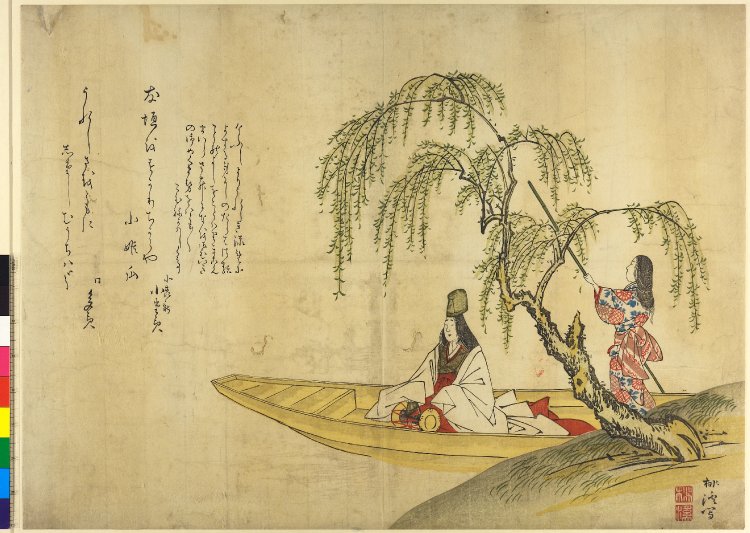
Asazuma Punting Beneath a Willow Tree (surimono diptych)
朝妻舟図摺物
mid-19th century
Woodblock print diptych (surimono); ink and color on paper with metallic pigments

Flowering Plum and Birds
梅花小禽図
1873
Album leaf; ink and color on silk
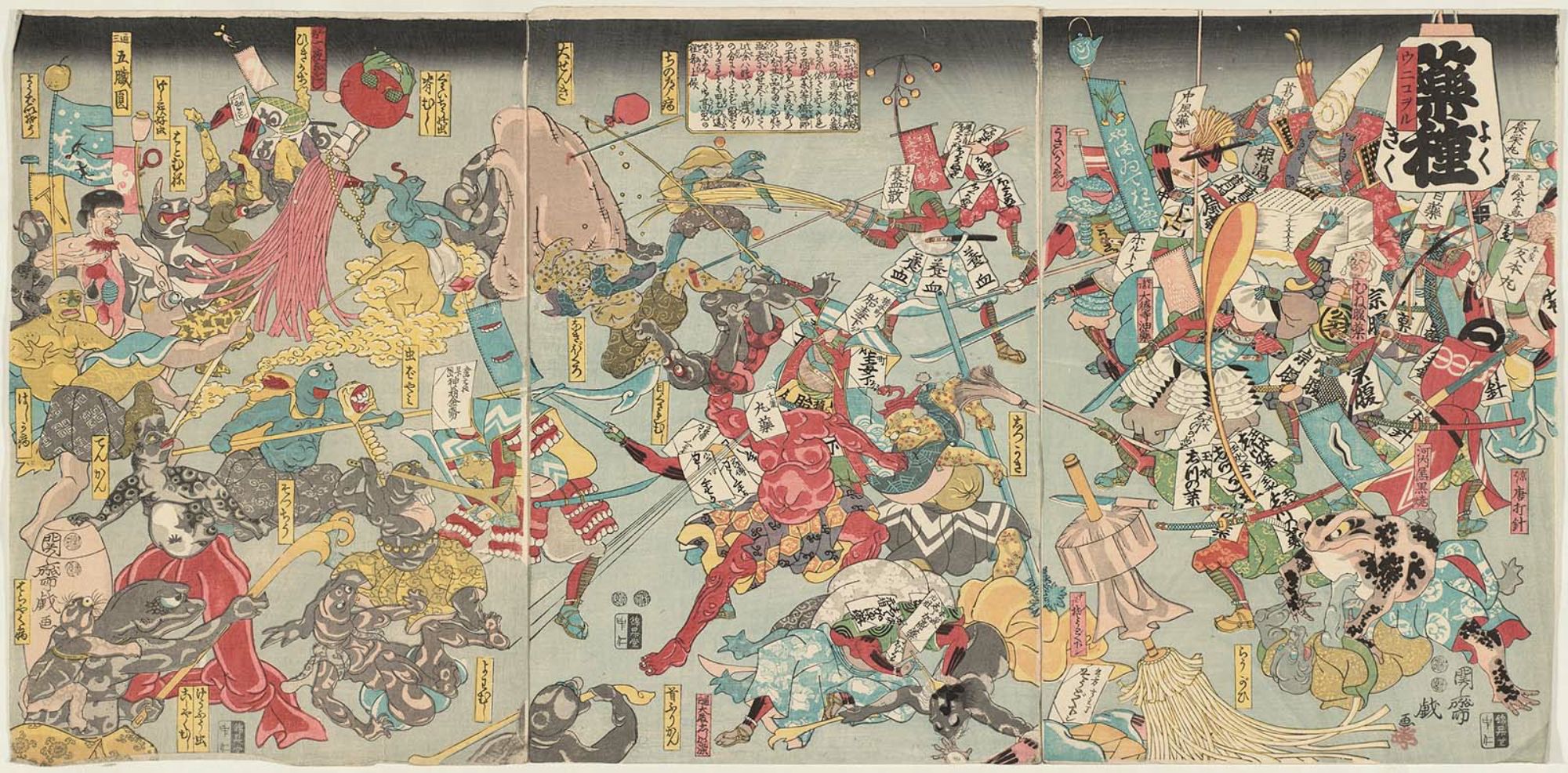
Effective Medicines (Yoku kiku yakushū)
能効藥種
circa 1847–1852
Woodblock-printed book illustration; ink and color on paper

Waves and Seashells
波貝図
1873
Album leaf; ink and color on silk
Frequently Asked Questions
Byōdō-in Temple in Winter (冬の平等院図) was created by Mori Kansai (森寛斎) in circa 1860–1870.