Biography
Mori Kansai (森寛斎, 1814–1894) was the last major master of the Mori school of Japanese painting and one of the central figures of mid-nineteenth-century Kyoto art, a painter whose career bridged the Bakumatsu and Meiji periods and helped carry the Maruyama-Shijō tradition of close natural observation into the institutional structures of Meiji Japan. He was born in Hagi, in the Chōshū domain (Nagato Province, modern Yamaguchi Prefecture), in 1814, the son of a samurai retainer of the Mōri clan.
In 1831 he went to Osaka to study painting under Mori Tetsuzan (1775–1841), a leading master of the Mori school. That school descended from Mori Sosen (1747–1821), the celebrated painter of monkeys, and was rooted in the naturalist manner of the Maruyama school of Maruyama Ōkyo (1733–1795) and the closely related Kishi school of Kishi Ganku (1749–1839) — traditions that combined close zoological observation with the disciplined practice of sketching from life (shasei). Under Tetsuzan the young painter was adopted into the Mori family and took the surname he carried thereafter, along with the art name Kansai by which he became known.
His preferred subjects reflected the inheritance of the Mori school: landscapes and seasonal scenery, animals — with monkeys and deer especially prominent — kachō-e bird-and-flower compositions, and figural, Buddhist, and historical or literary subjects. Alongside his painting he worked in the woodblock medium, designing surimono, the privately commissioned prints made for Kyoto and Osaka poetry circles; the British Museum holds examples, including a Cuckoo and Moon composition and a scene of an Asazuma figure poled in a boat beneath a willow, works that unite Mori-school natural drawing with the literary and kyōka traditions of the surimono genre.
During the turbulent Bakumatsu years Kansai moved between Kyoto and his native Hagi and sympathized with the imperial-restoration cause. The Meiji Restoration of 1868 found him already established as a senior Kyoto painter, and he became one of the leading figures of the city's painting world; after the death of Shiokawa Bunrin he stood at the center of the Jo'unsha (如雲社), an association of Kyoto painters. He was among the teachers when the Kyoto Prefectural School of Painting (Kyōto-fu Gagakkō) opened in 1880, and he exhibited at the national painting expositions of the early Meiji period, winning a second-class prize at the Second Naikoku Kangyō Hakurankai in 1881 and a silver award at the First Naikoku Kaiga Kyōshinkai in 1882.
Kansai died in 1894. His work is preserved today in museums in Japan, Europe, and the United States, among them the British Museum and the Walters Art Museum. Among his pupils was Yamamoto Shunkyo, who became a leading painter of the modern Kyoto nihonga movement — a quiet but consequential transmission of the Mori school's discipline of sustained natural observation into the modern Japanese painting tradition.
Key Facts
- Active Period
- 1814–1894
- Nationality
- 🇯🇵Japan
- Movement
- Meiji/Taishō Prints
- Works Indexed
- 21
Frequently Asked Questions
Mori Kansai (森寛斎, 1814–1894) was the last major master of the Mori school of Japanese painting and one of the central figures of mid-nineteenth-century Kyoto art, a painter whose career bridged the Bakumatsu and Meiji periods and helped carry the Maruyama-Shijō tradition of close natural observation into the institutional structures of Meiji Japan. He was born in Hagi, in the Chōshū domain (Nagato Province, modern Yamaguchi Prefecture), in 1814, the son of a samurai retainer of the Mōri clan.
Mori Kansai was active from 1814 to 1894. They were associated with the Meiji/Taishō Prints movement.
Mori Kansai's work was shaped by the Meiji/Taishō Prints tradition in Japanese woodblock printmaking. Meiji/Taishō Prints: Meiji and Taishō era prints (1868–1926) bridge the transition from traditional ukiyo-e to the modern shin-hanga and sosaku-hanga movements.
Mori Kansai's prints frequently feature birds & flowers, moonlight, autumn foliage, winter, mount fuji, summer.
Original prints by Mori Kansai can be found in collections including British Museum (via ukiyo-e.org), Rhode Island School of Design Museum (via Wikimedia Commons), Museum of Fine Arts, Boston (via ukiyo-e.org), Rijksmuseum (via Wikimedia Commons).
Woodblock Prints by Mori Kansai (21)
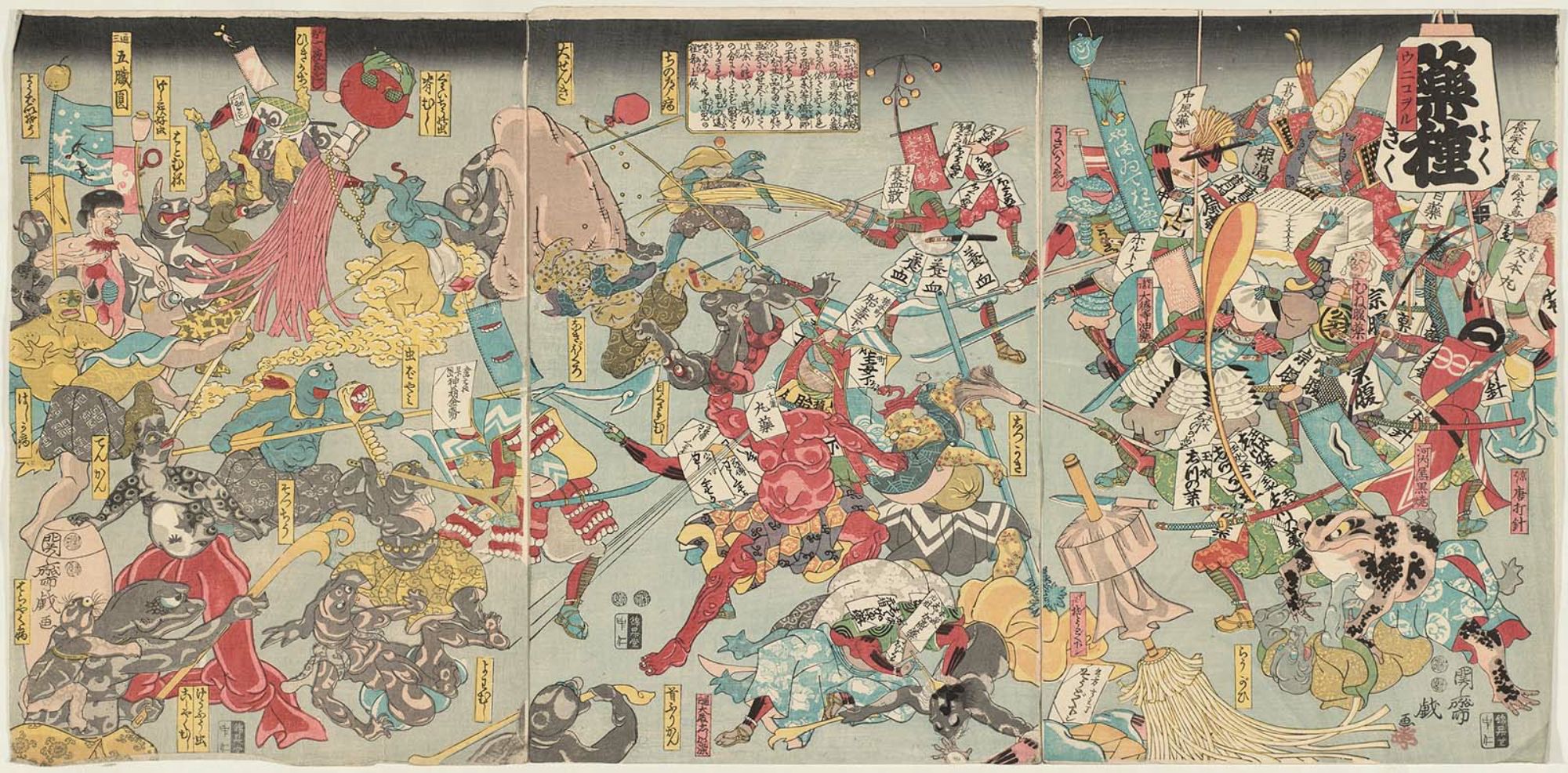
Effective Medicines (Yoku kiku yakushū)
能効藥種
circa 1847–1852
Woodblock-printed book illustration; ink and color on paper

Wooden Sliding Doors (Itado)
板戸絵
mid-19th century
Pair of sliding doors; pine, black Japanese lacquer, copper alloy, and mineral colors
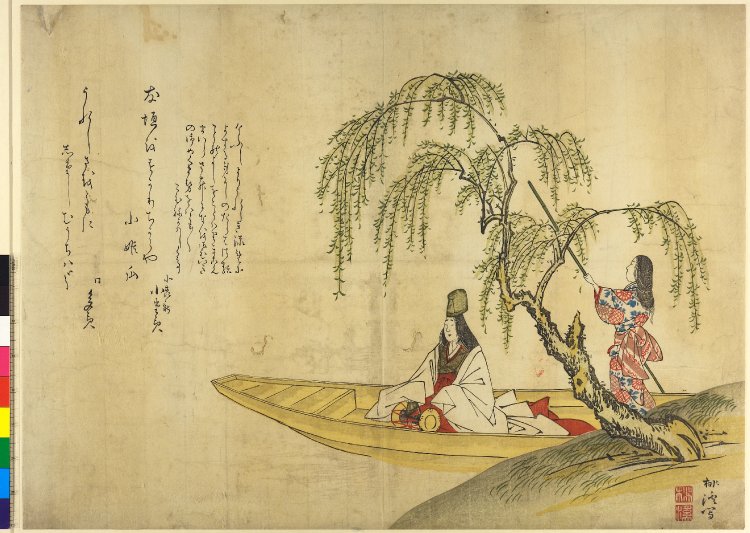
Asazuma Punting Beneath a Willow Tree (surimono diptych)
朝妻舟図摺物
mid-19th century
Woodblock print diptych (surimono); ink and color on paper with metallic pigments

Kamigamo Shrine in Summer
夏の上賀茂神社図
circa 1860–1870
Six-panel screen; ink, color, and gold on paper
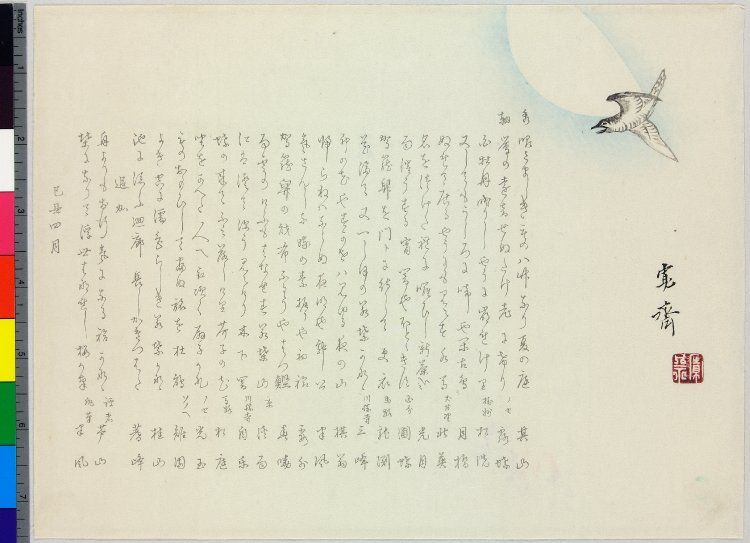
Cuckoo and Moon (surimono)
月下時鳥摺物
1865
Woodblock print (surimono); ink and color on paper with metallic pigments

Byōdō-in Temple in Winter
冬の平等院図
circa 1860–1870
Six-panel screen; ink, gold wash, and color on paper

Butterflies and Autumn Grasses
蝶秋草図
1873
Album leaf; ink and color on silk

Mt. Fuji with Cranes and Fishing Boats
富士に鶴漁舟図
1873
Album leaf; ink and color on silk

Warrior with Armor Turning to Face a Kneeling Woman Holding His Sword
鎧武者図
1873
Album leaf; ink and color on silk

Flowering Plum and Birds
梅花小禽図
1873
Album leaf; ink and color on silk

Waves and Seashells
波貝図
1873
Album leaf; ink and color on silk

Nuthatch on a Flowering Cherry Tree
桜花鳥図
1873
Album leaf; ink and color on silk

Eight Immortals
八仙人図
1873
Album leaf; ink and color on silk

Tanuki with Autumn Moon
秋月狸図
1873
Album leaf; ink and color on silk

Fruit and a Taihu Rock
太湖石果実図
1873
Album leaf; ink and color on silk

Two Deer by Snowy Pines
雪松双鹿図
late 19th century
Hanging scroll; ink and color on silk

Monkeys
猿図
late 19th century
Hanging scroll; ink and color on silk

Insect Procession
虫の行列図
late 19th century
Handscroll; ink and color on paper

Collaborative Painting of Sixteen Arhats
十六羅漢合作図
circa 1880
Hanging scroll; ink and color on satin (collaborative work)

Old Oak, Monkeys, and Deer
古柏猴鹿之図
1880
Hanging scroll; ink and color on silk

Brokaten uit de hoofdstad (Brocades of the Capital) — leporello album
京都錦繍帖
1891
Woodblock-printed leporello album by twenty Kyoto painters; ink and color on paper