
Collaborative Painting of Sixteen Arhats
十六羅漢合作図
by Mori Kansai
- Date:
- circa 1880
- Medium:
- Hanging scroll; ink and color on satin (collaborative work)
Description
Collaborative Painting of Sixteen Arhats is a hanging scroll in ink and color on satin, circa 1880, held by the Metropolitan Museum of Art (accession 2020.92). The work is a collaborative composition in which the lead artist Suzuki Hyakunen — Mori Kansai's contemporary on the founding faculty of the Kyoto Prefectural Painting School — assembled contributions from a roster of major late-Meiji Kyoto painters, including Tomioka Tessai, Kōno Bairei, Tanomura Chokunyū, and Mori Kansai himself, each adding a portion of the sixteen-arhat subject to the unified scroll. The arhats (rakan) are the sixteen enlightened disciples of the Buddha who, in East Asian Buddhist iconography, are charged with protecting the Dharma until the arrival of the future Buddha Maitreya; they appear individually or as a group in countless Japanese hanging scrolls, screens, and prints. Collaborative paintings of this kind were common in the late-Meiji Kyoto painting world, both as expressions of social solidarity among the senior painters and as ceremonial commissions, and the Met's example documents Kansai's centrality in the Kyoto painting community in his late career.
More Prints by Mori Kansai
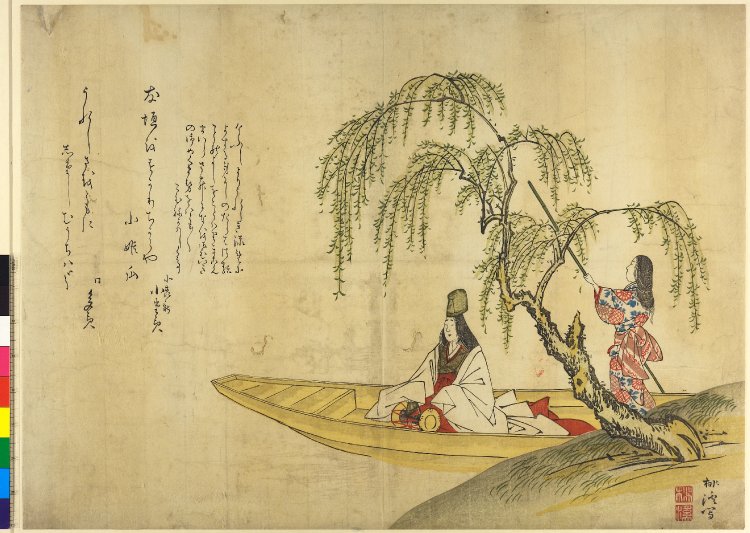
Asazuma Punting Beneath a Willow Tree (surimono diptych)
朝妻舟図摺物
mid-19th century
Woodblock print diptych (surimono); ink and color on paper with metallic pigments

Flowering Plum and Birds
梅花小禽図
1873
Album leaf; ink and color on silk
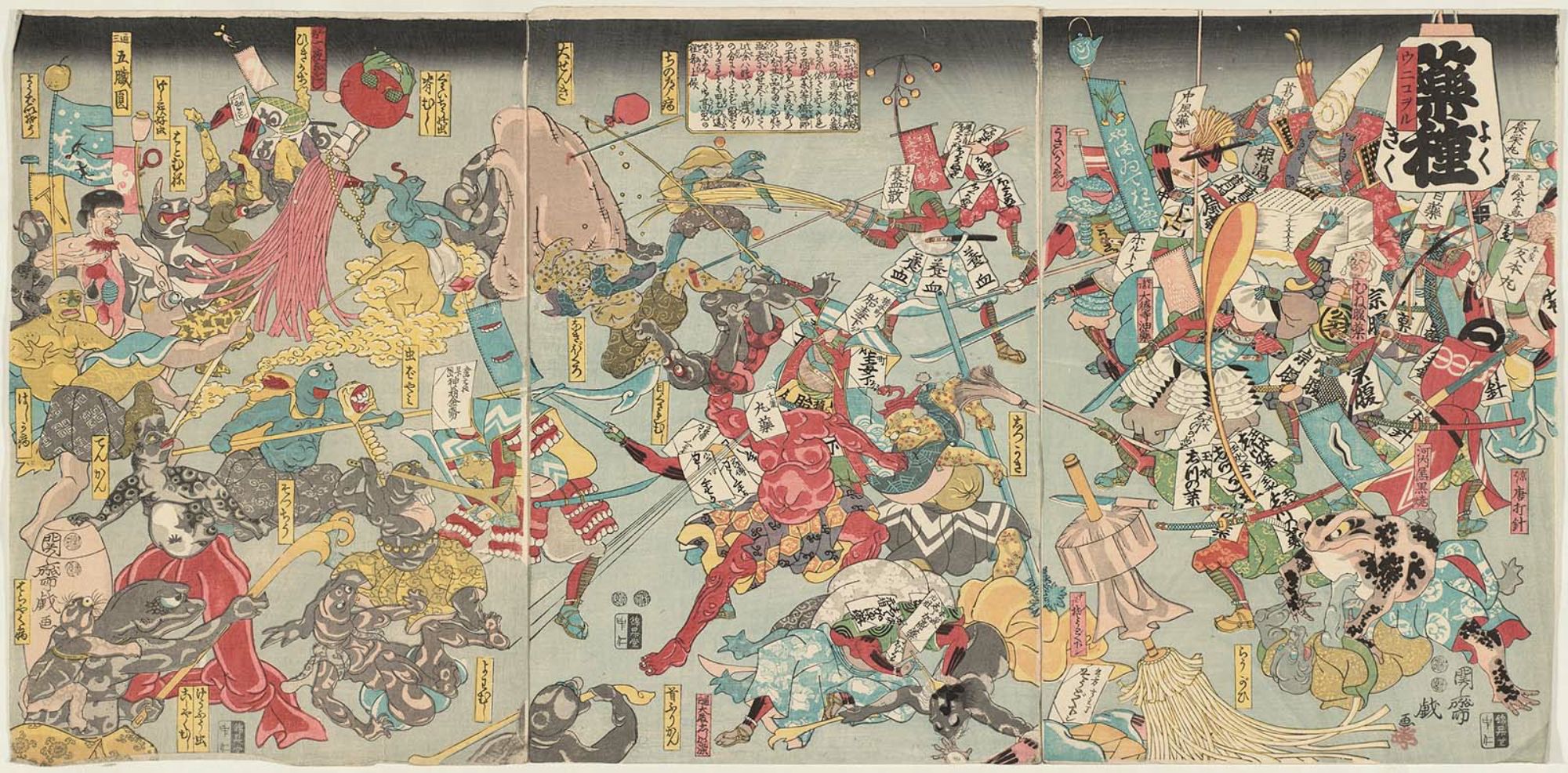
Effective Medicines (Yoku kiku yakushū)
能効藥種
circa 1847–1852
Woodblock-printed book illustration; ink and color on paper

Waves and Seashells
波貝図
1873
Album leaf; ink and color on silk
Frequently Asked Questions
Collaborative Painting of Sixteen Arhats (十六羅漢合作図) was created by Mori Kansai (森寛斎) in circa 1880.