
Monkeys
猿図
by Mori Kansai
- Date:
- late 19th century
- Medium:
- Hanging scroll; ink and color on silk
Description
Monkeys is a hanging-scroll painting by Mori Kansai in ink and color on silk, depicting a group of Japanese macaques (Nihon-zaru) in the kind of close-observed grouping that has been a signature of the Mori-Kishi school of Kyoto painting since the eighteenth century. The subject descends directly from Mori Sosen (1747-1821), Kansai's spiritual ancestor in the Mori line, whose monkey paintings — based on years of direct study of living and stuffed specimens — established monkeys as one of the school's defining subjects. Kansai's treatment of the fur in fine, dry-brush strokes, the careful articulation of the hands and feet, and the deployment of the group in a vertical scroll composition with ample negative space are characteristic of his Maruyama-Shijō-trained eye for animal anatomy. The Minneapolis Institute of Art's example (accession 2002.143.1) is one of several Kansai monkey paintings in major American collections and is among the works most often cited as evidence of the persistence of the Mori-Kishi monkey-painting tradition through the late nineteenth century. Signed Kansai with seal, it can be dated stylistically to the painter's mature period of the 1870s-1880s.
More Prints by Mori Kansai
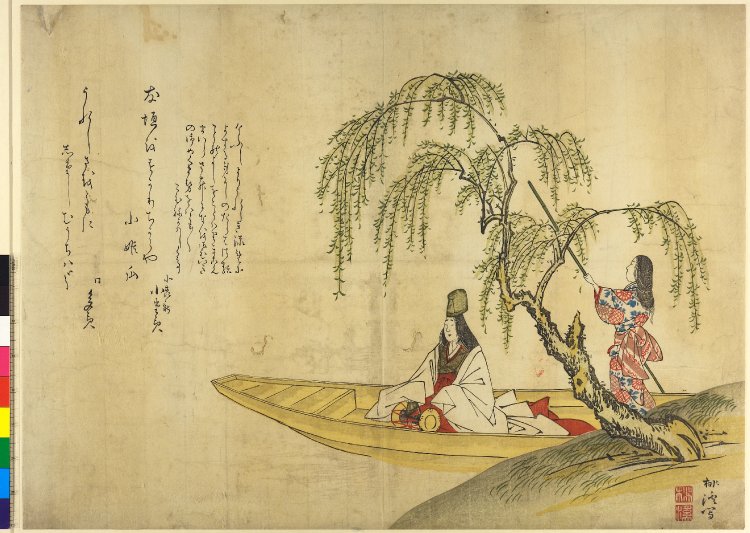
Asazuma Punting Beneath a Willow Tree (surimono diptych)
朝妻舟図摺物
mid-19th century
Woodblock print diptych (surimono); ink and color on paper with metallic pigments

Flowering Plum and Birds
梅花小禽図
1873
Album leaf; ink and color on silk
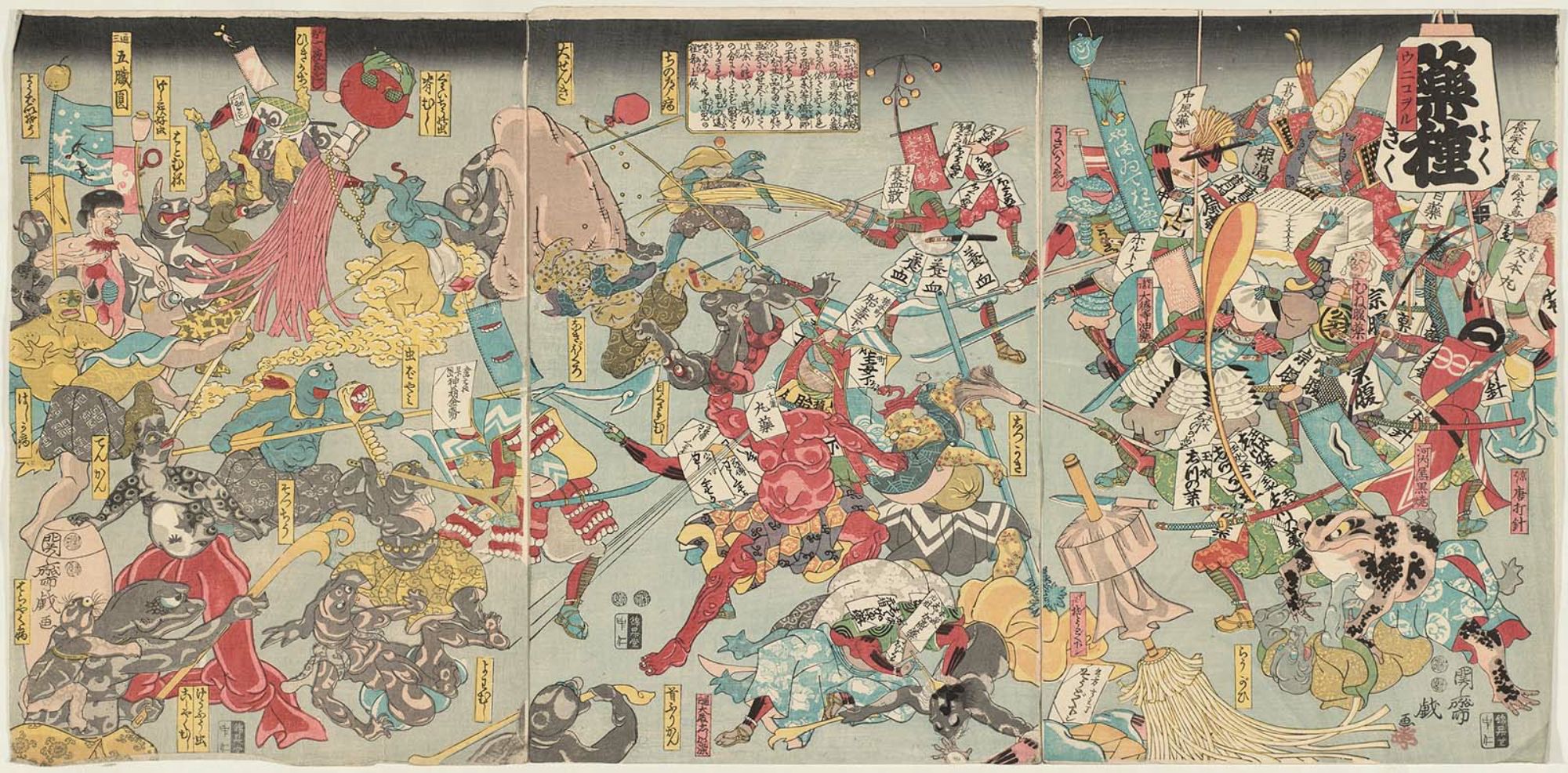
Effective Medicines (Yoku kiku yakushū)
能効藥種
circa 1847–1852
Woodblock-printed book illustration; ink and color on paper

Waves and Seashells
波貝図
1873
Album leaf; ink and color on silk
Frequently Asked Questions
Monkeys (猿図) was created by Mori Kansai (森寛斎) in late 19th century.