
Mt. Fuji with Cranes and Fishing Boats
富士に鶴漁舟図
by Mori Kansai
- Date:
- 1873
- Medium:
- Album leaf; ink and color on silk
Description
Mt. Fuji with Cranes and Fishing Boats is a leaf from the 1873 album of fifteen paintings by Mori Kansai held by the Rhode Island School of Design Museum (accession 2001.16J), executed in ink and color on silk. The composition combines three of the most powerful auspicious motifs in Japanese painting: Mount Fuji as the symbol of long life and steady form, cranes as the symbol of longevity and good fortune, and fishing boats as the emblem of the abundant sea and a peaceful working life. The convention of pairing Fuji with cranes and with sailing or fishing boats goes back at least to the seventeenth century in Japanese decorative painting and printmaking, and continued as a popular subject through the early twentieth century. Kansai's handling — the broad cone of Fuji in pale washes, the cranes flying in close paired formation across the foreground, the boats indicated as small graphic marks on the sea — places the leaf squarely in the kind of auspicious shōchikubai-adjacent painting that albums of this kind were designed to deliver. Signed and dated 1873.
More Prints by Mori Kansai
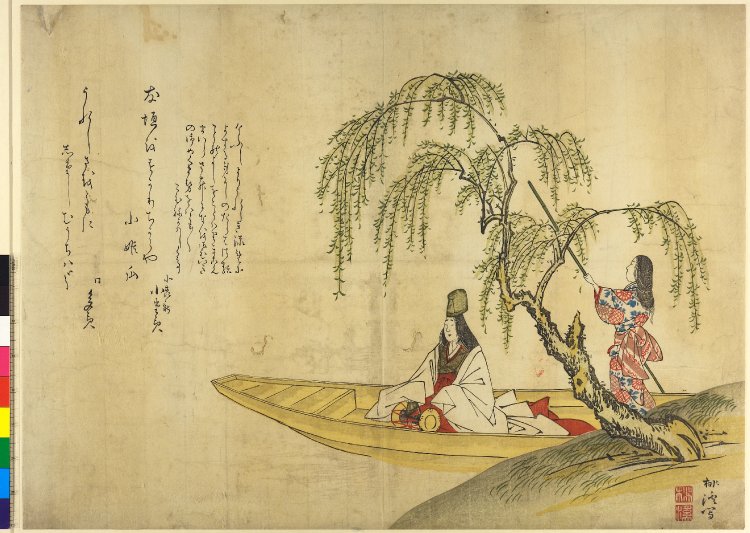
Asazuma Punting Beneath a Willow Tree (surimono diptych)
朝妻舟図摺物
mid-19th century
Woodblock print diptych (surimono); ink and color on paper with metallic pigments

Flowering Plum and Birds
梅花小禽図
1873
Album leaf; ink and color on silk
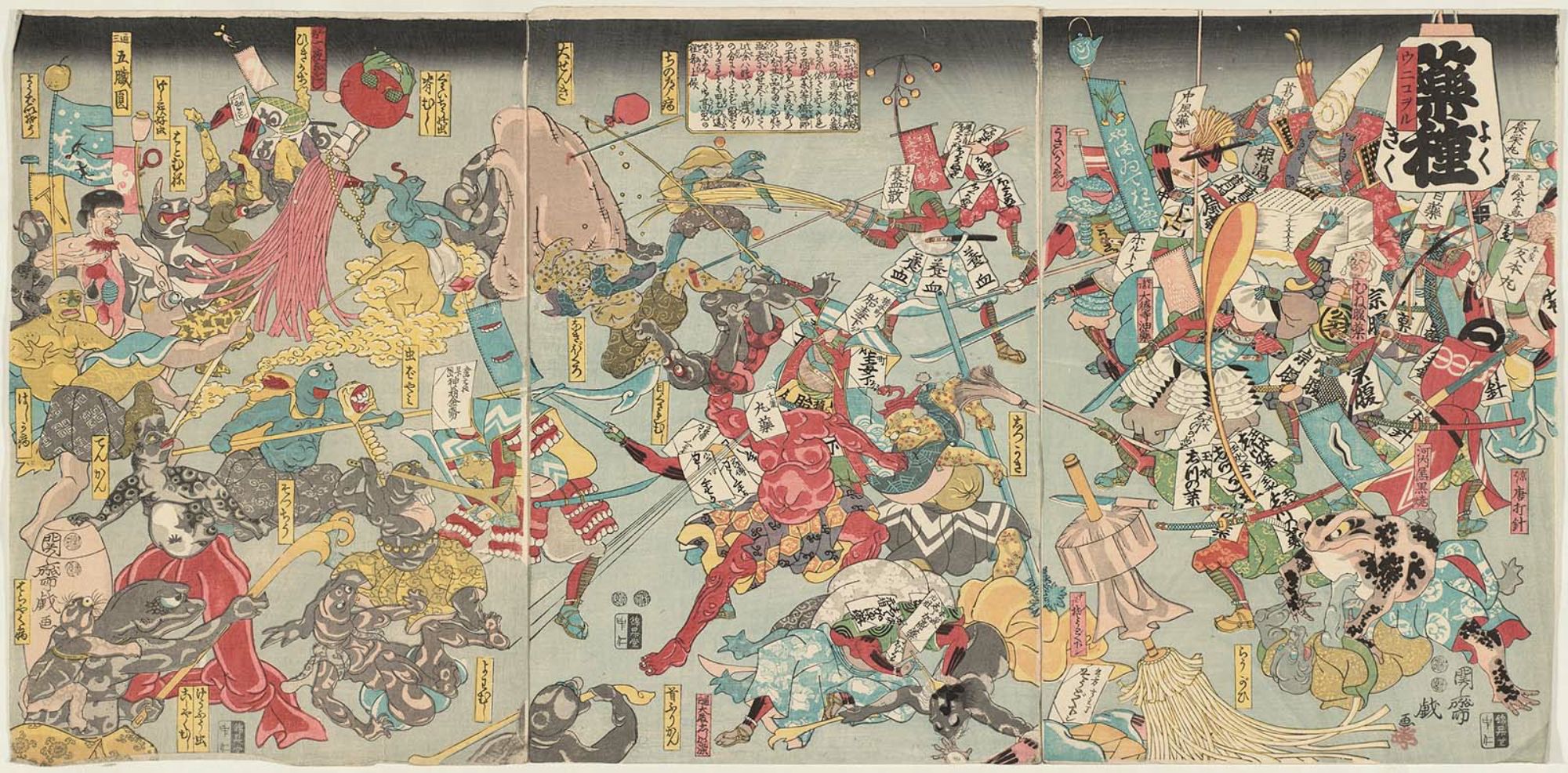
Effective Medicines (Yoku kiku yakushū)
能効藥種
circa 1847–1852
Woodblock-printed book illustration; ink and color on paper

Waves and Seashells
波貝図
1873
Album leaf; ink and color on silk
More Birds & Flowers Prints
Featured in Collections
Curated cross-cuts that include this print.
Frequently Asked Questions
Mt. Fuji with Cranes and Fishing Boats (富士に鶴漁舟図) was created by Mori Kansai (森寛斎) in 1873.
Mt. Fuji with Cranes and Fishing Boats depicts birds & flowers, fish, and mount fuji.