
Old Oak, Monkeys, and Deer
古柏猴鹿之図
by Mori Kansai
- Date:
- 1880
- Medium:
- Hanging scroll; ink and color on silk
Description
Old Oak, Monkeys, and Deer (古柏猴鹿之図, Kohaku kōrokuzu) is a hanging-scroll painting by Mori Kansai dated to 1880, executed in ink and color on silk and now held in the Museum of the Imperial Collections (Sannomaru Shōzōkan) in Tokyo, the institutional successor to the holdings of the Imperial Household Agency. The composition combines three of the painter's central subject specialties: the aged oak as a symbol of longevity, the monkey as the signature animal of the Mori-Kishi school descending from Mori Sosen, and the deer as the canonical animal of autumn poetic imagery. The grouping — monkeys clambering on or near the oak's twisted branches, deer at rest below — invokes the Buddhist symbolism of the saru, shika, and matsu (or in this case oak) combination that signified peaceful coexistence in the natural world. The painting's presence in the Imperial Collections marks Kansai's standing in the Meiji painting establishment, in which the imperial household acquired representative work by leading Kyoto and Tokyo painters as part of the broader effort to assert the dignity of Japanese painting alongside its growing engagement with the West.
More Prints by Mori Kansai
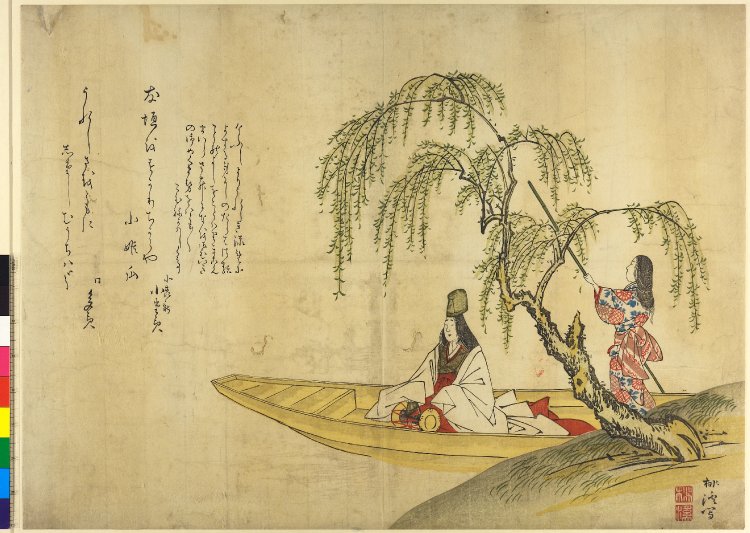
Asazuma Punting Beneath a Willow Tree (surimono diptych)
朝妻舟図摺物
mid-19th century
Woodblock print diptych (surimono); ink and color on paper with metallic pigments

Flowering Plum and Birds
梅花小禽図
1873
Album leaf; ink and color on silk
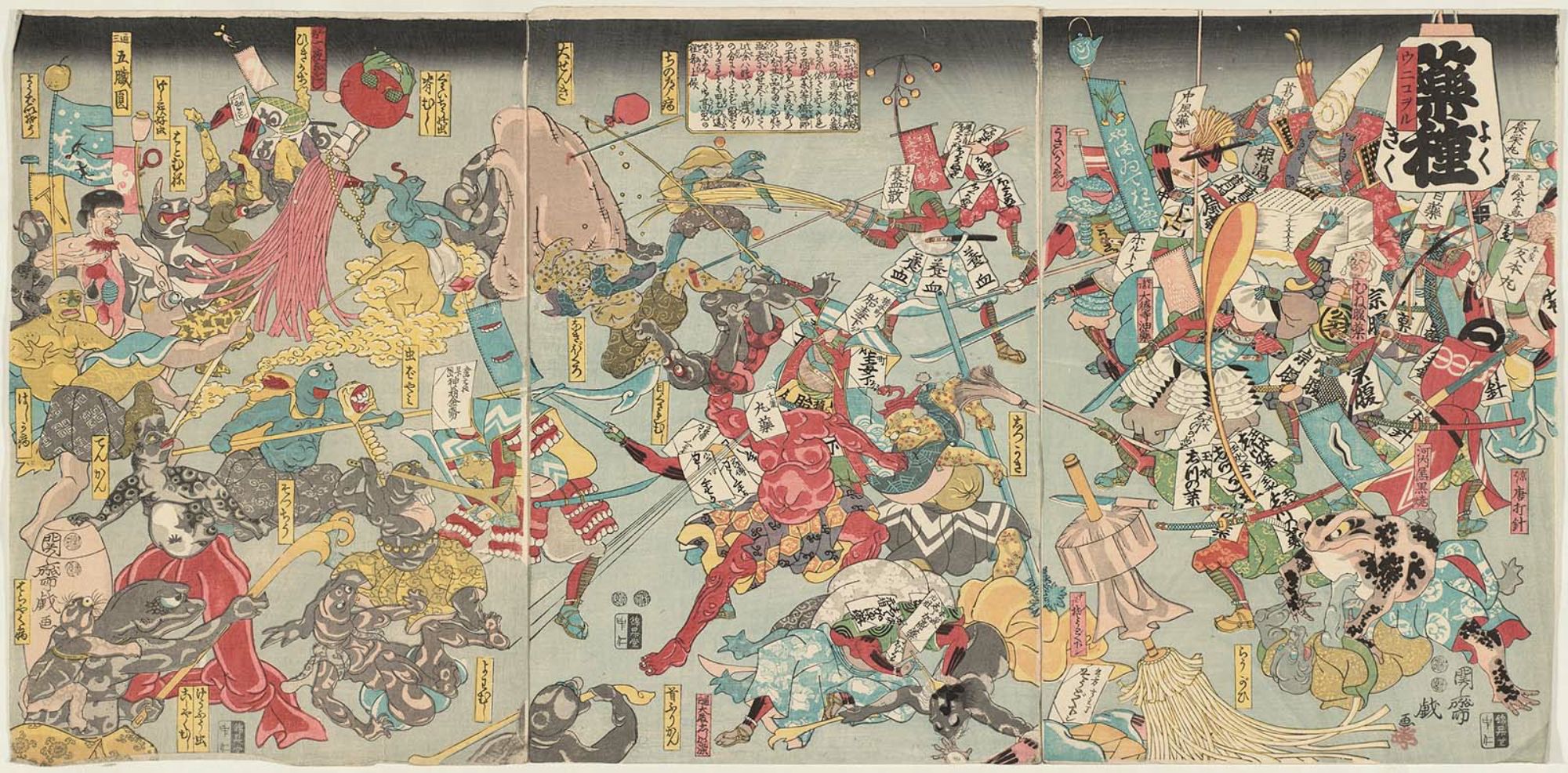
Effective Medicines (Yoku kiku yakushū)
能効藥種
circa 1847–1852
Woodblock-printed book illustration; ink and color on paper

Waves and Seashells
波貝図
1873
Album leaf; ink and color on silk
Frequently Asked Questions
Old Oak, Monkeys, and Deer (古柏猴鹿之図) was created by Mori Kansai (森寛斎) in 1880.