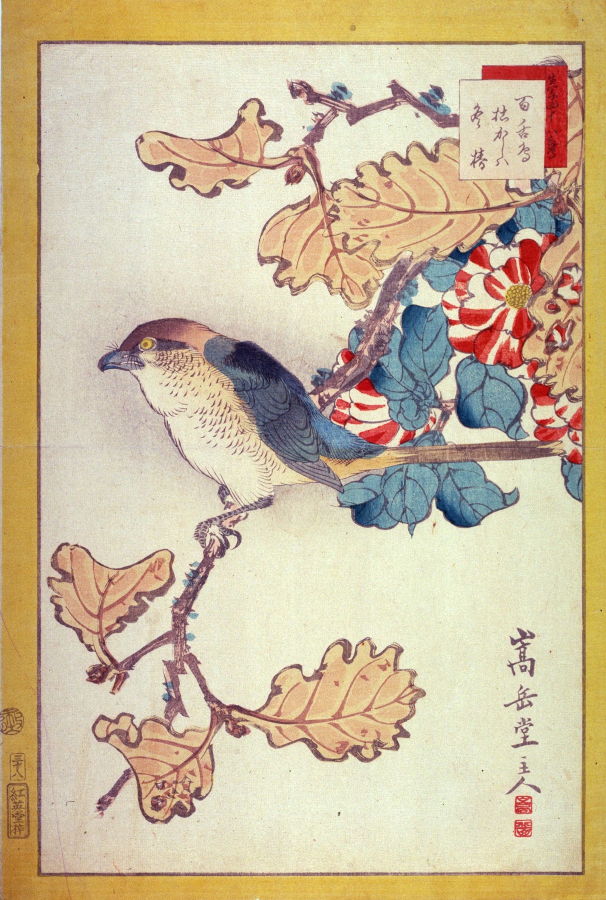
No. 38, Shrike, Withered Oak, Water Camellia (Mozu karegashiwa fuyutsubaki), from the series Forty-eight Birds Drawn from Life
百舌 枯柏 冬椿
- Date:
- 1859
- Medium:
- Color woodblock print
Description
No. 38, Shrike, Withered Oak, Water Camellia (Mozu karegashiwa fuyutsubaki) is among the most dramatically composed plates of Nakayama Sūgakudō's 1859 Forty-eight Birds Drawn from Life, pairing a shrike (mozu) — a small carnivorous songbird known in Japan for its habit of impaling prey on thorns — with a withered oak branch and a winter-flowering camellia (fuyutsubaki). The shrike was a late-autumn and winter motif in the kachō-e tradition, prized for the contrast between its small size and its predatory habit, and the withered oak adds the early-winter note of leafless branches without going as far as the snow-bound imagery of true midwinter plates. Camellia in winter, by contrast, signals endurance and the slow approach of spring. Sūgakudō's drawing of the shrike, with its hooked beak and upright posture on a vertical branch, depends on the close zoological observation his series claimed in its programmatic Ikiutsushi title; the Achenbach Foundation impression (FAMSF 1963.30.5552) preserves the careful Kōeidō printing of the original 1859 issue.
More Prints by Nakayama Sūgakudō
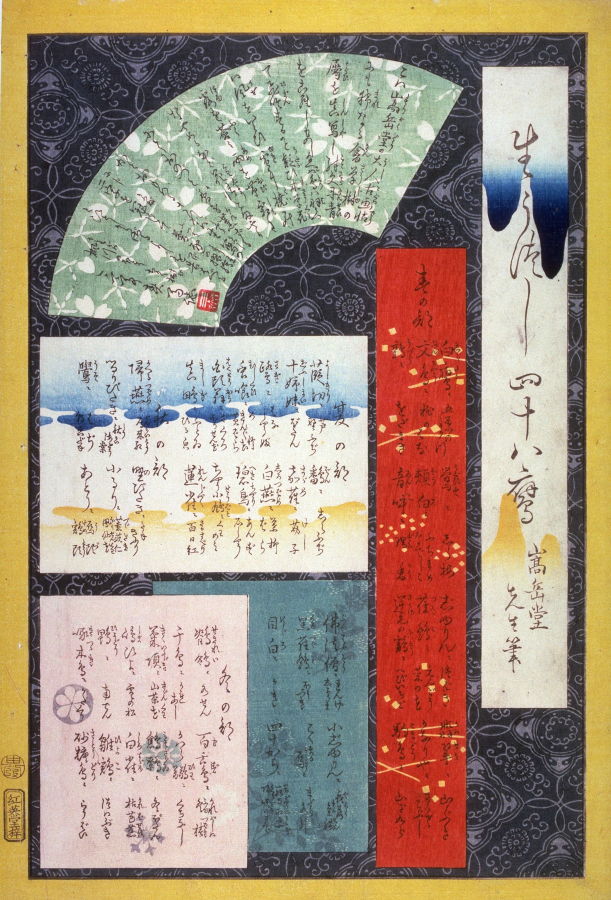
Title page, from the series Forty-eight Birds Drawn from Life (Ikiutsushi yonjuhachiyo)
生写四十八鷹
1859–60
Color woodblock print
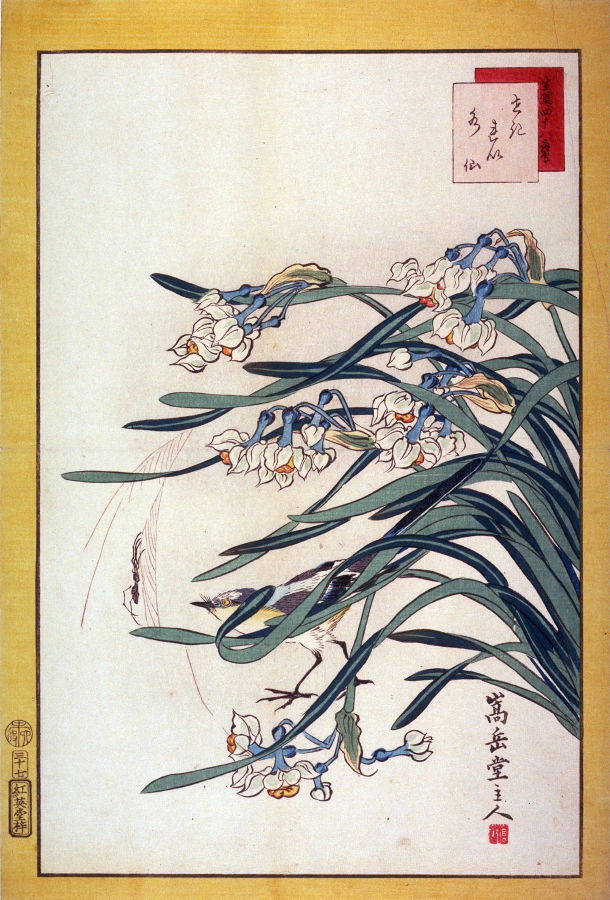
Wagtail and Narcissus (Sekirei suisen), No. 23 from the series Forty-eight Birds Drawn from Life
鶺鴒 水仙
1859
Color woodblock print
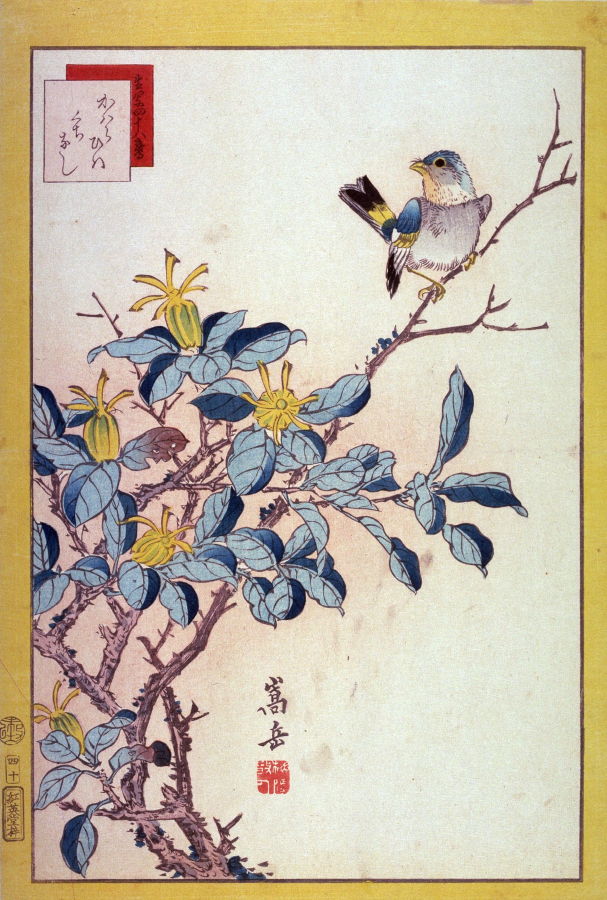
River Sparrow and Kuchinashi Flowers (Kawara hiwa kuchinashi), No. 40 from the series Forty-eight Birds Drawn from Life
河原鶸 梔子
1859
Color woodblock print
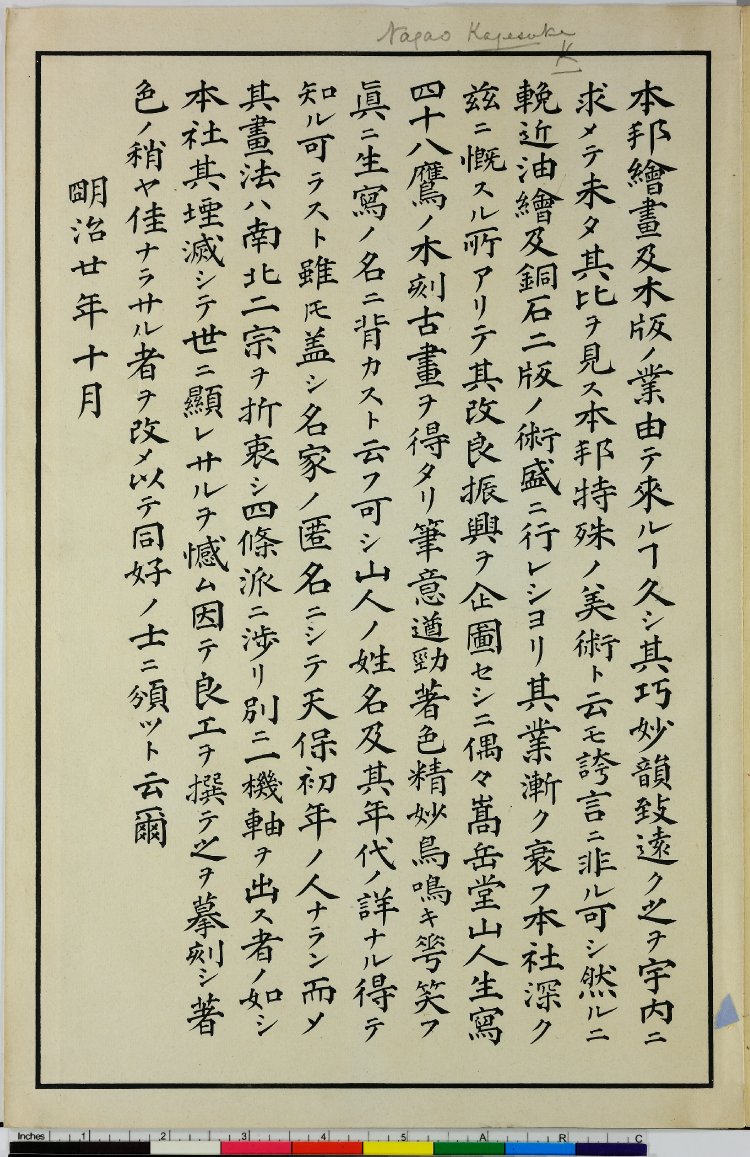
Shasei yonju-hachi taka gajo (Lifelike Drawings of 48 Kinds of Hawk)
写生四十八鷹画帖
1859 (later edition with French/English colophon)
Album of color woodblock prints
Frequently Asked Questions
No. 38, Shrike, Withered Oak, Water Camellia (Mozu karegashiwa fuyutsubaki), from the series Forty-eight Birds Drawn from Life (百舌 枯柏 冬椿) was created by Nakayama Sūgakudō (中山嵩岳堂) in 1859.