Biography
Nakayama Sūgakudō (中山嵩岳堂, active c. 1850–c. 1861) was a late-Edo ukiyo-e print designer who specialized almost exclusively in kachō-e (bird-and-flower prints) and whose single most celebrated achievement, the 1859 series Shō utsushi yonjūhachi taka (Forty-eight Hawks Drawn from Life, also rendered as Forty-eight Birds Drawn from Life), stands among the most ambitious bird-and-flower series of the Bakumatsu period. Comparatively little secure biographical information about Sūgakudō survives in the standard Edo print-artist genealogies, and museum catalogues consistently describe him as 'active c. 1850–c. 1860,' without firm birth or death dates. He worked in Edo (modern Tokyo), is identified as a pupil of Utagawa Hiroshige I (1797–1858), and is associated with the broader circle of Hiroshige's followers who took up the master's late-career interest in floral and natural-history subjects, following Hiroshige's own celebrated bird-and-flower prints of the 1840s and 1850s.
Sūgakudō's reputation rests almost entirely on the Forty-eight Hawks series, issued by the Edo publisher Tsutaya Kichizō under the imprint Kōeidō and dated to Ansei 6 (1859) on most surviving impressions. The series is structured as a sustained natural-history compendium, each plate pairing a specific bird species — songbirds, hawks, falcons, plovers, sparrows, wagtails, finches, snipes, shrikes, kingfishers, parakeets, roosters — with a corresponding seasonal plant, in a vertical chūban format. The word Ikiutsushi (生写) in the series' titles literally means 'copying from life' or 'drawing from the living model' and signals its programmatic claim to naturalistic observation, distinguishing it from the more decorative kachō-e of the earlier Edo print tradition. Western museum cataloguers have sometimes translated the title with the word 'hawks' — as with the Museum of Fine Arts, Boston's Forty-eight Hawks Drawn from Life — reflecting an older nineteenth-century reading; it is also rendered as Forty-eight Birds Drawn from Life, since the series covers a wide ornithological range and many of the plates depict songbirds and shorebirds rather than raptors.
The series circulated widely both as individual prints and in album form. The British Museum holds a bound album of the prints with preface and colophon printed in Japanese, French, and English — a reissue produced for the Western market in which Sūgakudō's designs were repackaged as a kind of natural-history reference work, illustrating the rapid international circulation of his bird-and-flower images after the opening of Japan to Western trade in 1859. Individual plates from the series entered Western museum collections through the great donations of Japanese art assembled in the late nineteenth and early twentieth centuries; the Museum of Fine Arts, Boston holds a substantial number of plates, and impressions are held by many other major public collections of Japanese art in North America and Europe. The series is consistently cited as one of the high points of late-Edo kachō-e printmaking and as evidence that the Hiroshige tradition of bird-and-flower observation continued at a high technical level in the years immediately preceding the Meiji Restoration.
Sūgakudō's other documented project is a second bird-and-flower series, Birds and Flowers of the Four Seasons, issued about 1861 and likewise represented in major museum collections, including the British Museum. Plates from this series carry a similar pairing logic — a single bird, observed with attention to its plumage and posture, placed against a flowering plant of the appropriate season — but tend toward a more painterly, less encyclopedic mode than the strictly numbered Forty-eight Hawks. After this body of work Sūgakudō effectively disappears from the historical record; no later prints, paintings, or biographical mentions have been securely attributed to him, and most scholars treat his active career as a relatively brief window extending from about 1850 into the early 1860s. Despite his brief and sparsely documented career, Sūgakudō occupies a stable place in the late-Edo kachō-e canon: his prints are reproduced in standard surveys of Japanese bird-and-flower printmaking, are collected by museums of Japanese art in Europe, North America, and Japan, and are regularly cited among the most technically accomplished naturalist bird-and-flower prints of the immediate pre-Meiji moment, sitting between Hiroshige's mid-century kachō-e and the great Meiji Kyoto albums of Kōno Bairei and Imao Keinen that would follow in the 1880s and 1890s.
Key Facts
- Nationality
- 🇯🇵Japan
- Movement
- Ukiyo-e
- Subjects
- Birds & Flowers
- Works Indexed
- 9
Frequently Asked Questions
Nakayama Sūgakudō (中山嵩岳堂, active c. 1850–c. 1861) was a late-Edo ukiyo-e print designer who specialized almost exclusively in kachō-e (bird-and-flower prints) and whose single most celebrated achievement, the 1859 series Shō utsushi yonjūhachi taka (Forty-eight Hawks Drawn from Life, also rendered as Forty-eight Birds Drawn from Life), stands among the most ambitious bird-and-flower series of the Bakumatsu period. Comparatively little secure biographical information about Sūgakudō survives in the standard Edo print-artist genealogies, and museum catalogues consistently describe him as 'active c. 1850–c. 1860,' without firm birth or death dates. He worked in Edo (modern Tokyo), is identified as a pupil of Utagawa Hiroshige I (1797–1858), and is associated with the broader circle of Hiroshige's followers who took up the master's late-career interest in floral and natural-history subjects, following Hiroshige's own celebrated bird-and-flower prints of the 1840s and 1850s.
Nakayama Sūgakudō's work was shaped by the Ukiyo-e tradition in Japanese woodblock printmaking. Ukiyo-e: ## What is ukiyo-e? Ukiyo-e ([浮世絵](/glossary/ukiyo-e)) — literally "pictures of the floating world" — is the Edo-period Japanese print and painting tradition that flourished from roughly 1660 to 1868, depicting the pleasures of urban life in Edo (modern Tokyo): courtesans, kabuki actors, sumo wrestlers, famous landscapes, and seasonal beauties.
Nakayama Sūgakudō's prints frequently feature birds & flowers.
Original prints by Nakayama Sūgakudō can be found in collections including Fine Arts Museums of San Francisco (Achenbach Foundation), British Museum, Honolulu Museum of Art, Museum of Fine Arts, Boston.
Woodblock Prints by Nakayama Sūgakudō (9)
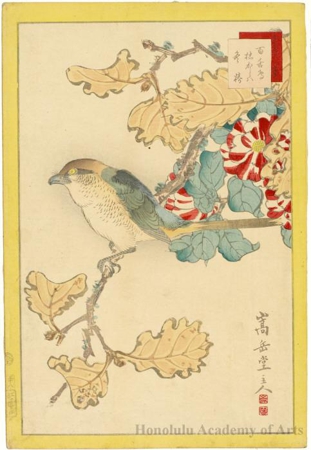
Butcherbird, Oak Tree and Camellia
1859
Color woodblock print
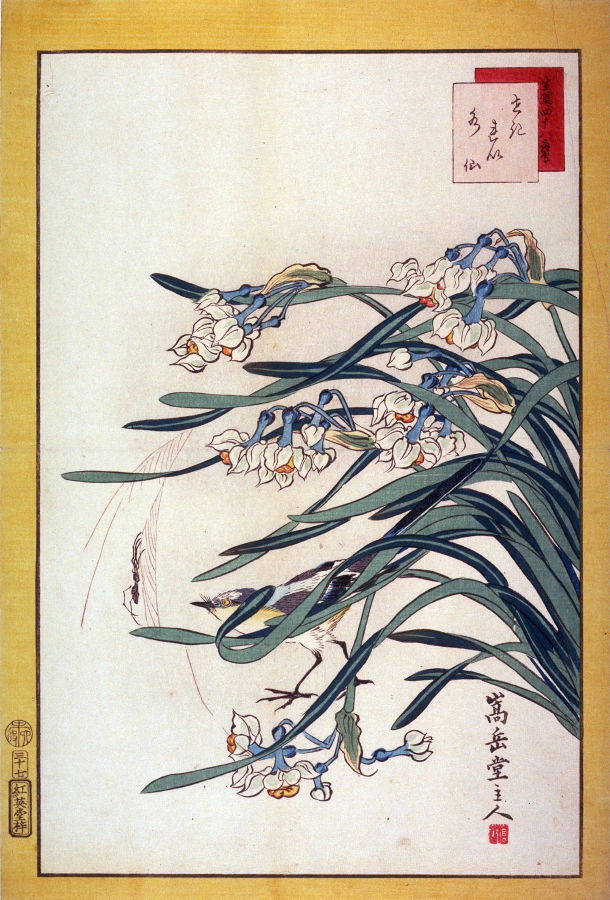
Wagtail and Narcissus (Sekirei suisen), No. 23 from the series Forty-eight Birds Drawn from Life
鶺鴒 水仙
1859
Color woodblock print
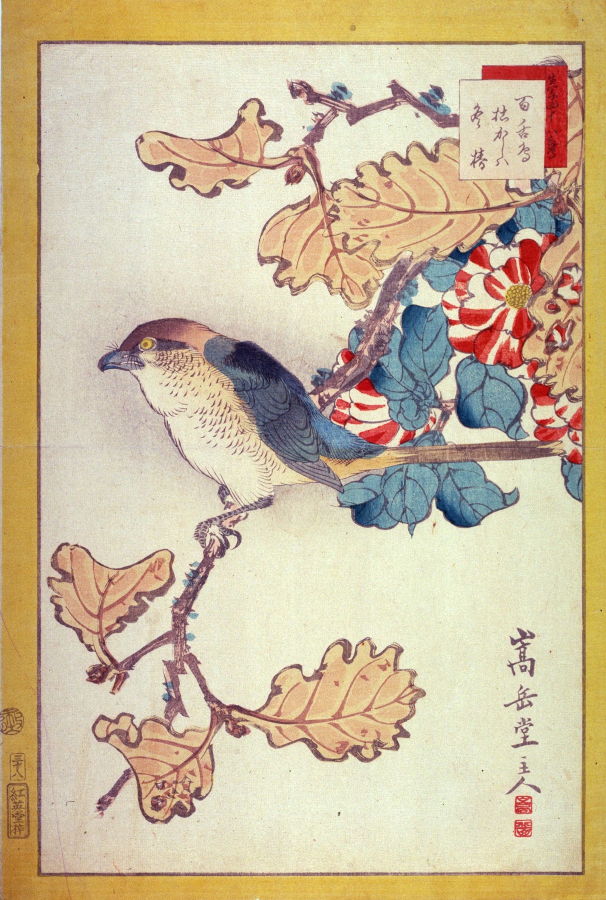
No. 38, Shrike, Withered Oak, Water Camellia (Mozu karegashiwa fuyutsubaki), from the series Forty-eight Birds Drawn from Life
百舌 枯柏 冬椿
1859
Color woodblock print
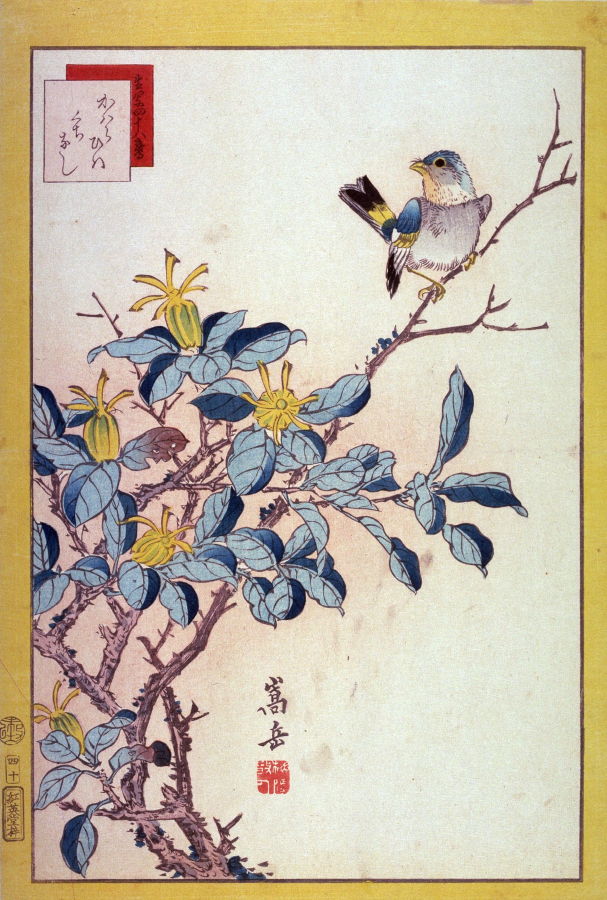
River Sparrow and Kuchinashi Flowers (Kawara hiwa kuchinashi), No. 40 from the series Forty-eight Birds Drawn from Life
河原鶸 梔子
1859
Color woodblock print
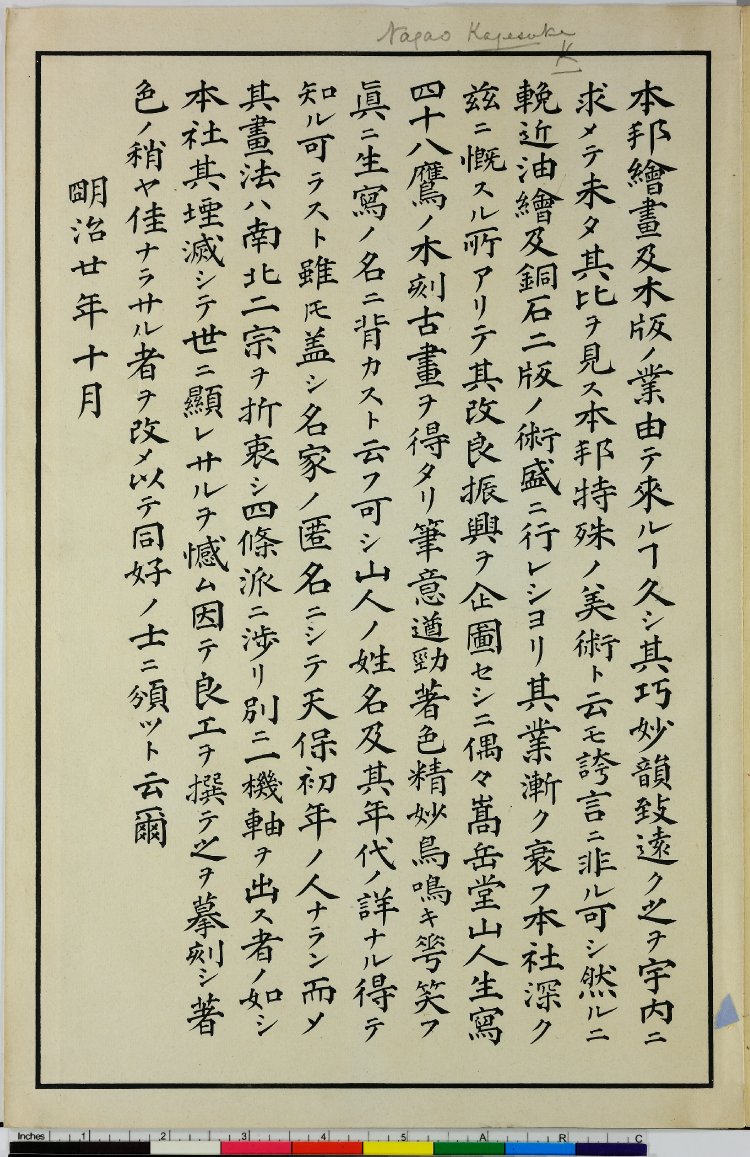
Shasei yonju-hachi taka gajo (Lifelike Drawings of 48 Kinds of Hawk)
写生四十八鷹画帖
1859 (later edition with French/English colophon)
Album of color woodblock prints
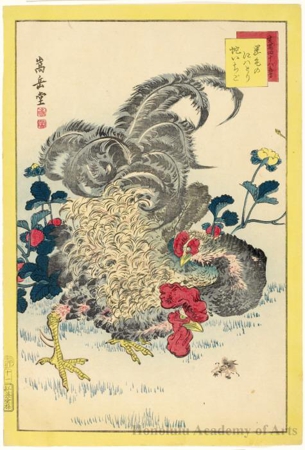
Rooster and Indian Strawberries
1859
Color woodblock print
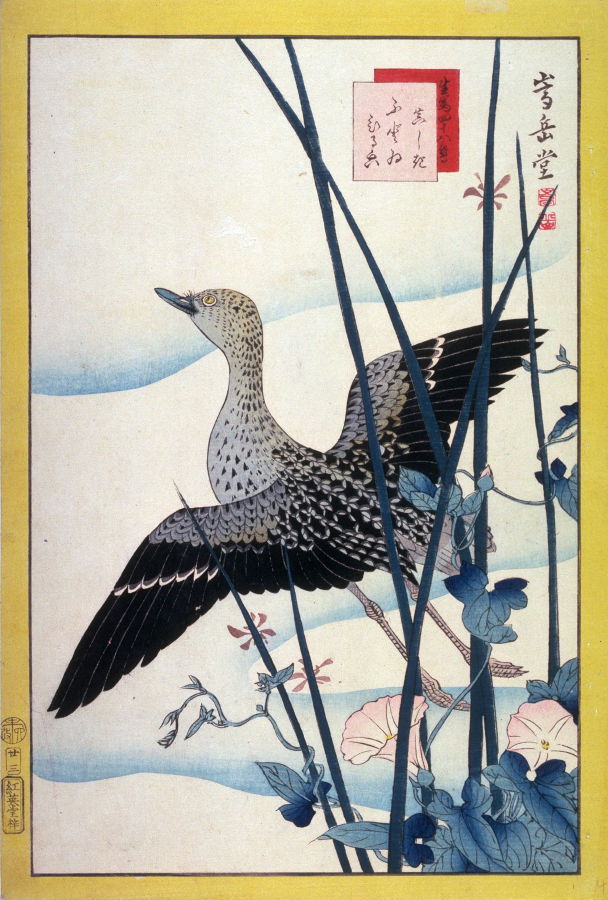
Snipe, Reeds, and Morning Glory, from the series Forty-eight Birds Drawn from Life
鴫 葦 朝顔
1859
Color woodblock print
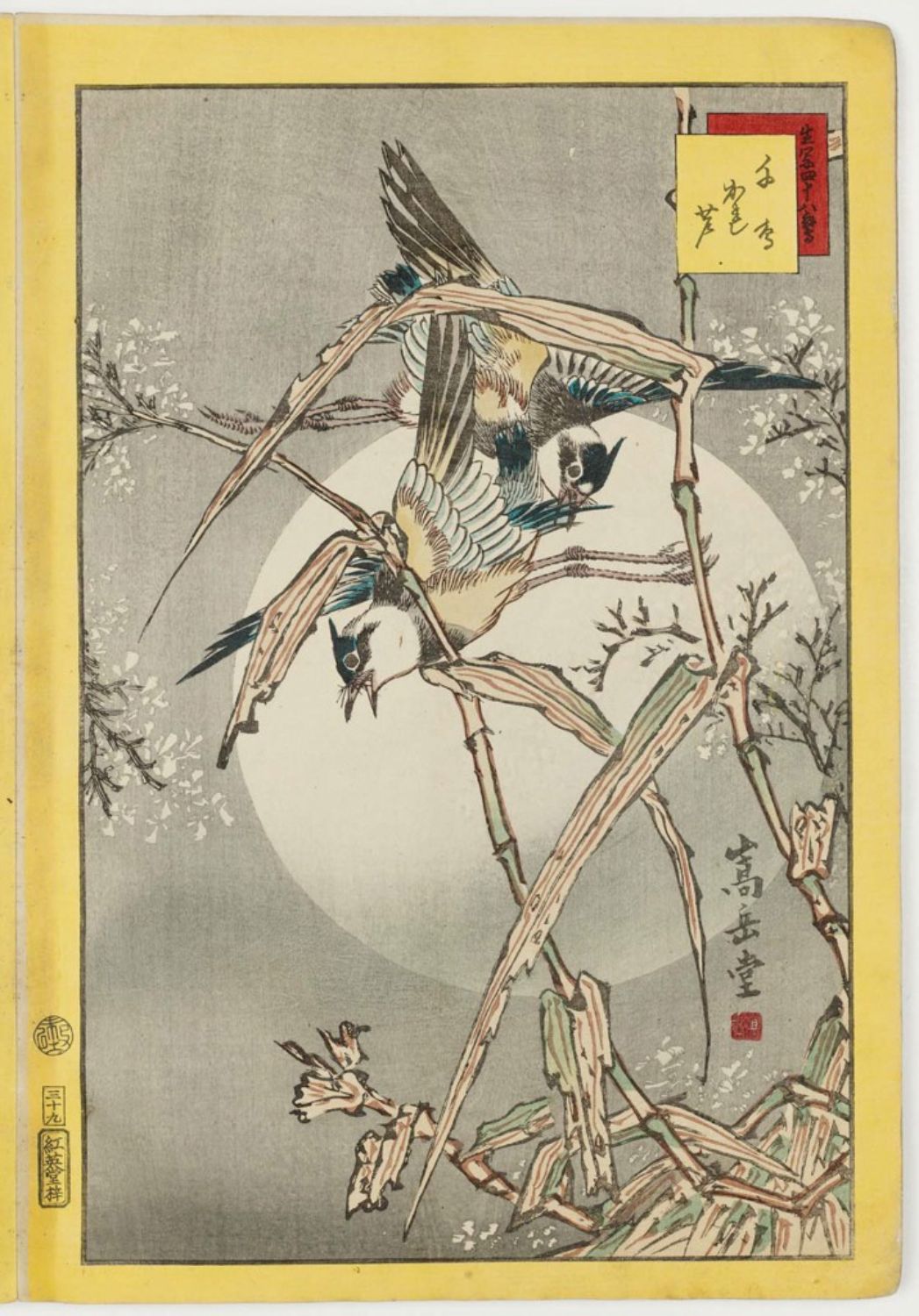
No. 39, Plovers and Dry Reeds (Chidori kareashi), from the series Forty-eight Hawks Drawn from Life
千鳥 枯葦
1859
Color woodblock print
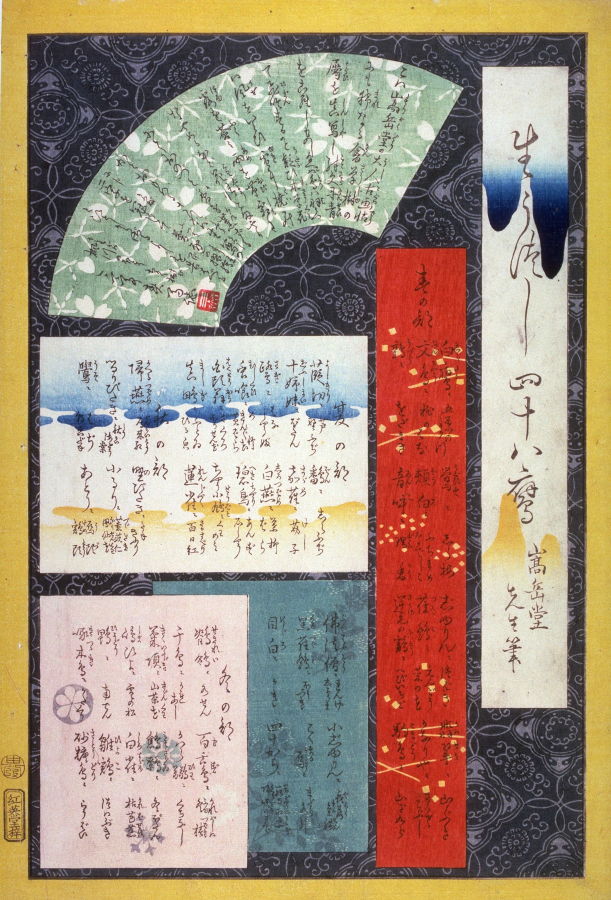
Title page, from the series Forty-eight Birds Drawn from Life (Ikiutsushi yonjuhachiyo)
生写四十八鷹
1859–60
Color woodblock print