
surimono / diptych print
- Source:
- ukiyo-e.org
Description
This undated diptych surimono by Natori Shunsen, recorded in the British Museum's collection and indexed through ukiyo-e.org, shows the artist working in a privately commissioned format that long predates the shin-hanga movement but which shin-hanga designers occasionally revisited for special-occasion prints. Surimono were luxury woodblock prints produced outside the commercial trade for poetry clubs, theatrical patrons, and individual collectors, and they were typically printed in small runs on thick hosho paper with extensive use of metallic pigments, blind embossing, and finely tuned color gradations. Although Shunsen is best known for his yakusha-e actor portraits issued through Watanabe Shozaburo, this diptych demonstrates his fluency with the older surimono idiom, in which figure, calligraphy, and decorative pattern share the picture surface in close visual dialogue. The two sheets are designed to read as a single composition, with the figures and their surrounding motifs balanced across the central join in a manner consistent with Edo-period precedent. Shunsen's draftsmanship remains visible in the firm, even outlines and the carefully observed facial expressions, qualities that align this work with the close-looking portrait sensibility he later refined in the Shunsen nigao shu actor series. As a designer trained in nihonga and active in the early twentieth-century print revival, Shunsen represents a generation that bridged commercial shin-hanga production with the connoisseur traditions of surimono. The print survives as a useful document of that bridging role and as evidence that Shunsen's reputation in early twentieth-century print circles extended beyond the actor portraits for which he is now principally remembered.
More Prints by Natori Shunsen
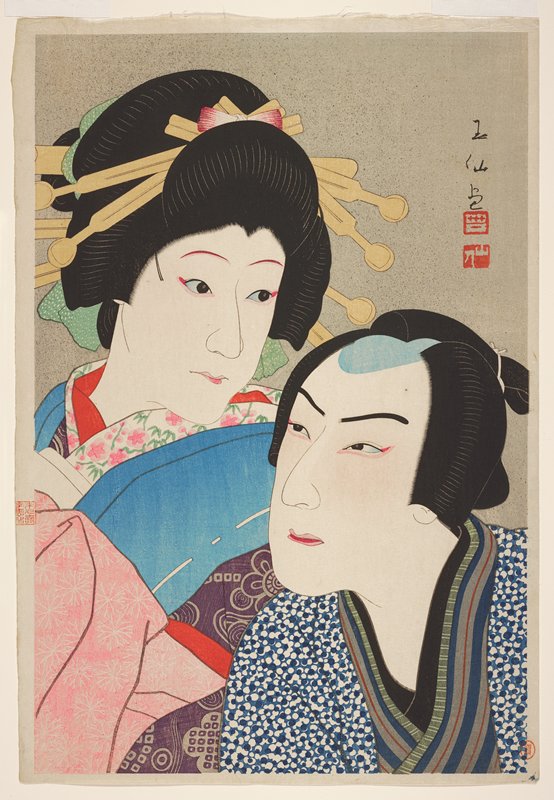
Actors Ichikawa Shōchō II as Umegawa and Kataoka Gadō XII as Chūbei
1927
Woodblock print, ink and color on paper

The Actor Sawada Shojiro as the Swordsman Hayashi Buhei, from the series “Collection of Portraits by Shunsen (Shunsen nigao shu)"

The Actor Ichimura Uzaemon XV as Naozamurai, from the series “Collection of Portraits by Shunsen (Shunsen nigao shu)"

The Actor Onoe Baiko VI as Sayuri, from the series “Collection of Portraits by Shunsen (Shunsen nigao shu)"
Featured in Collections
Curated cross-cuts that include this print.
Frequently Asked Questions
surimono / diptych print was created by Natori Shunsen (名取春仙).