
Courtesan Walking
- Date:
- 1739
- Medium:
- From a woodblock printed book (sumizuri-e), ink on paper
- Source:
- Minneapolis Institute of Art
Description
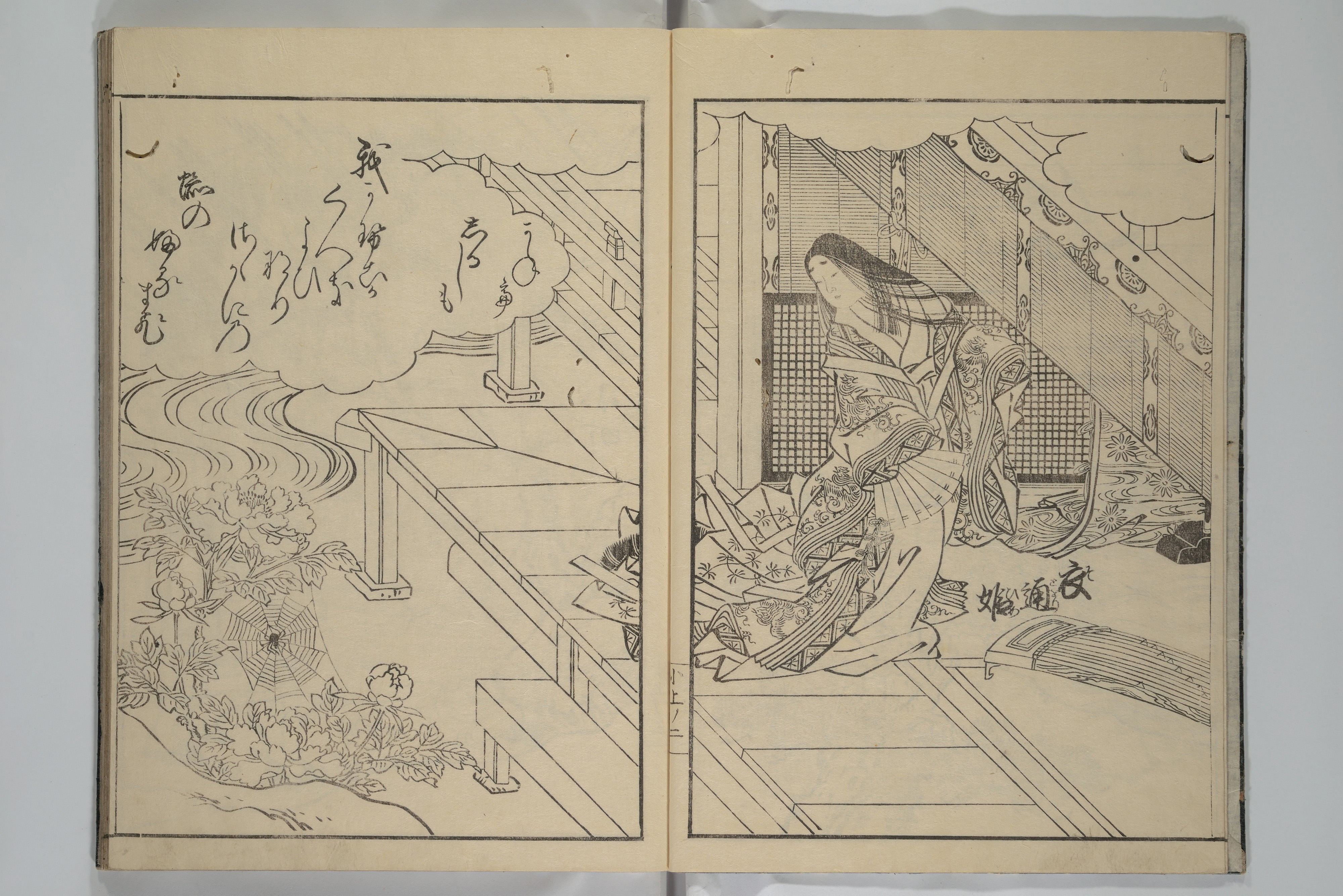
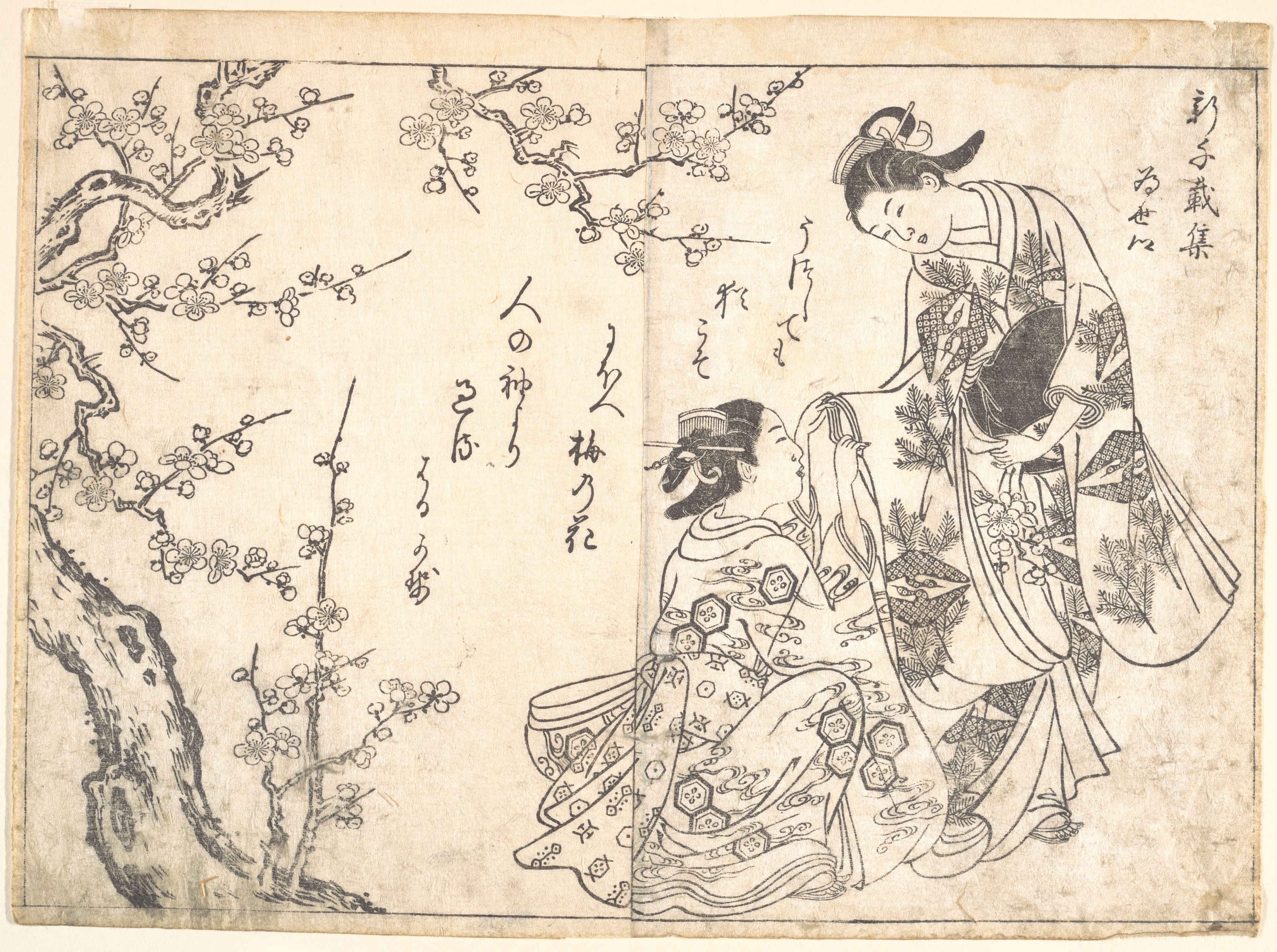
Courtesan Walking, a sumizuri-e impression on paper from a woodblock-printed book dated 1739 in the Minneapolis Institute of Art, is a separated ehon page now circulating as a single sheet. The courtesan is shown in mid-stride, her tall figure occupying the full vertical of the page, her layered robes trailing behind her in the long flowing sweep that Sukenobu had developed as a signature shorthand for both motion and refinement. The Kyoto pleasure quarters — Shimabara in particular — had a different texture from Edo's Yoshiwara, more closely integrated with the city's older merchant and artistic culture, and Sukenobu's walking courtesans accordingly read less as exotic spectacle and more as participants in a continuous urban scene. The 1739 date places the print within Sukenobu's most productive Genbun-era decade, when he was producing major ehon at a rapid pace. Single sheets like this one in the Minneapolis collection are particularly valuable because they allow direct comparison with the multi-volume ehon from which they were originally extracted; the museum's deep holdings of Sukenobu material make such cross-reference unusually productive for researchers studying the mature Kamigata bijin-ga tradition.
More Prints by Nishikawa Sukenobu


Frequently Asked Questions
Courtesan Walking was created by Nishikawa Sukenobu (西川祐信) in 1739.