
Biography
Nishikawa Sukenobu (1671-1750) was a towering figure of Kyoto ukiyo-e during the first half of the eighteenth century, an artist who more than any other defined what Kamigata-e — the printmaking culture of the Kyoto-Osaka region — would look like in the decades before Edo's polychrome revolution. Working above all in the medium of the ehon, or illustrated printed book, Sukenobu produced a large body of bijin-ga (pictures of beautiful women) that wedded the refinement of Kyoto's classical painting traditions to the new commercial appetites of the urban townspeople. His quiet, observant women — kneeling at writing desks, adjusting hairpins before mirror stands, walking under plum blossoms, instructing children, taking lessons on the shamisen — became a visual template against which generations of later ukiyo-e artists would measure their own depictions of feminine beauty.
Born in Kyoto in 1671, Sukenobu trained first as a painter in the Kano school under Kano Eino, and then in the gentler, more lyrical Tosa school under Tosa Mitsusuke. This dual grounding — the disciplined ink line of Kano and the courtly color sensibility of Tosa — underlies much of what distinguishes his mature style from the Edo ukiyo-e of near-contemporaries such as Torii Kiyonobu and the somewhat earlier Hishikawa Moronobu. Where Edo printmaking of the same decades trafficked in bold contour, kabuki theatricality, and the assertive sensuality of Yoshiwara courtesans, Sukenobu's women are softer, more inward, and more clearly drawn from the rhythm of Kyoto life: the daughters of merchant households, the entertainers of Gion, the young wives of the Nishijin weaving district. His line is supple and unhurried; his compositions favor genre vignettes over grand parade.
Sukenobu's signature contribution to Japanese print culture was the bijin ehon — the picture book devoted to the depiction of women in all their social gradations, costumes, occupations, and seasonal pleasures. Working with Kyoto publishers, he produced a steady stream of illustrated books from the 1710s through the late 1740s. Among the most celebrated is Hyakunin joro shinasadame (One Hundred Women Ranked by Class), a two-volume work of 1723 that arranged female types from the empress down to the lowest prostitute; another is Ehon Tokiwagusa (Picture Book of Evergreens), a three-volume album of 1731 whose double-page images of women of different social classes close with pages of painting and coloring instruction for aspiring artists. Later works such as Ehon Masukagami — translated by the Metropolitan Museum of Art as True Reflections on the Life and Manners of a Woman — read like a slow-moving anthology of classical Japanese poetic subjects, repopulated with the women of Sukenobu's own day. Circulating nationwide, these books helped make his Kyoto vision of feminine beauty a widely emulated reference for bijin-ga across Japan.
The ehon format mattered. Where single-sheet prints in Edo were sold as inexpensive ephemera, the multi-volume picture book was a more durable and respectable object, often acquired by upper-merchant and minor samurai households as a kind of refined gift. Sukenobu's ehon could be openly didactic — instructional books taught calligraphy, etiquette, and dress — or frankly erotic, as in the privately circulated shunga albums for which he was also known. That his output ranged so widely, and that his name became so closely identified with the printed image of women, is itself a measure of how thoroughly his work had come to stand for bijin imagery in early-Edo Japan.
Stylistically, Sukenobu inherited and transformed the conventions established by Hishikawa Moronobu a generation earlier. He worked in the monochrome sumizuri-e and hand-colored formats that dominated Japanese printing before the arrival of full-color nishiki-e in the 1760s, and he showed little interest in the actor portraits and kabuki ephemera that drove the Edo market. Instead he cultivated a deliberately unhurried, narrative-friendly mode: figures placed in interior or garden spaces, often paired and in conversation, with carefully rendered fabrics, furniture, and seasonal accessories. The refinement of his work was not nostalgia for the aristocratic Heian past but a contemporary urban elegance — that of the Kyoto merchant quarters — translated into woodblock for a national audience.
His influence on later ukiyo-e is hard to overstate. Suzuki Harunobu, the leading figure in the development of full-color nishiki-e printing in the 1760s, drew openly on Sukenobu's compositional sense and his soft, slender figures; many Harunobu prints can be read as polychrome translations of Sukenobu's monochrome ehon pages. Through Harunobu and his successors the Sukenobu manner fed into the later mainstream of Japanese depiction of women, including the bijin-ga of Kitagawa Utamaro in the 1790s. His own circle carried the Nishikawa style into the second half of the eighteenth century: Nishikawa Suketada, a pupil generally thought to be his son, whose illustrated books appear from the late 1740s onward, and the Osaka painter Tsukioka Settei, who was strongly influenced by Sukenobu's work.
Nishikawa Sukenobu died in Kyoto in 1750, in his eightieth year by traditional reckoning, having produced a large body of illustrated books over the course of a long career. His blocks continued to be reprinted by Kyoto and Osaka publishers well after his death, and his designs survive today in major museum collections, including those of the Metropolitan Museum of Art and the Art Institute of Chicago. His work is studied not only as a pivot point of Kamigata-e but as one of the earliest sustained attempts in any printed medium to construct and circulate a broad iconography of women's daily life.
Key Facts
Frequently Asked Questions
Nishikawa Sukenobu (1671-1750) was a towering figure of Kyoto ukiyo-e during the first half of the eighteenth century, an artist who more than any other defined what Kamigata-e — the printmaking culture of the Kyoto-Osaka region — would look like in the decades before Edo's polychrome revolution. Working above all in the medium of the ehon, or illustrated printed book, Sukenobu produced a large body of bijin-ga (pictures of beautiful women) that wedded the refinement of Kyoto's classical painting traditions to the new commercial appetites of the urban townspeople. His quiet, observant women — kneeling at writing desks, adjusting hairpins before mirror stands, walking under plum blossoms, instructing children, taking lessons on the shamisen — became a visual template against which generations of later ukiyo-e artists would measure their own depictions of feminine beauty.
Nishikawa Sukenobu was active from 1671 to 1750. They were associated with the Ukiyo-e movement.
Nishikawa Sukenobu's work was shaped by the Ukiyo-e tradition in Japanese woodblock printmaking. Ukiyo-e: ## What is ukiyo-e? Ukiyo-e ([浮世絵](/glossary/ukiyo-e)) — literally "pictures of the floating world" — is the Edo-period Japanese print and painting tradition that flourished from roughly 1660 to 1868, depicting the pleasures of urban life in Edo (modern Tokyo): courtesans, kabuki actors, sumo wrestlers, famous landscapes, and seasonal beauties.
Nishikawa Sukenobu's prints frequently feature children.
Original prints by Nishikawa Sukenobu can be found in collections including Metropolitan Museum of Art, Minneapolis Institute of Art, Art Institute of Chicago, Victoria and Albert Museum.
Woodblock Prints by Nishikawa Sukenobu (11)
A Dancer
Late 17th to 18th century
Color woodblock print
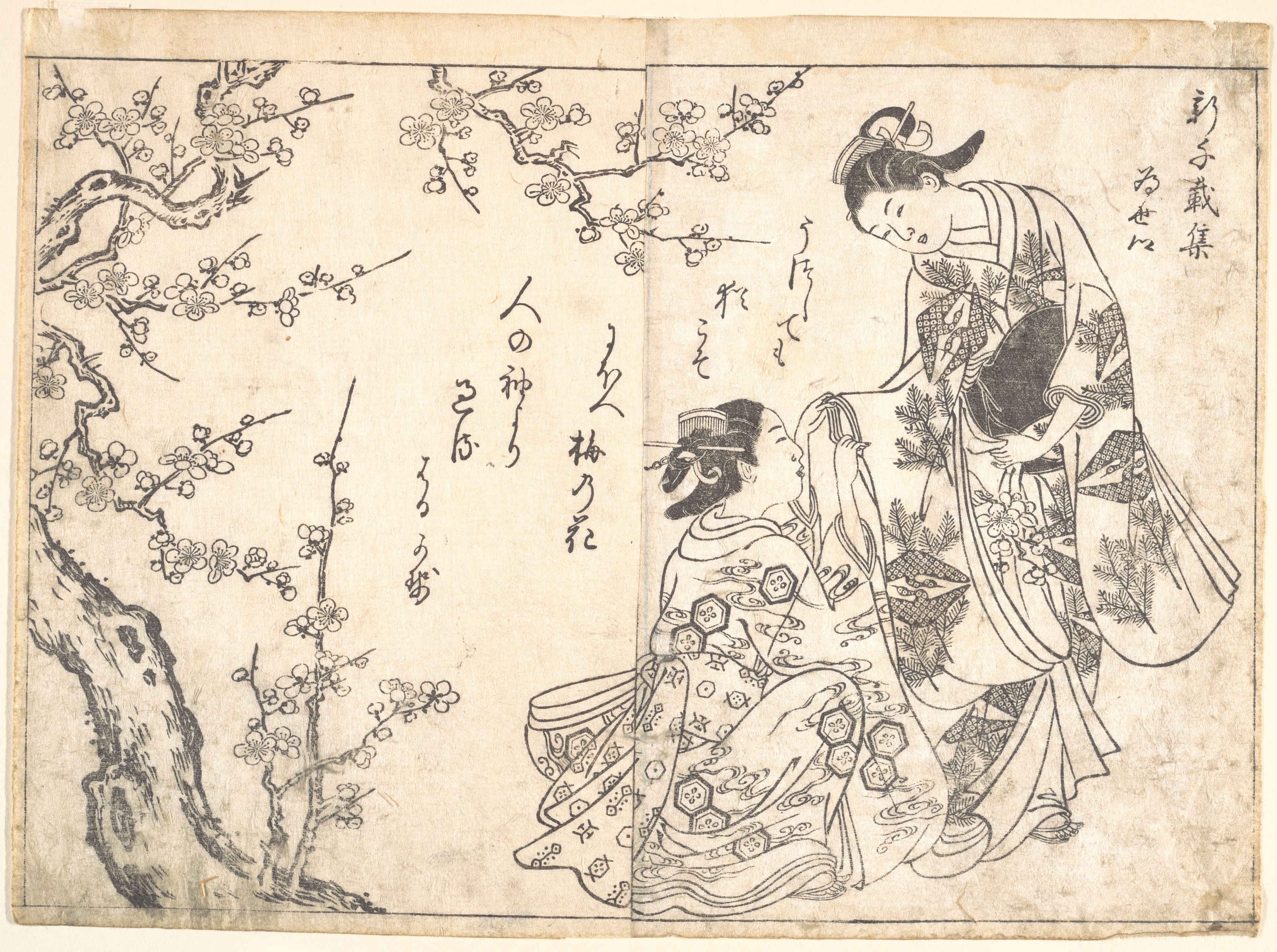
Two Girls Under Plum Tree
Monochrome woodblock print; ink on paper
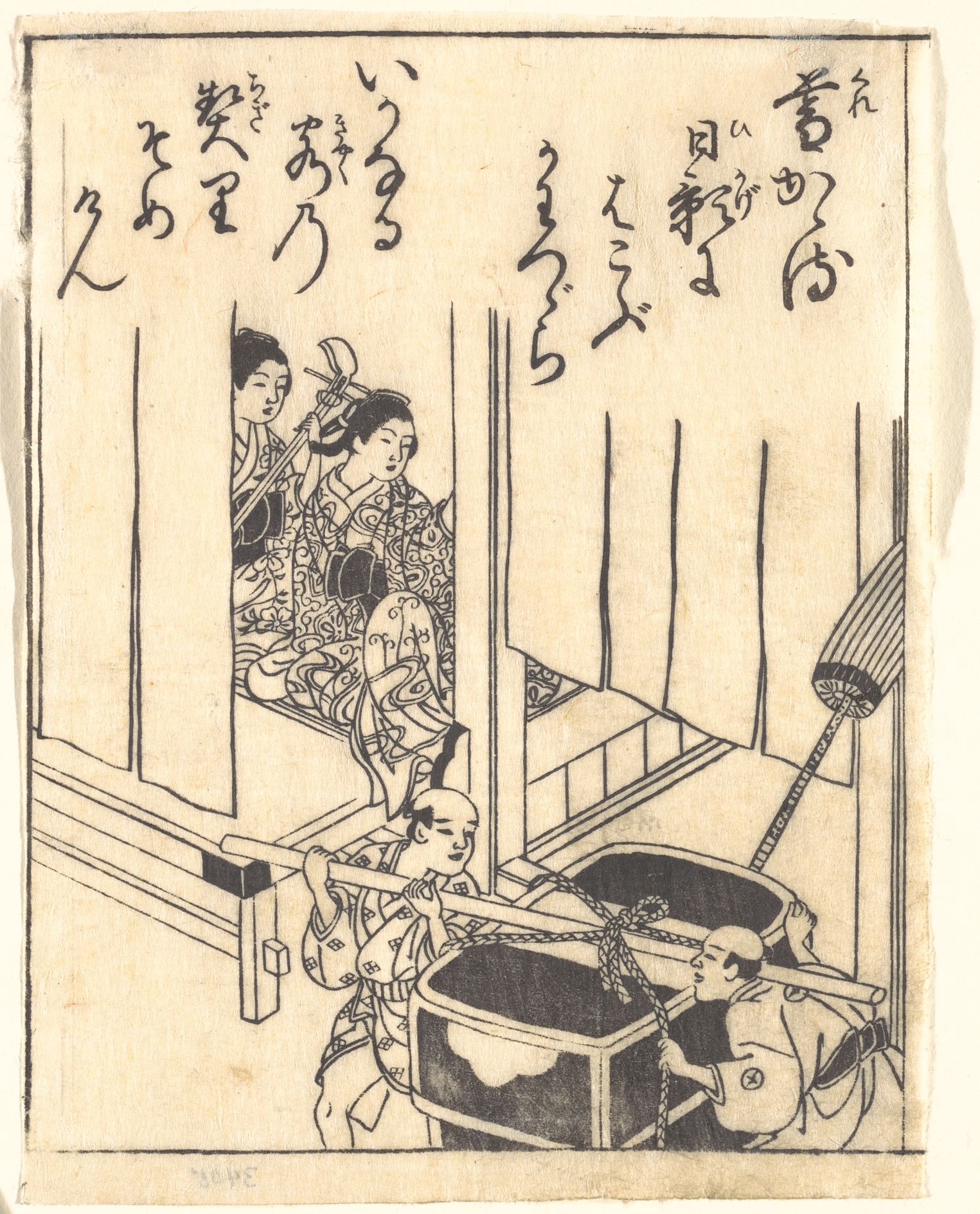
Monochrome woodblock print; ink on paper

Ehon ike no kokoro (pair has old stickers #707)
1739
Woodblock printed book, two volumes

Courtesan Walking
1739
From a woodblock printed book (sumizuri-e), ink on paper
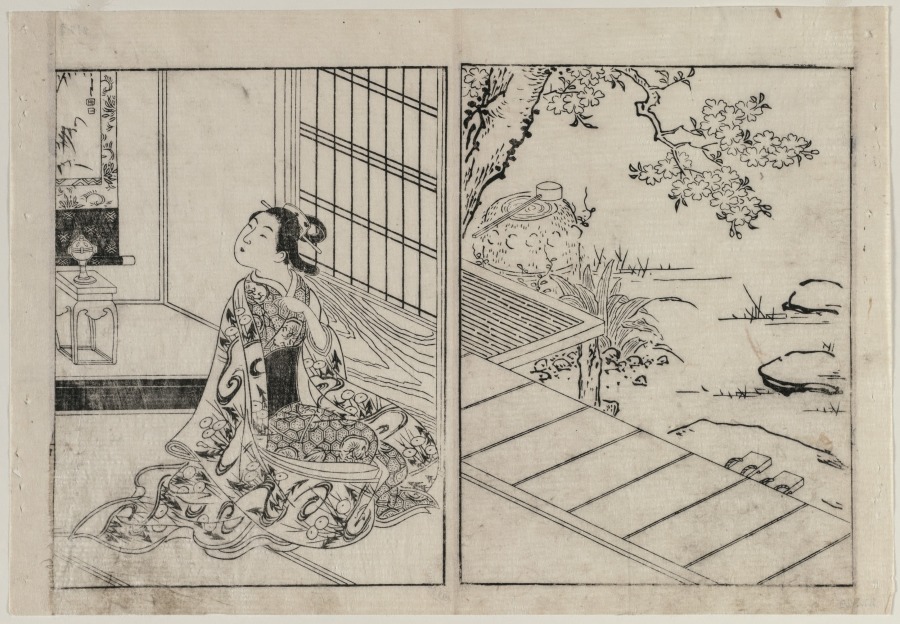
Woman Looking at a Hanging Scroll
c. 1740s
color woodblock print
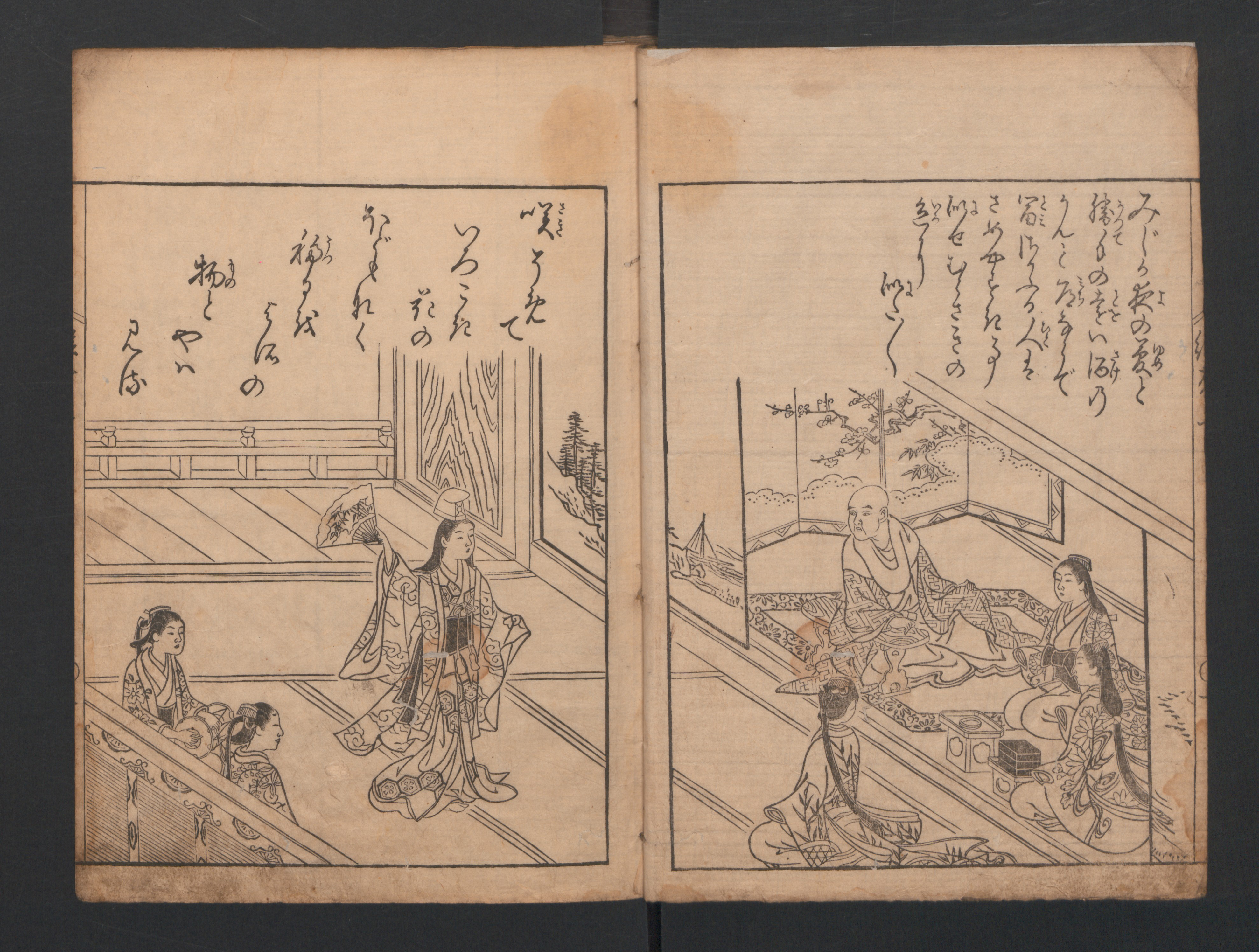
Picture Book: Thousand-Year Mountain? (Ehon Chitoseyama? 絵本千年山?
1740
Woodblock print; ink on paper
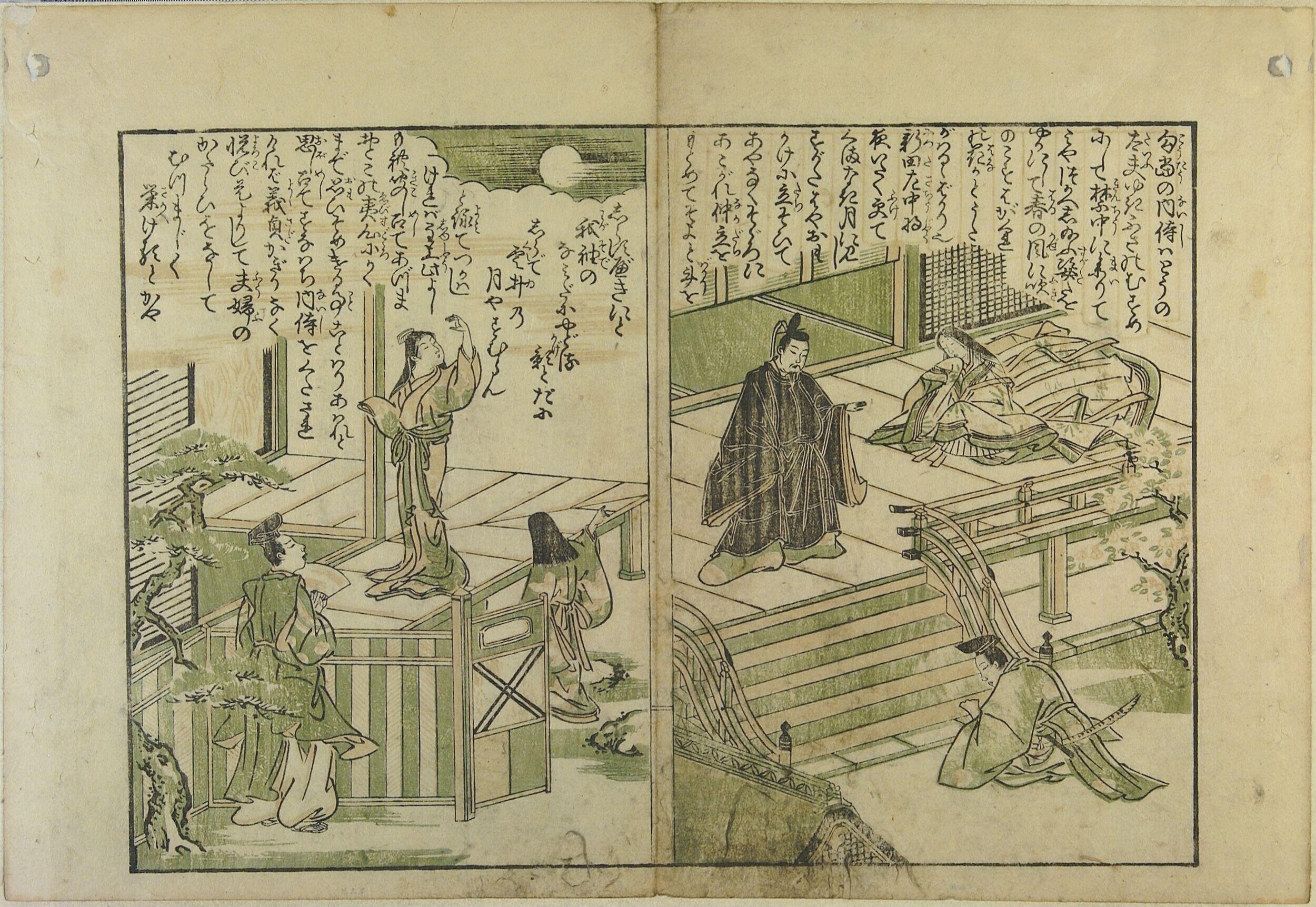
Untitled
ca.1740
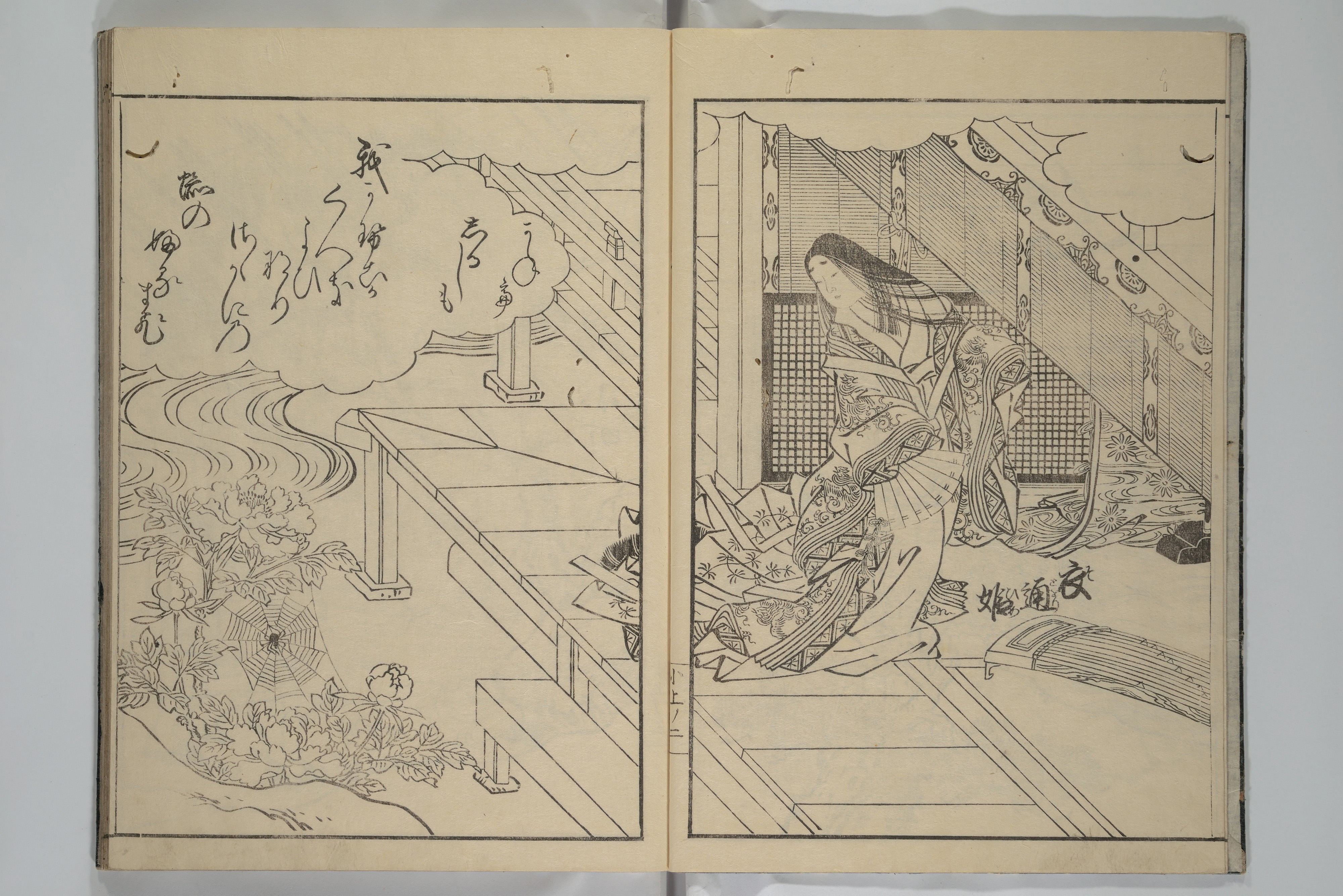
Picture Book of Komatsubara (Ehon komatsubara) 絵本小松原
1761
Woodblock-printed book; ink on paper

Kayō hyakunin isshu taisei
1781 Anei 10
Woodblock- printed book; 1 vol.

Ehon Tokiwagusa
17th/18th century
Woodblock- printed book; 3 vols.