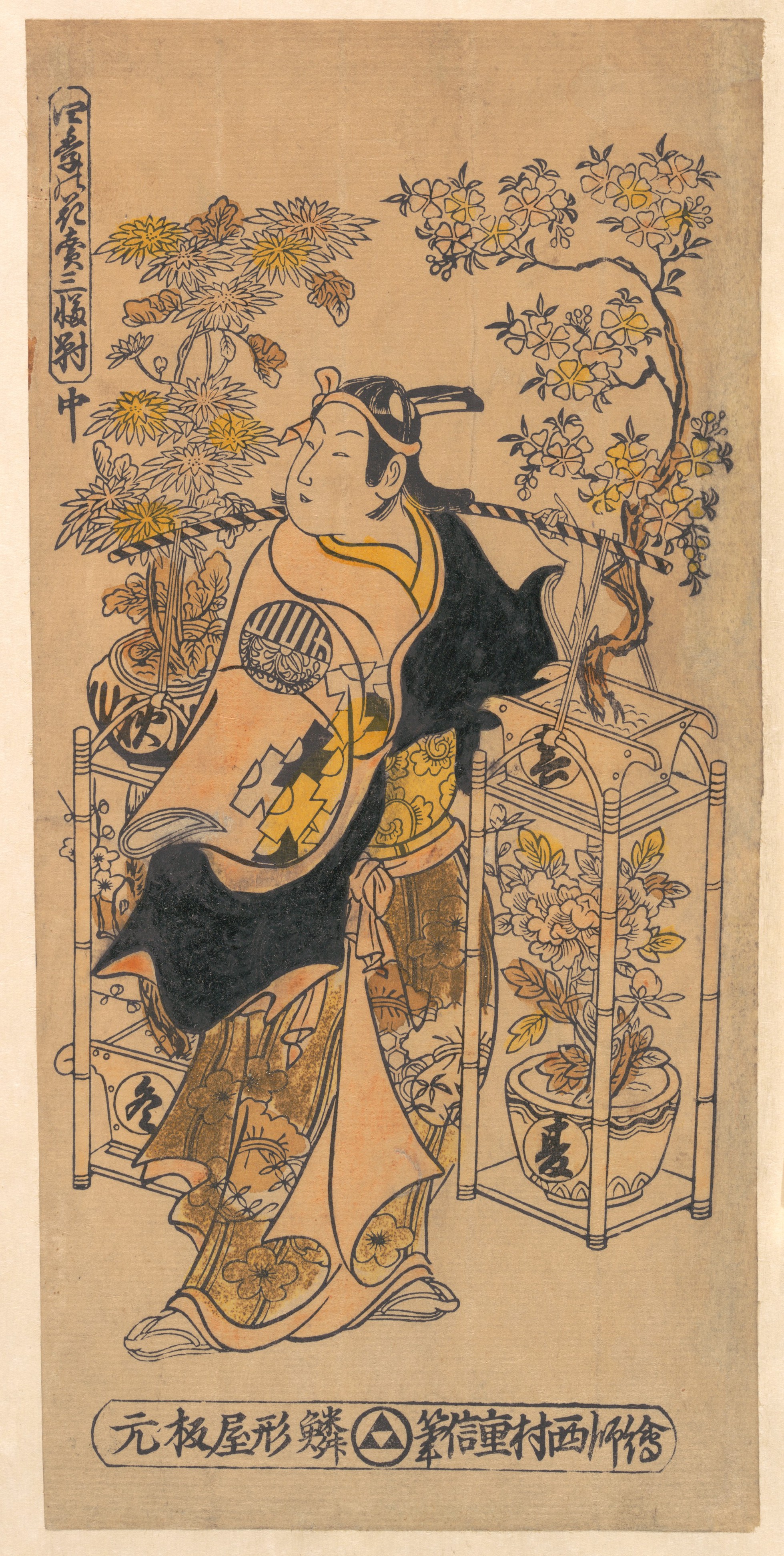
The Actor Ogino Isaburō as an Itinerant Flower Vendor
- Date:
- ca. 1738
- Medium:
- Woodblock print; ink and color on paper
- Source:
- Metropolitan Museum of Art
Description
Dated to circa 1738 and held in the Metropolitan Museum of Art, this hand-coloured woodblock print by Nishimura Shigenobu depicts the kabuki actor Ogino Isaburo in the role of an itinerant flower vendor, combining the actor-portrait genre with the street-vendor genre in the kind of cross-genre composition that the mature 1730s ukiyo-e market favoured. The role of the itinerant flower vendor, a recurrent character type in the kabuki repertoire of the Edo theatres, allowed the actor to display a range of song, dance, and gestural set-pieces while the elaborate basket of seasonal flowers provided both a narrative anchor and a visually rich compositional element. Shigenobu's composition, printed with ink and hand-applied colour on paper in the urushi-e mode of the late 1730s, demonstrates his command of the single-figure actor portrait at the maturity of his career. The print's relationship to Shigenobu's other late-1730s flower-vendor compositions, including the related Flower Vendor and the Peddler of Flowers of the Four Seasons triptych in the Art Institute of Chicago, suggests a sustained iconographic engagement with the subject across multiple works at the close of his documented career. The Metropolitan Museum of Art example documents the late phase of Shigenobu's print designing and the moment at which actor portraiture and genre street scenes were being productively combined in the years immediately before the benizuri-e colour revolution would transform the technical vocabulary of the medium.
More Prints by Nishimura Shigenobu

Ono no Komachi, from A Set of Three Beauties (Bijin sanpukutsui)
c. 1720s
Hand-colored woodblock print; right sheet of hosoban triptych, urushi-e

Hollyhocks and Peacocks (Aoi ni kujaku)
early 1730s
Hand-colored woodblock print; hosoban, urushi-e

A Flower Vendor
1737-38
Hand-colored woodblock print; hosoban

The Actors Segawa Kikujiro I as Oshichi and Sanjo Kantaro II as Kichisaburo in the play "Shochikubai Kongen Soga," performed at the Ichimura Theater in the third month, 1732
1732
Hand-colored woodblock print; hosoban, urushi-e
More Birds & Flowers Prints
Frequently Asked Questions
The Actor Ogino Isaburō as an Itinerant Flower Vendor was created by Nishimura Shigenobu (西村重信) in ca. 1738.
The Actor Ogino Isaburō as an Itinerant Flower Vendor depicts birds & flowers.