
Saigyo Hoshi
- Date:
- 1730s
- Medium:
- Hand-colored woodblock print; hosoban, urushi-e
- Source:
- Art Institute of Chicago
Description
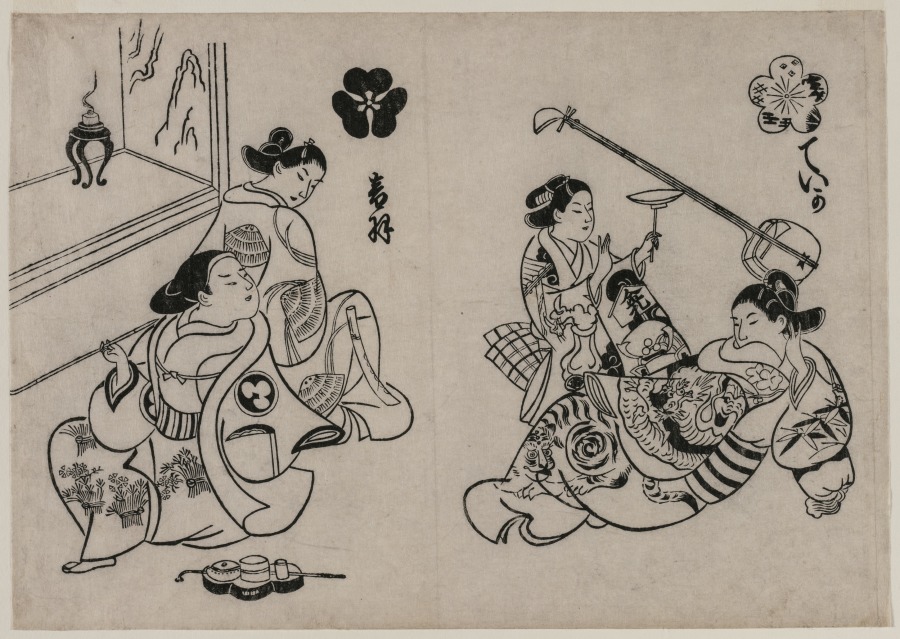
This hosoban urushi-e print from the 1730s in the Art Institute of Chicago depicts the celebrated Heian-period poet-monk Saigyo Hoshi (1118-1190), the wandering Buddhist priest whose pilgrimage poetry became foundational to medieval and early modern Japanese aesthetics. Saigyo, whose travels to remote temples and famous places established the cultural template that Basho would later inherit and transform, was a recurring subject in ukiyo-e parody and reverence prints, and Masanobu's choice to render him in the slender hosoban format reflects the format's suitability for single standing figures. The urushi-e technique, which Masanobu is credited with developing, involved enriching the printing ink with boiled animal glue (nikawa) to create a lustrous black surface, often supplemented by brass filings dusted onto wet areas to produce a metallic shimmer suggestive of lacquer. The technique gave the prints an opulent material presence that distinguished them from the matte sumizuri-e of the previous generation. The combination of hosoban format, urushi-e finish, and classical poetic subject demonstrates the literary breadth and technical experimentation that defined Masanobu's mature practice in the 1730s, when his Okumuraya was the leading publishing house of innovative ukiyo-e in Edo.
More Prints by Okumura Masanobu

Frequently Asked Questions
Saigyo Hoshi was created by Okumura Masanobu (奥村政信) in 1730s.