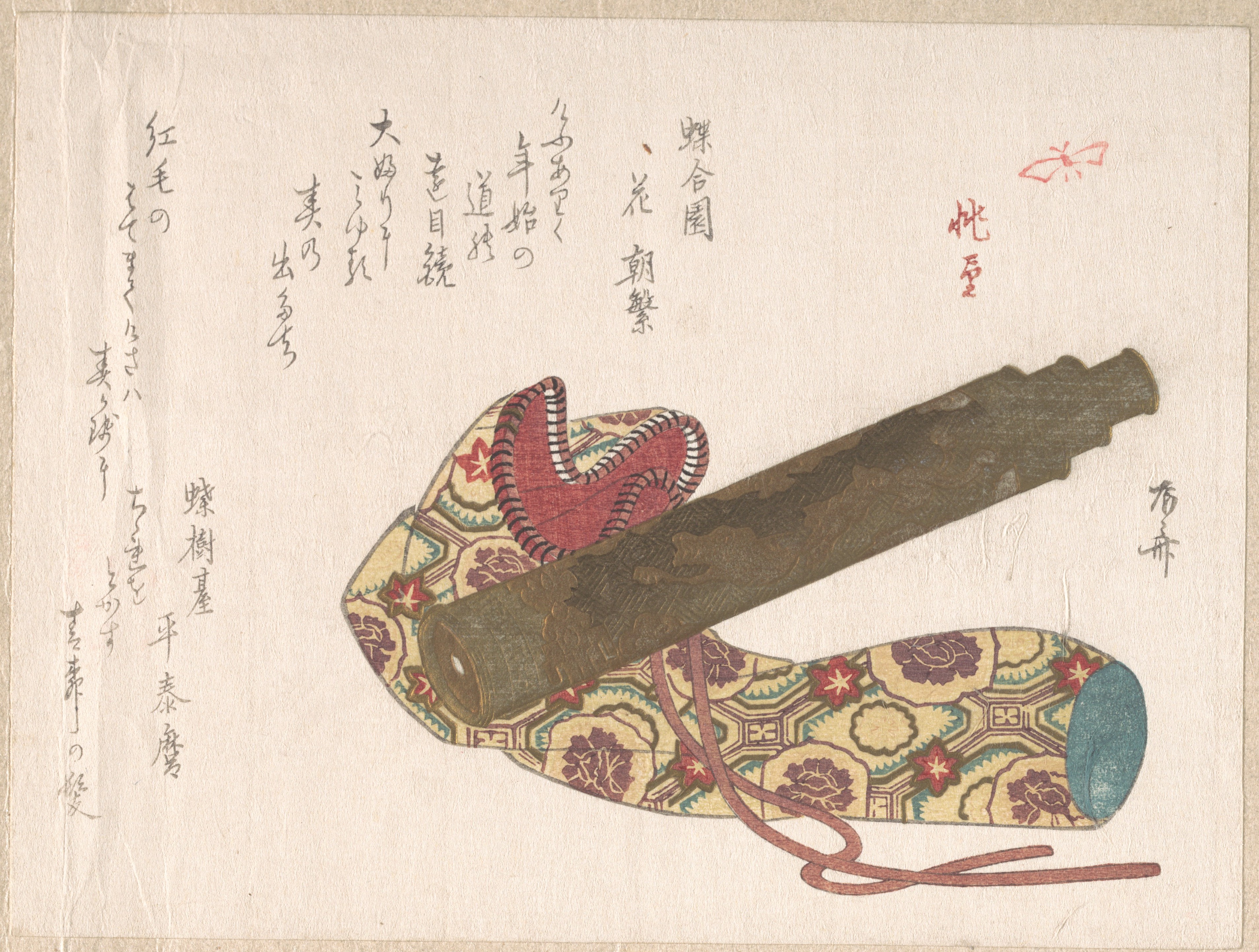
Telescope with Its Bag
- Date:
- 19th century
- Medium:
- Woodblock print (surimono); ink and color on paper
- Source:
- Metropolitan Museum of Art
Description
A collapsible brass telescope rests diagonally across its storage bag, which is patterned in gold, purple, and teal florals and medallions on a cream ground, with a red and white lining visible where the flap folds open and a pink cord looped beneath. The bag's rounded end is capped in solid teal-blue. Columns of Japanese calligraphy in black ink fill the upper left of the cream paper ground, with a small red butterfly or moth motif and additional red characters in the upper right.
More Prints by Ryūryūkyo Shinsai
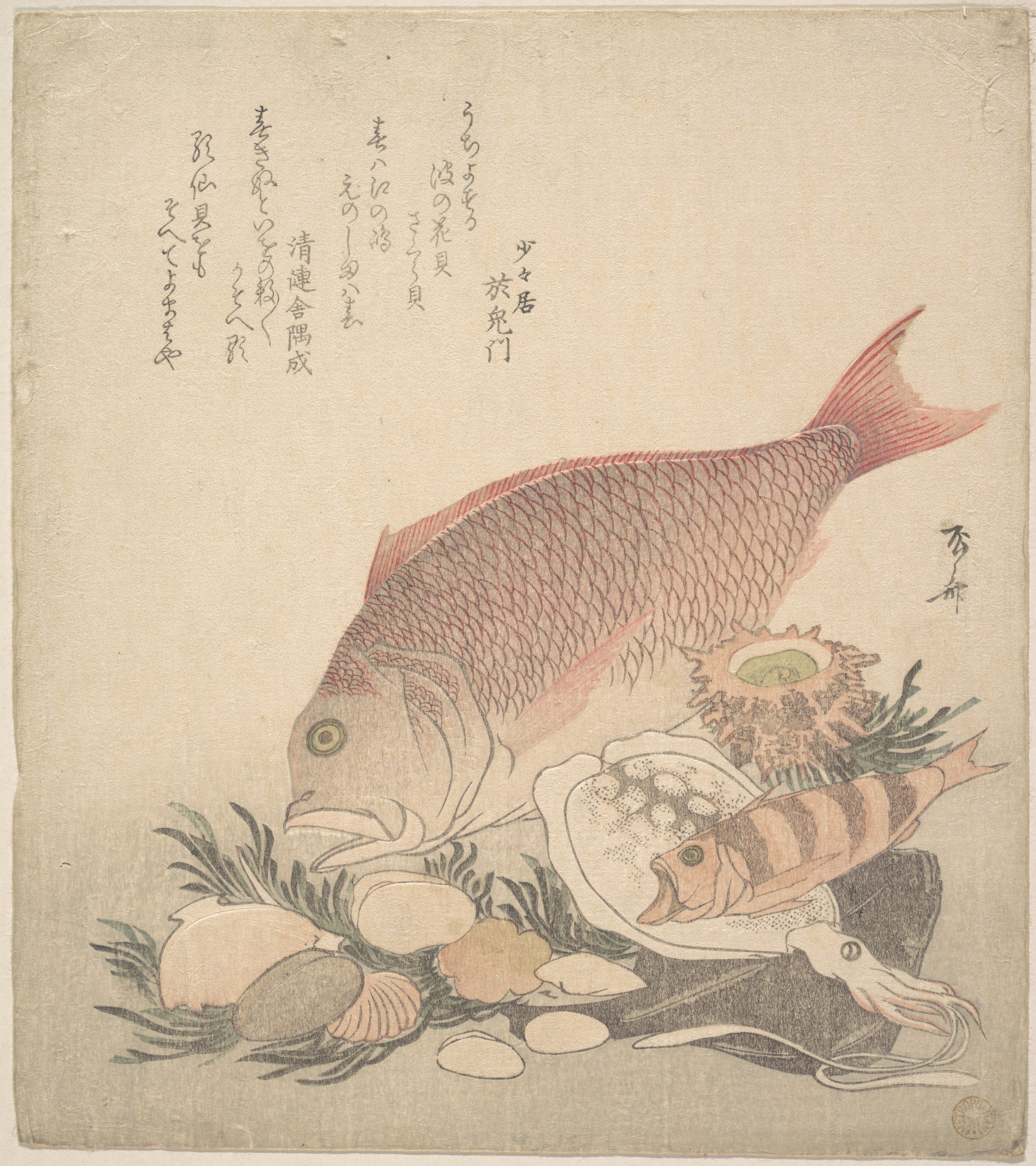
Large and Small Fish Swimming Among Shells and Moss at the Bottom of the Sea
ca. 1830
Woodblock print (surimono); ink and color on paper
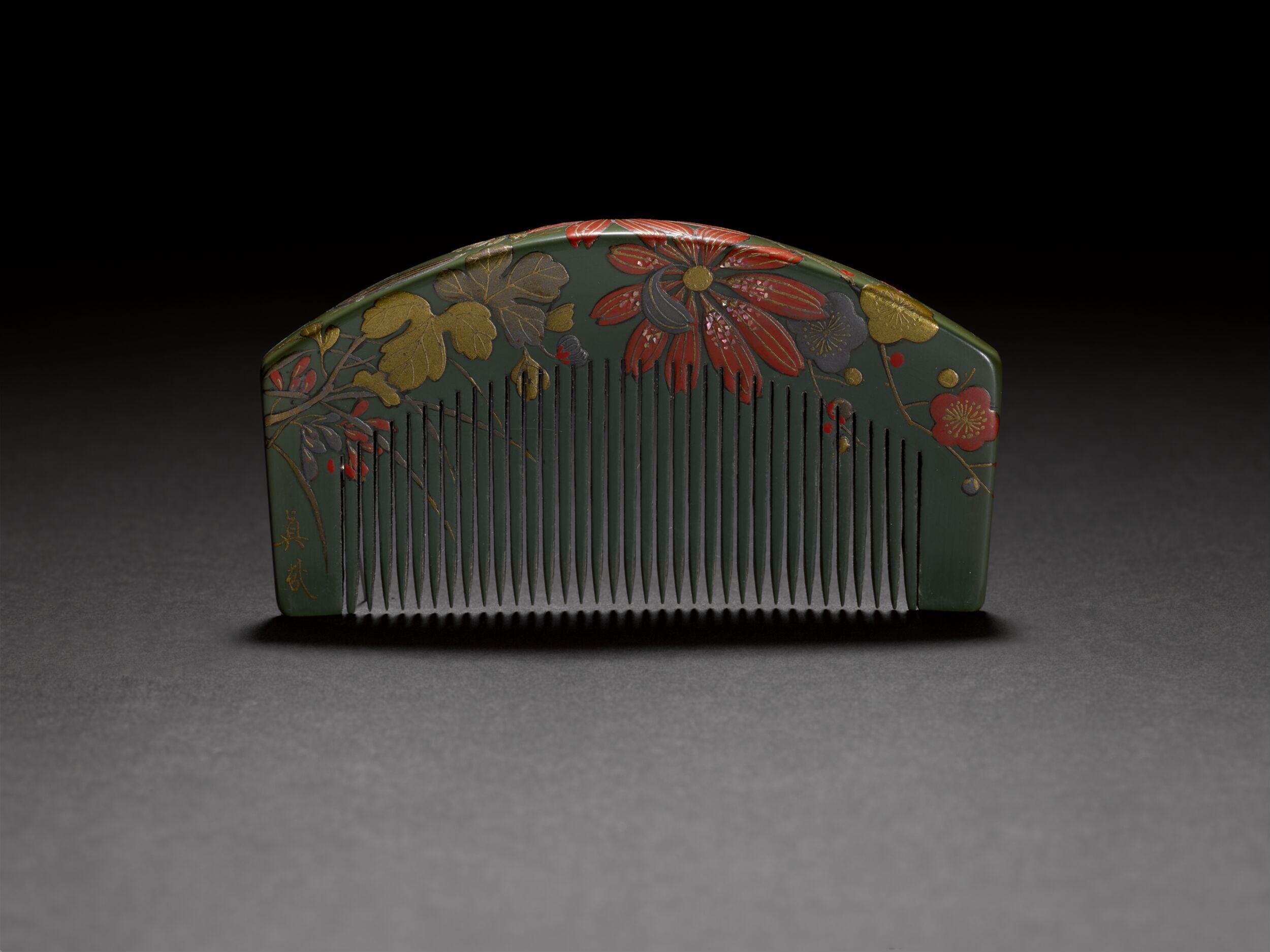
Untitled
1880 - 1895
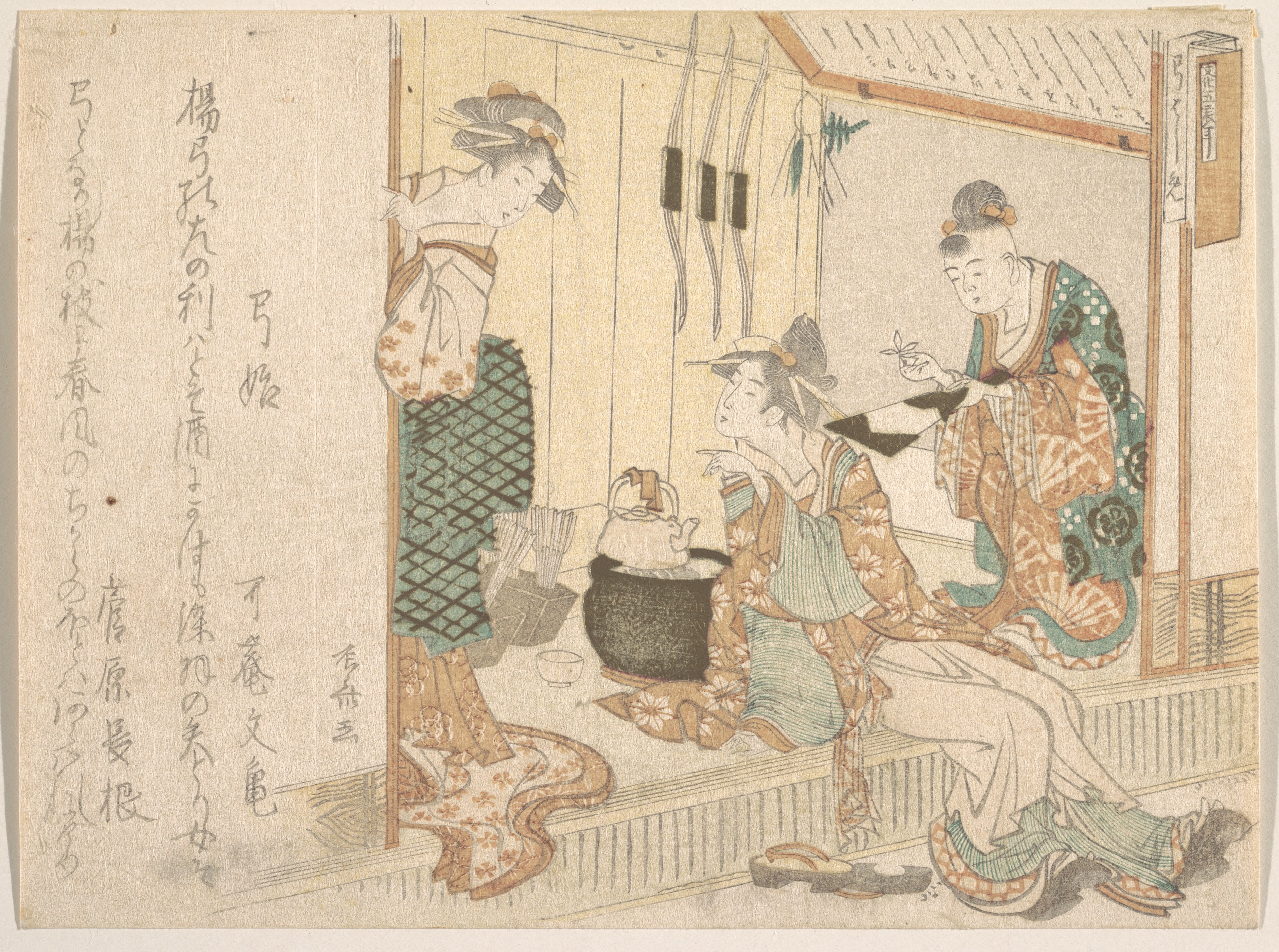
Two Young Ladies Having Tea Attended by Elderly Servant
Woodblock print (surimono); ink and color on paper

At the Beach of Shichirigahama
1805
Color woodblock print; long surimono
Frequently Asked Questions
Telescope with Its Bag was created by Ryūryūkyo Shinsai (柳々居辰斎) in 19th century.