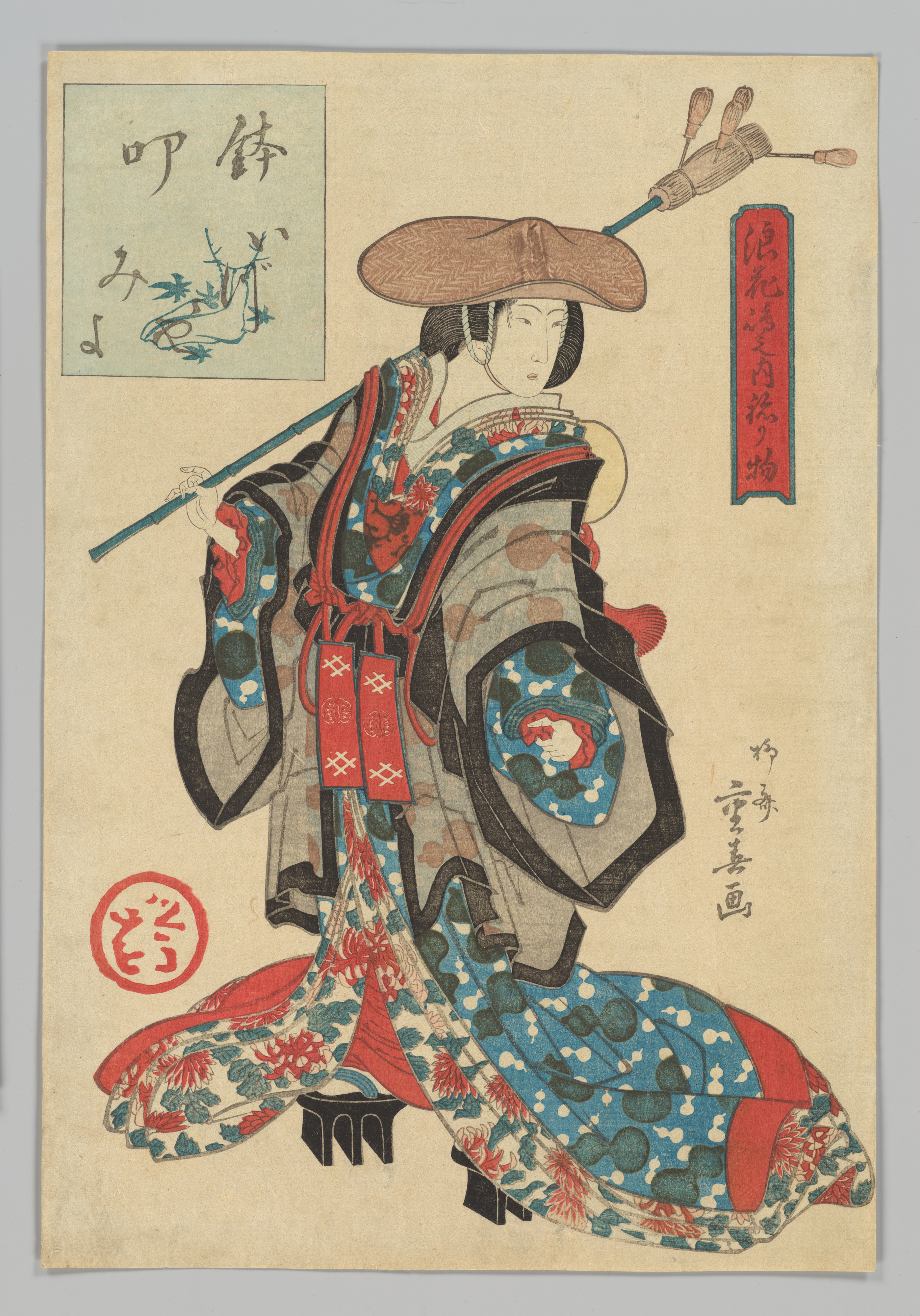
The Courtesan Miyo of the Izutsuya Brothel as a Tea Whisk Vendor, from the series Costume Parade of the Shimanouchi District in Osaka (Naniwa Shimanouchi nerimono, Hachitataki Izutsuya Miyo)
- Date:
- 1828, sixth month
- Medium:
- Woodblock print (nishiki-e); ink and color on paper
- Source:
- Metropolitan Museum of Art
Description
This 1828 print by Ryūsai Shigeharu, held by the Metropolitan Museum of Art (accession 2025.796.7), depicts the courtesan Miyo of the Izutsuya brothel costumed as a tea-whisk vendor (Hachitataki) for the annual Naniwa Shimanouchi nerimono costume parade. The Hachitataki was a traditional itinerant figure who walked the streets of Osaka and Kyoto selling tea-whisks while beating a small bowl as accompaniment, and the courtesan's adoption of this humble street-vendor disguise — complete with the basket and instrument of the trade — exemplified the playful inversion that drove the nerimono procession's costume choices. The print belongs to Shigeharu's contributions to the multi-artist Shimanouchi project that documented the pleasure-quarter's annual parade across the late 1820s and 1830s. The Met's holding entered the collection in 2025 as part of a broader Osaka kamigata-e acquisition that complemented the museum's earlier 2011 and 2020 Shigeharu purchases. As a sixth-month 1828 dating, the print is one of the earliest works in Shigeharu's mature single-sheet career (his peak productivity as an ichimai-e designer ran 1829-1831) and documents the courtesan culture of Shimanouchi that ran alongside the theatrical world to which most of his later prints were devoted.
More Prints by Ryūsai Shigeharu
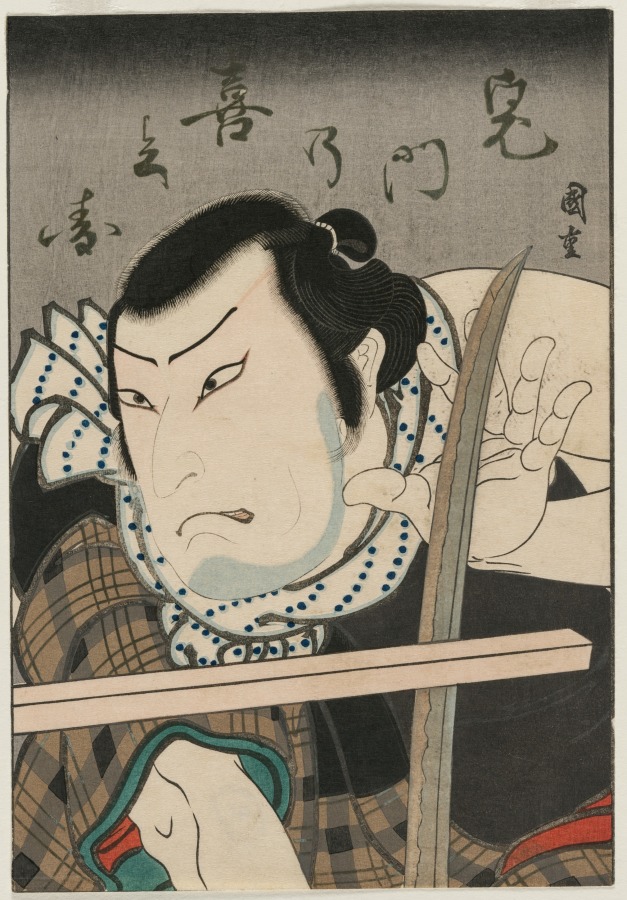
Actor as Kimon no Kihei
before 1826
Color woodblock print
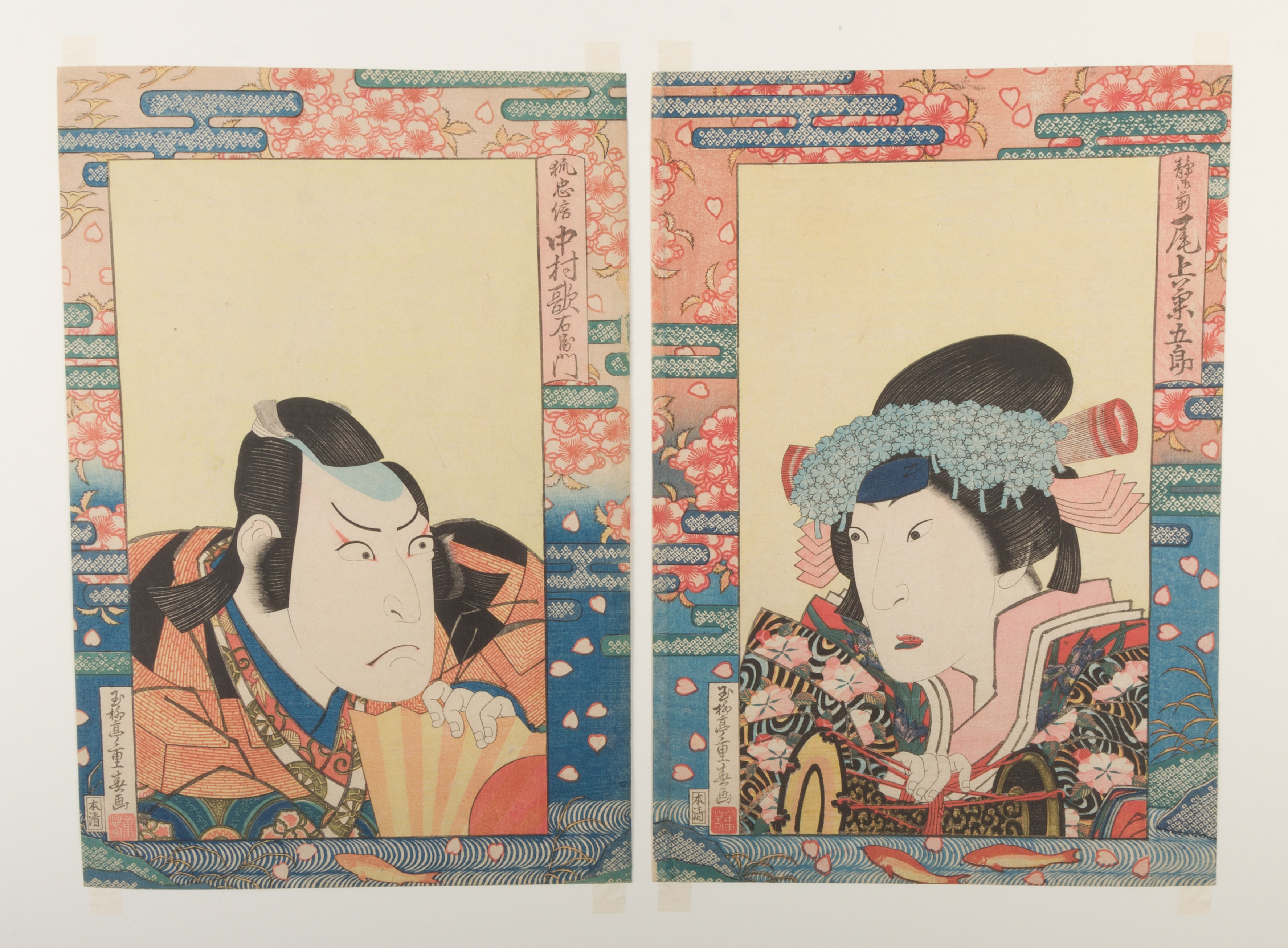
Kabuki Actors Onoe Kikugorō III as Shizuka Gozen and Nakamura Utaemon III as Kitsune Tadanobu, in the play Yoshitsune senbon zakura (The Thousand Cherry Trees of Yoshitsune)
1830
Diptych of woodblock prints (nishiki-e); ink and color on paper; vertical ōban
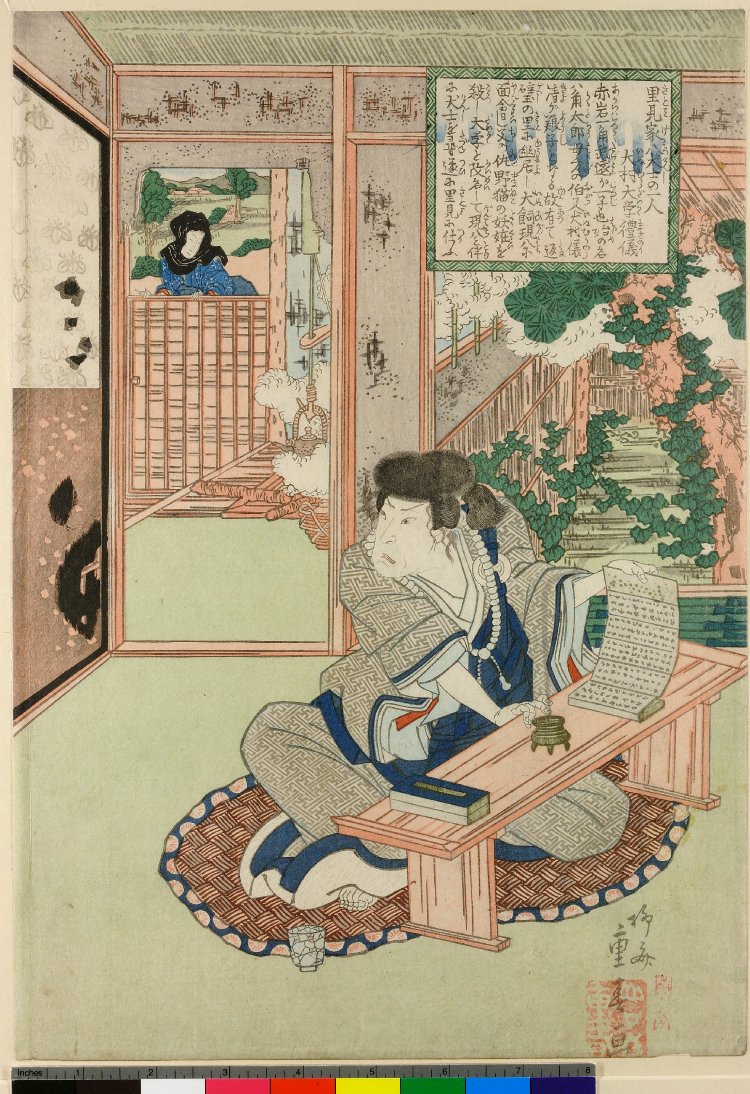
Satomi ke Hakkenshi no hitori (One of the Eight Heroes of the Satomi Clan: Inumura Daikaku Surprised by a Female in His Hermitage)
c. 1830s
Color woodblock print
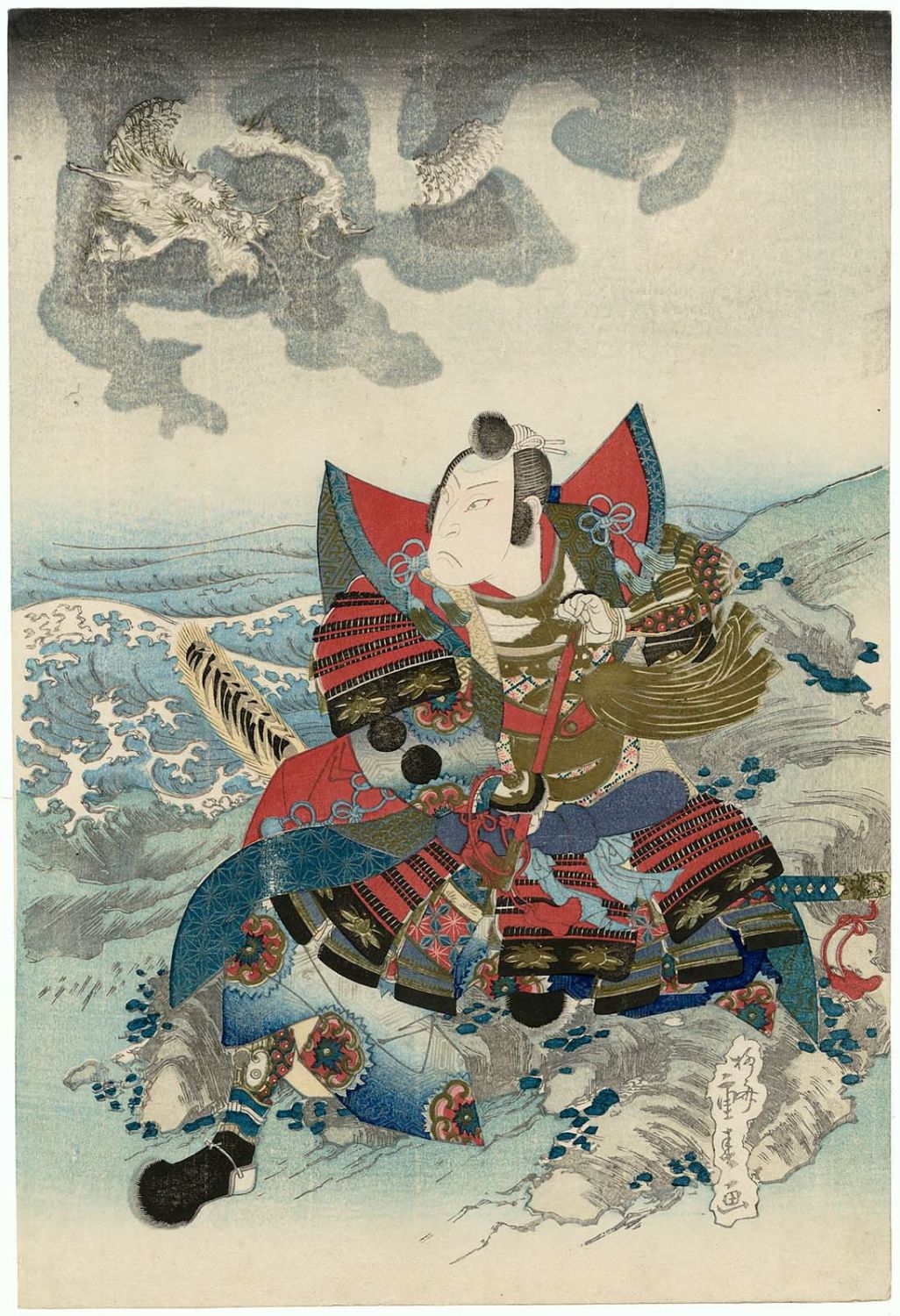
Actor Arashi Rikan as Chinzei Hachirō Tametomo
1833
Woodblock print (nishiki-e); ink and color on paper; vertical ōban
Frequently Asked Questions
The Courtesan Miyo of the Izutsuya Brothel as a Tea Whisk Vendor, from the series Costume Parade of the Shimanouchi District in Osaka (Naniwa Shimanouchi nerimono, Hachitataki Izutsuya Miyo) was created by Ryūsai Shigeharu (柳斎重春) in 1828, sixth month.