Biography
Ryūsai Shigeharu (柳斎重春, 1803–1853) was one of the leading Osaka kabuki print designers of the late Bunsei and Tenpō periods, and is remembered as the only Osaka artist of his time to earn his living entirely as a professional ukiyo-e designer — a distinction that set him apart from the merchant-amateurs and fan-club designers who dominated the Osaka yakusha-e market. Born Yamaguchi Yasuhide in Hizen Province (Nagasaki) in 1803, he was established in Osaka's Mitsudera-machi district by around 1820 to study printmaking, and the single-sheet prints, illustrated books, theater programs, and paintings he produced over the following decades are today held by the Museum of Fine Arts Boston, the Metropolitan Museum of Art, the Cleveland Museum of Art, the British Museum, the Library of Congress, and the Art Institute of Chicago, which together preserve the principal Western record of his career.
Shigeharu's first teacher in Osaka was Utagawa Kunihiro, under whom he began publishing around 1820 using the art name Nagasaki Kunishige (長崎国重) — a signature that acknowledged both his birthplace and his master. His more decisive training came through Yanagawa Shigenobu (1787–1832), the surimono and book-illustration specialist who had married into the Hokusai family in Edo before spending several years in Osaka in the early 1820s; from Shigenobu he absorbed a refined book-illustration vocabulary and a connection to the broader Hokusai stylistic orbit. In the spring of 1825 Shigeharu adopted the art name Ryūsai Shigeharu (柳斎重春), incorporating the 柳 (yanagi, willow) of Yanagawa Shigenobu and the 重 (shige) of his master's name into a new signature that anchored him within the Yanagawa lineage. He later signed work under the studio name Gyokuryūtei (玉柳亭), among others; his peak years as a single-sheet designer fell around 1829–1831.
The Osaka theatrical world of the 1820s and 1830s was tightly focused on a handful of star tachiyaku (male leads) — Nakamura Utaemon III, Arashi Rikan II, Ichikawa Hakuen II, and Onoe Kikugorō III on his Osaka tours — and a corresponding small group of onnagata (female-role specialists), and Shigeharu's documentary output covered nearly all of them. His mature yakusha-e favored the standard vertical ōban format, often extended into diptychs and occasionally triptychs for paired-actor confrontation scenes drawn from specific kabuki productions. He shared the kamigata-e visual register that distinguished Osaka prints from their Edo counterparts — restrained palettes, careful inscription of role and actor name, attention to facial expression as the carrier of character, and smaller editions on heavier paper using metallic and embossed effects — and his designs document the same theatrical events as his contemporaries Shunkōsai Hokushū, Shunbaisai Hokuei, and Gigadō Ashiyuki, but with a slightly more graphic line and a more dynamic compositional sense that some scholars trace to his exposure to Hokusai through Shigenobu.
From the early 1830s Shigeharu produced an increasing volume of book illustration, including the celebrated Yakusha fūzoku sangokushi (Three Kingdoms of Actors' Customs), and he collaborated with Shigenobu on a pattern book of fashionable courtesan clothing. His working relationship with the publisher Tenki/Tenmaya Kihei, who operated under the studio name Kinkadō (金華堂) from 1816 into the 1850s, sustained much of his output. Around the time of the Tenpō-period censorship reforms of the early 1840s, Shigeharu appears to have returned to his native Nagasaki, and he died in 1853.
Shigeharu's daughter Yonejo became a painter whose work was sought by foreign collectors in the late nineteenth century, and Shigeharu's own prints arrived in Western collections through the same wave of late-Meiji acquisitions that brought the broader kamigata-e corpus to Boston, London, and Cleveland — many entering the Museum of Fine Arts, Boston through the William Sturgis Bigelow collection. Together these holdings sustain Shigeharu's standing as one of the indispensable Osaka actor-print designers of the early nineteenth century, ranked alongside Hokushū, Hokuei, Ashiyuki, and Hirosada in the kamigata-e canon.
Key Facts
- Active Period
- 1803–1853
- Nationality
- 🇯🇵Japan
- Movement
- Ukiyo-e
- Subjects
- Mount Fuji
- Works Indexed
- 9
Frequently Asked Questions
Ryūsai Shigeharu (柳斎重春, 1803–1853) was one of the leading Osaka kabuki print designers of the late Bunsei and Tenpō periods, and is remembered as the only Osaka artist of his time to earn his living entirely as a professional ukiyo-e designer — a distinction that set him apart from the merchant-amateurs and fan-club designers who dominated the Osaka yakusha-e market. Born Yamaguchi Yasuhide in Hizen Province (Nagasaki) in 1803, he was established in Osaka's Mitsudera-machi district by around 1820 to study printmaking, and the single-sheet prints, illustrated books, theater programs, and paintings he produced over the following decades are today held by the Museum of Fine Arts Boston, the Metropolitan Museum of Art, the Cleveland Museum of Art, the British Museum, the Library of Congress, and the Art Institute of Chicago, which together preserve the principal Western record of his career.
Ryūsai Shigeharu was active from 1803 to 1853. They were associated with the Ukiyo-e movement.
Ryūsai Shigeharu's work was shaped by the Ukiyo-e tradition in Japanese woodblock printmaking. Ukiyo-e: ## What is ukiyo-e? Ukiyo-e ([浮世絵](/glossary/ukiyo-e)) — literally "pictures of the floating world" — is the Edo-period Japanese print and painting tradition that flourished from roughly 1660 to 1868, depicting the pleasures of urban life in Edo (modern Tokyo): courtesans, kabuki actors, sumo wrestlers, famous landscapes, and seasonal beauties.
Ryūsai Shigeharu's prints frequently feature mount fuji.
Original prints by Ryūsai Shigeharu can be found in collections including Metropolitan Museum of Art, Cleveland Museum of Art, British Museum, Museum of Fine Arts, Boston.
Woodblock Prints by Ryūsai Shigeharu (9)
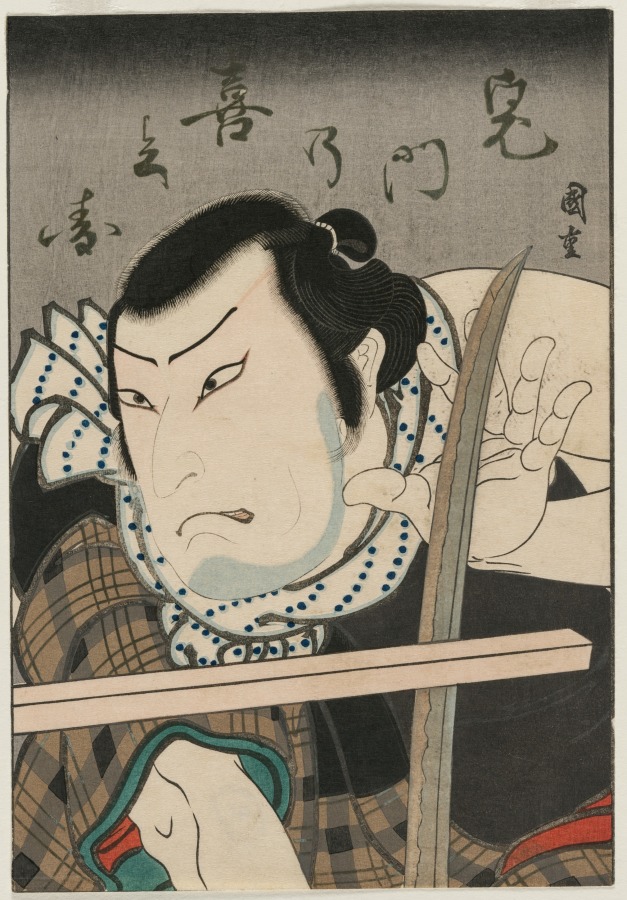
Actor as Kimon no Kihei
before 1826
Color woodblock print
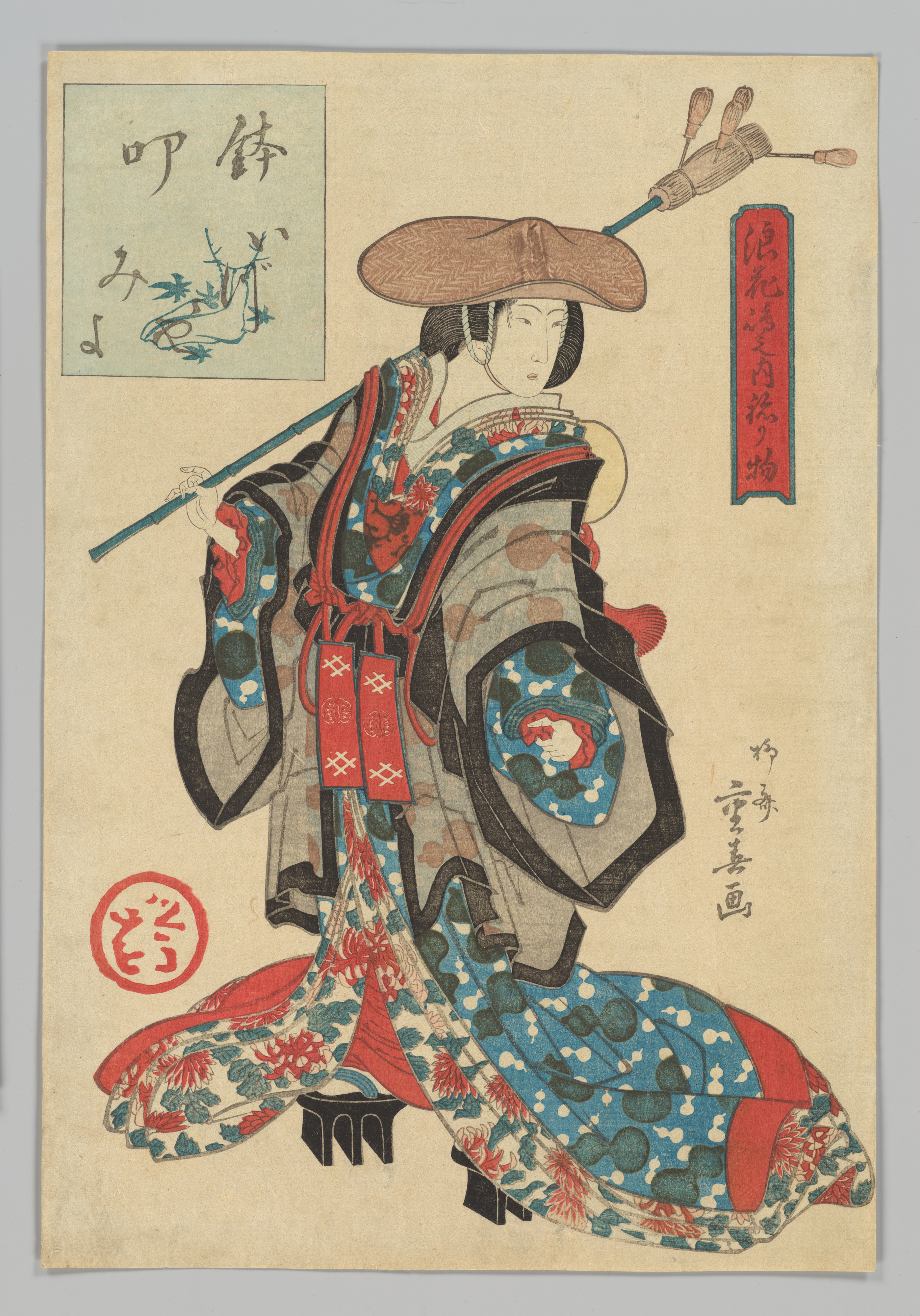
The Courtesan Miyo of the Izutsuya Brothel as a Tea Whisk Vendor, from the series Costume Parade of the Shimanouchi District in Osaka (Naniwa Shimanouchi nerimono, Hachitataki Izutsuya Miyo)
1828, sixth month
Woodblock print (nishiki-e); ink and color on paper
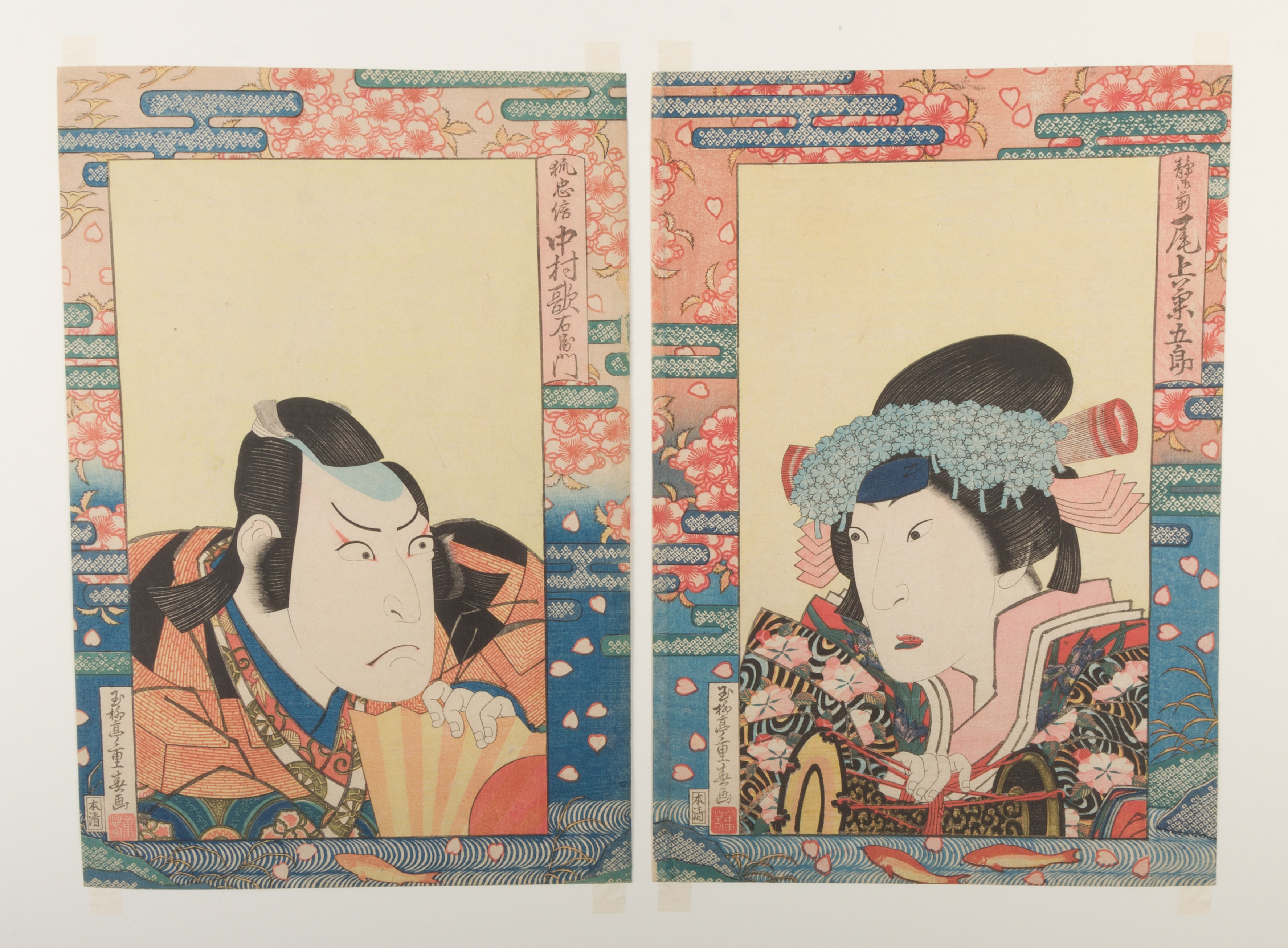
Kabuki Actors Onoe Kikugorō III as Shizuka Gozen and Nakamura Utaemon III as Kitsune Tadanobu, in the play Yoshitsune senbon zakura (The Thousand Cherry Trees of Yoshitsune)
1830
Diptych of woodblock prints (nishiki-e); ink and color on paper; vertical ōban
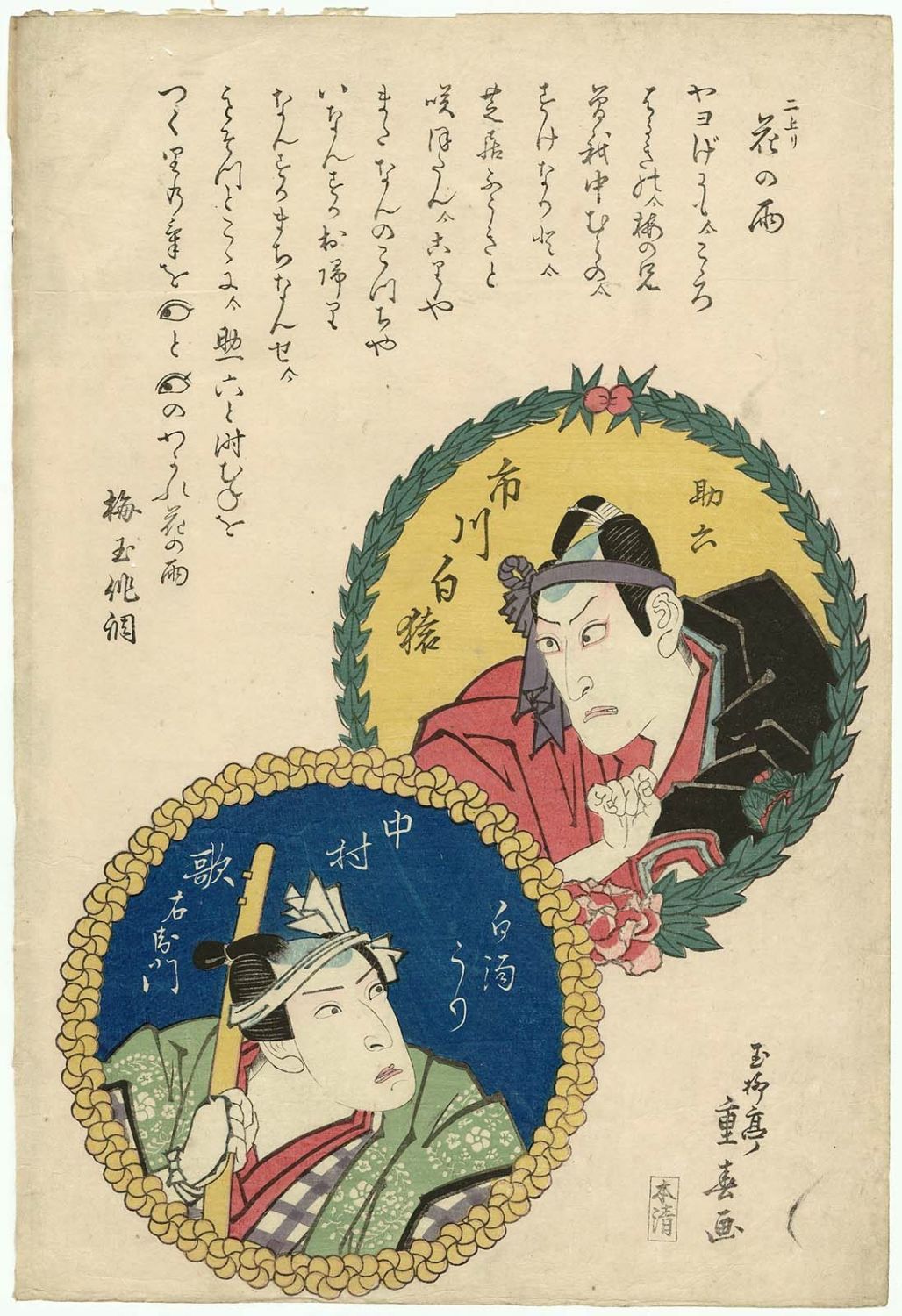
Actors Ichikawa Hakuen II as Sukeroku and Nakamura Utaemon III as a Vendor of White Sake
1830
Diptych of woodblock prints (nishiki-e); ink and color on paper; vertical ōban
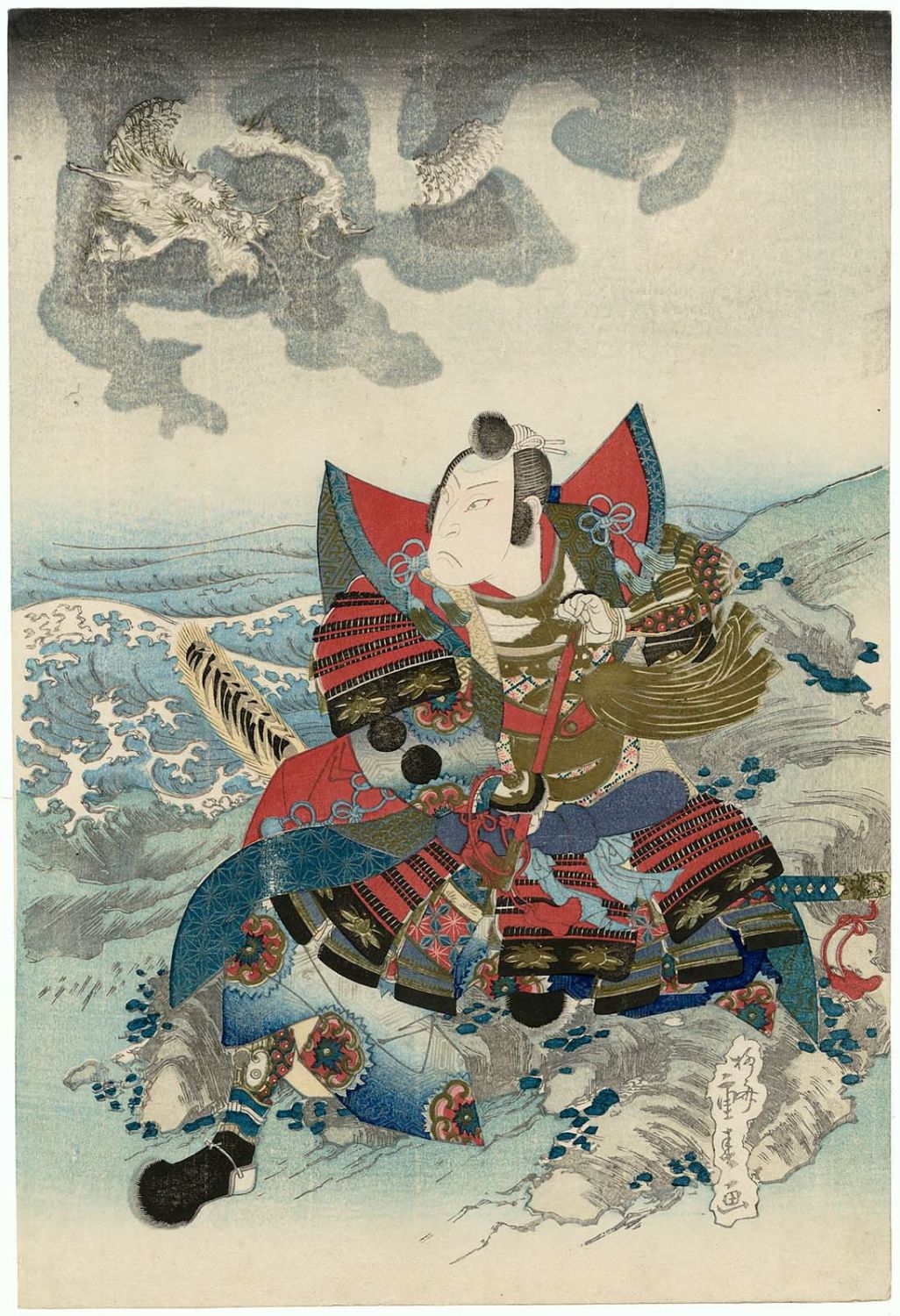
Actor Arashi Rikan as Chinzei Hachirō Tametomo
1833
Woodblock print (nishiki-e); ink and color on paper; vertical ōban
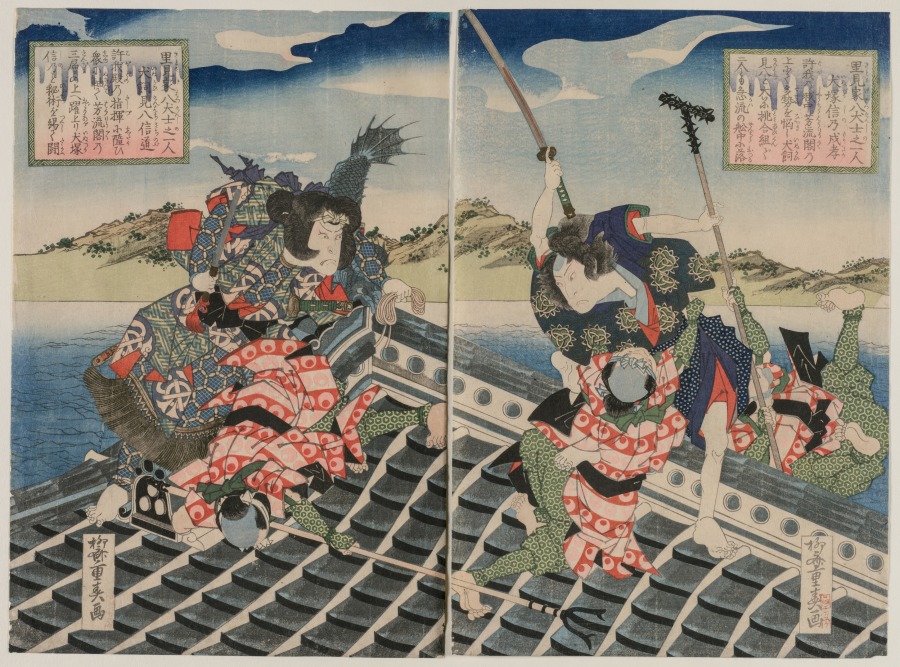
Arashi Rikan II as Inuzuka Shino Moritaka and Nakamura Utaemon III as Inukai Kenpachi Michinobu Battling (from the series The Eight Heroes of the Satomi Clan)
1834
Color woodblock print diptych
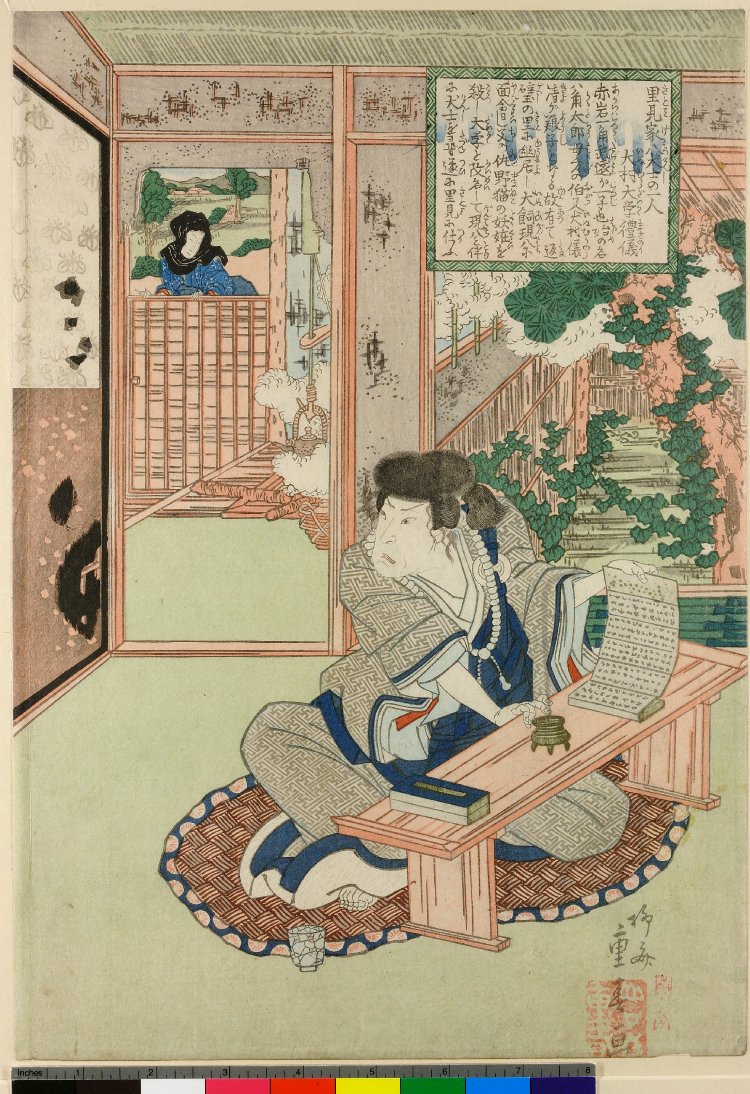
Satomi ke Hakkenshi no hitori (One of the Eight Heroes of the Satomi Clan: Inumura Daikaku Surprised by a Female in His Hermitage)
c. 1830s
Color woodblock print
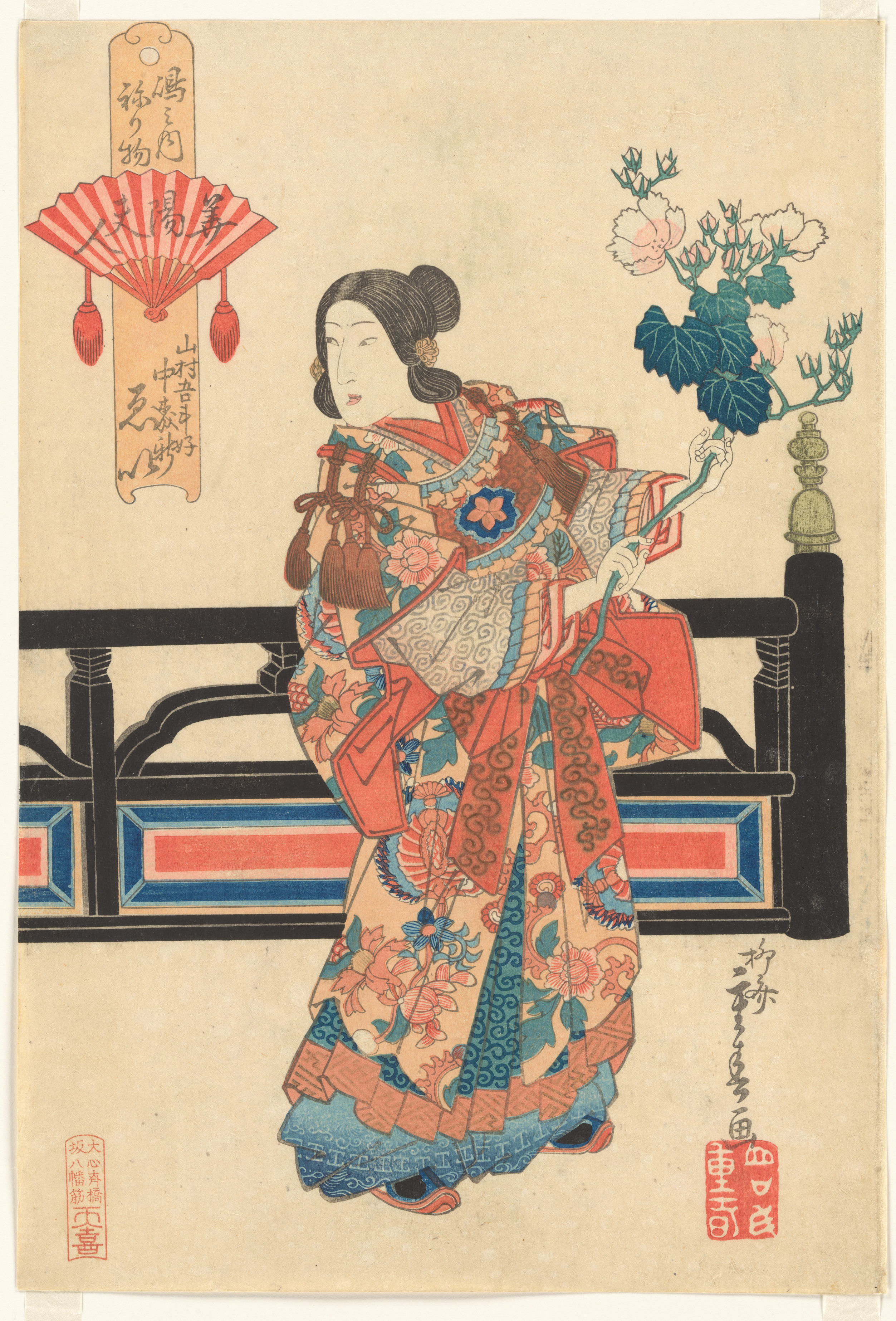
"Ei of the Nakamoriken Brothel, who was a favorite of Yamamura Goto, as Lady Huayang (Kayō Fujin Yamamura Goto gonomi Nakamoriken Ei)," from the series Costume Parade of the Shimanouchi District in Osaka (Naniwa Shimanouchi nerimono)
1836
Right sheet of a diptych of woodblock prints (nishiki-e); ink and color on paper; vertical ōban
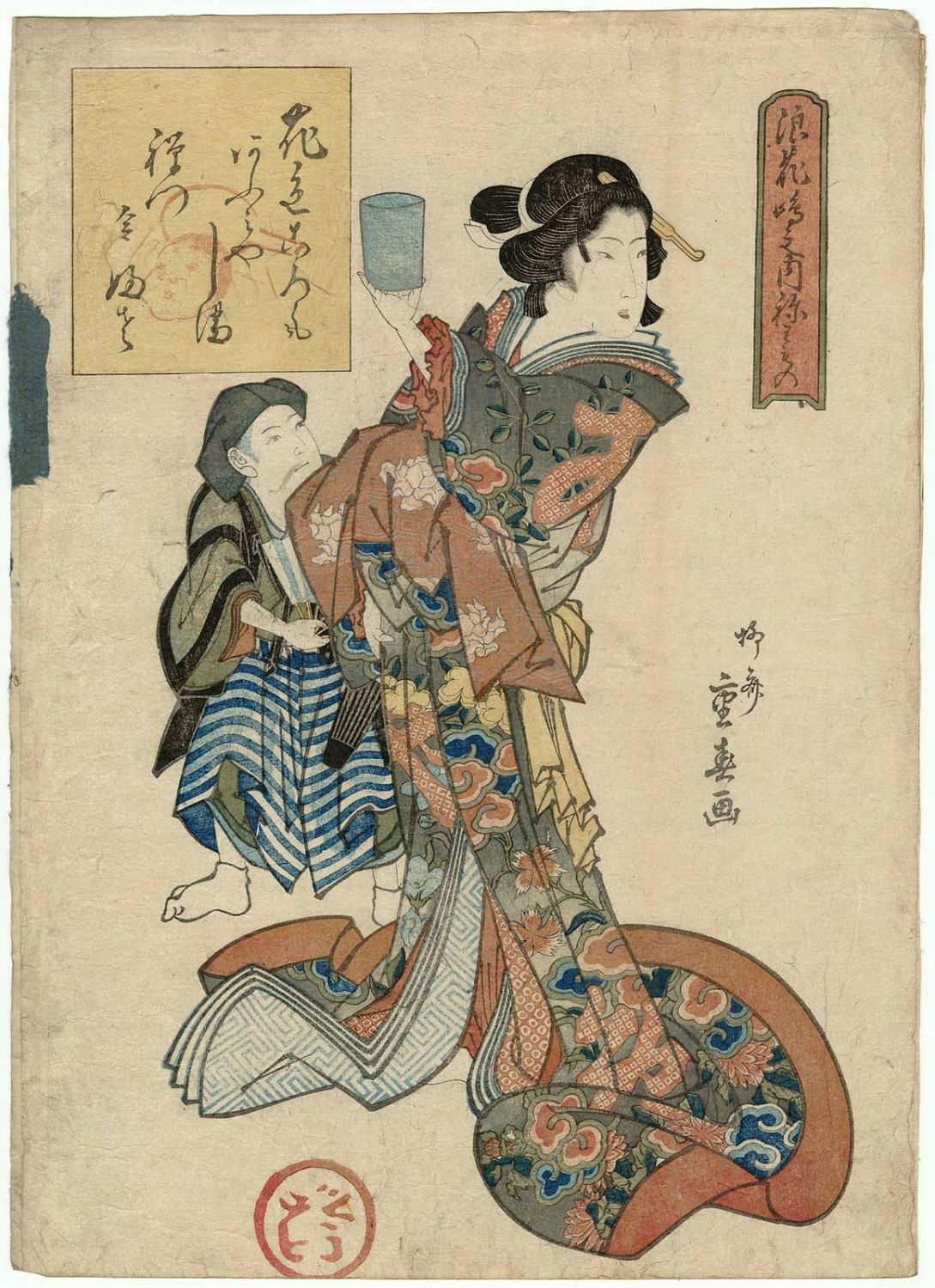
Shima of Ōmiya, from the series Costume Parade of the Shimanouchi Quarter in Osaka (Naniwa Shimanouchi nerimono)
1836
Woodblock print (nishiki-e); ink and color on paper; vertical ōban