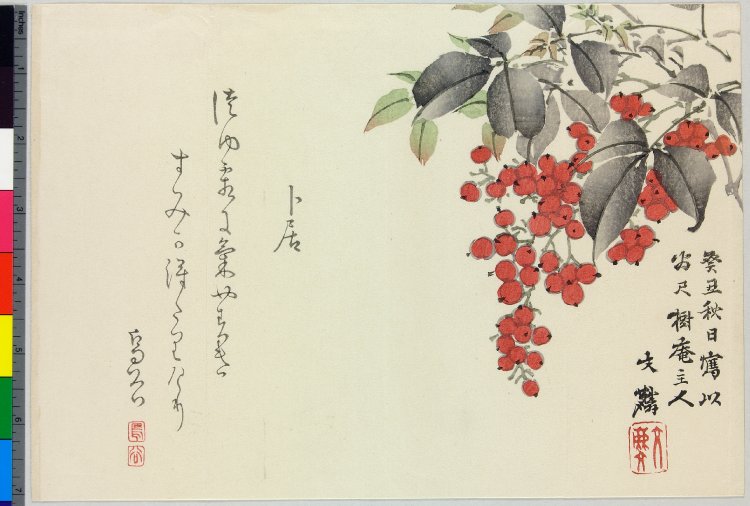
Surimono with Nanten Berries
- Date:
- 1853
- Medium:
- Surimono; woodblock print
- Source:
- British Museum
Description
Dated 1853 and held in the British Museum (1980,1022,0.16), this surimono with nanten berries represents Shiokawa Bunrin's contribution to the elite tradition of privately commissioned, lavishly produced woodblock prints that flourished in mid-nineteenth-century Kyoto. The nanten (heavenly bamboo, Nandina domestica), an evergreen shrub whose bright red berries persist through winter and into the New Year season, was an auspicious subject associated with year-end and New Year celebrations and a recurring motif in surimono designed for the season.
Surimono were privately commissioned, deluxe woodblock prints produced for kyōka poetry circles and other private patrons, characterized by the use of expensive pigments, lavish ground techniques (including metallic powders, blind embossing, and gauffrage), and small editions. They typically combined image and inscribed verse, with the image carrying the seasonal or thematic motif and the inscribed kyōka providing the literary frame. Bunrin's design, signed and sealed, applies the Shijō painter's sensitivity to natural form to the small surimono format, demonstrating the way Kyoto painters of his generation could move between the formats of painted scroll and printed sheet without compromising the school's pictorial values.
The British Museum's holding of Bunrin surimono, which includes this Nanten print along with several other examples of his work in the format, documents an important but under-studied aspect of his oeuvre: his engagement with the parallel world of Kyoto and Osaka surimono production during the 1850s and 1860s. The print's date of 1853 corresponds to the late Kaei era and places it among the earliest documented Bunrin surimono, contributing to the broader picture of mid-nineteenth-century Kyoto print culture.
More Prints by Shiokawa Bunrin
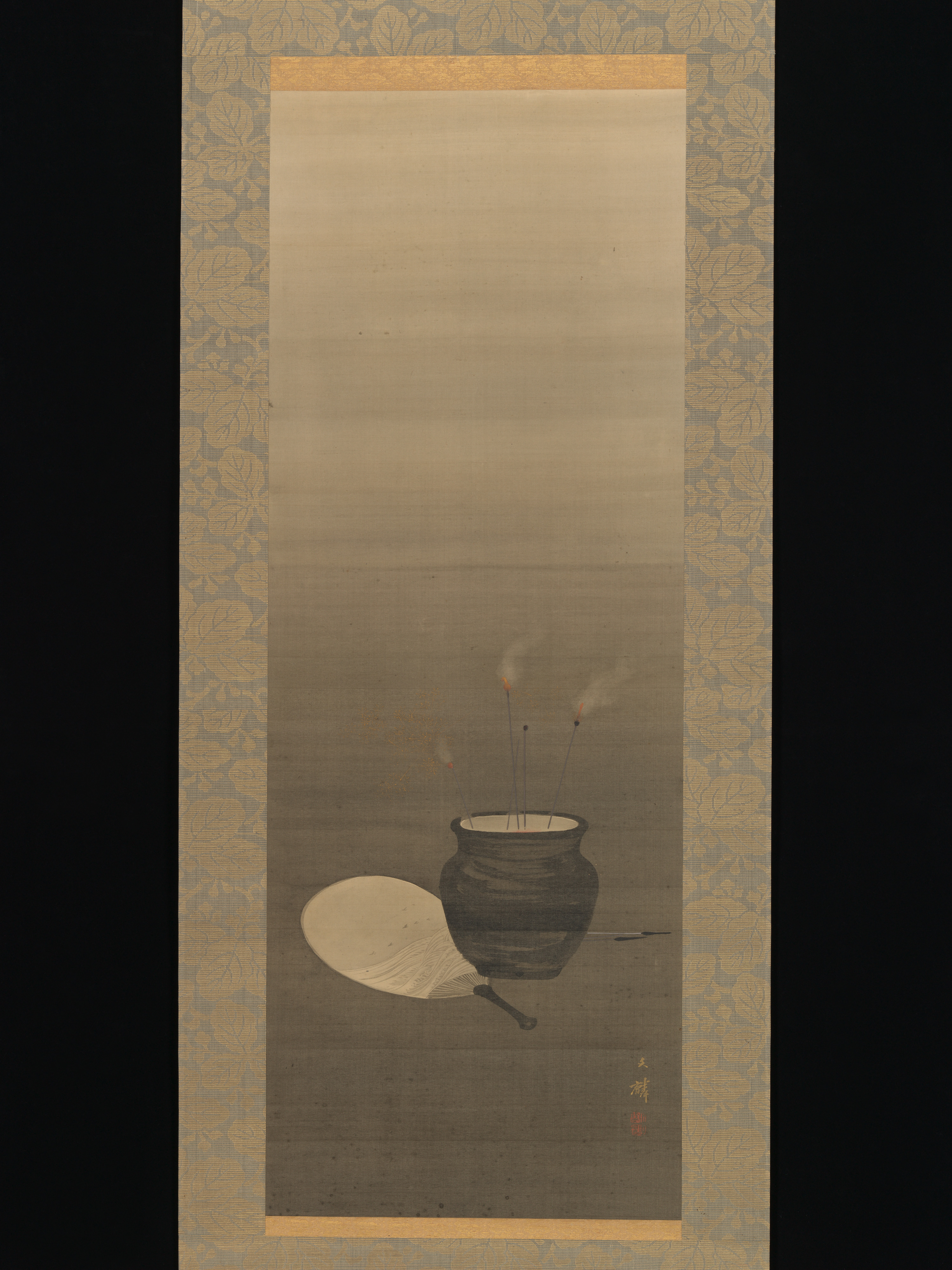
Sparklers on Summer Evening
Edo period (1615-1868)
Hanging scroll; ink, color and gold on silk
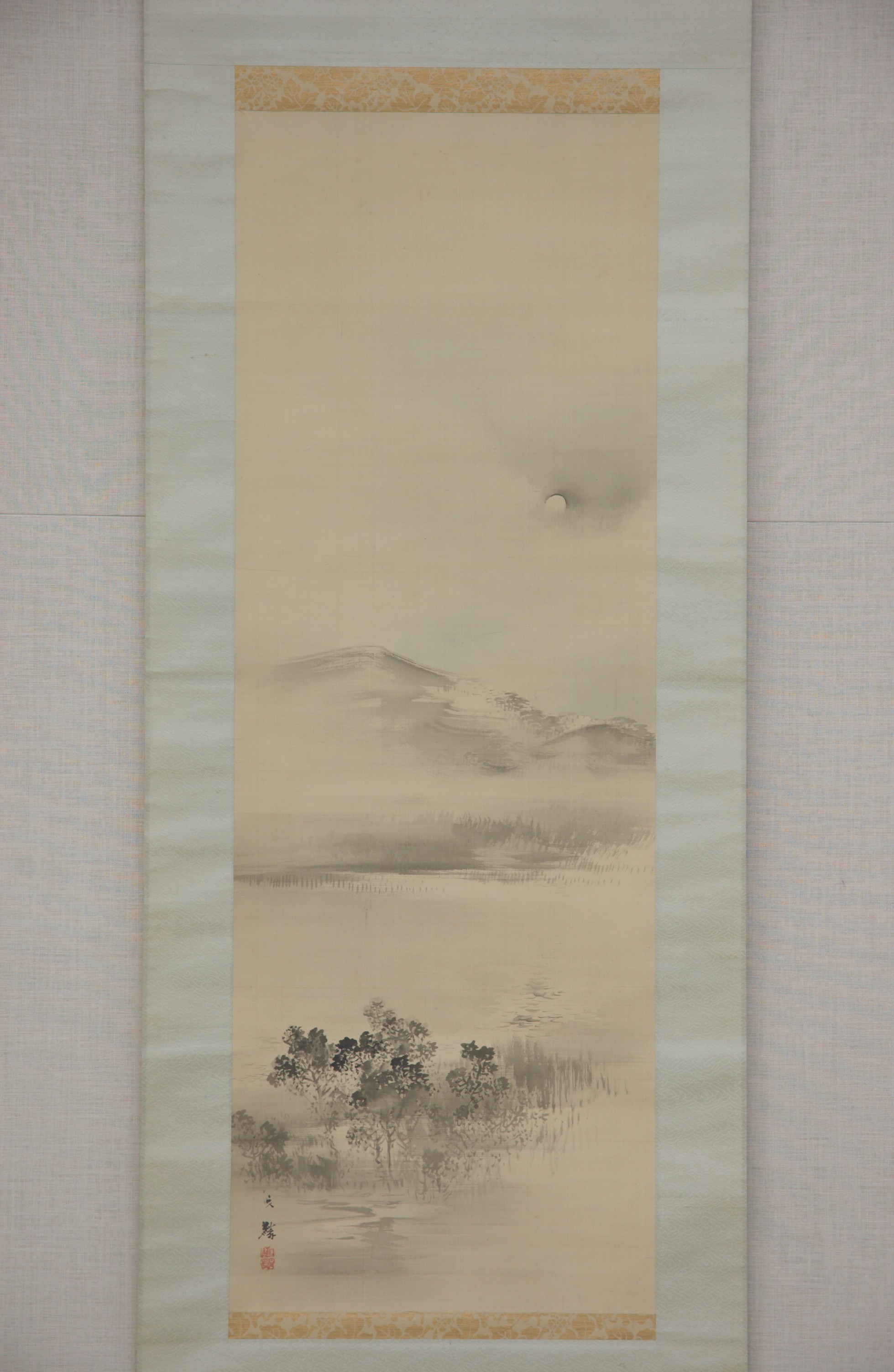
Landscape with the Moon
19th century
Hanging scroll; ink and color on silk
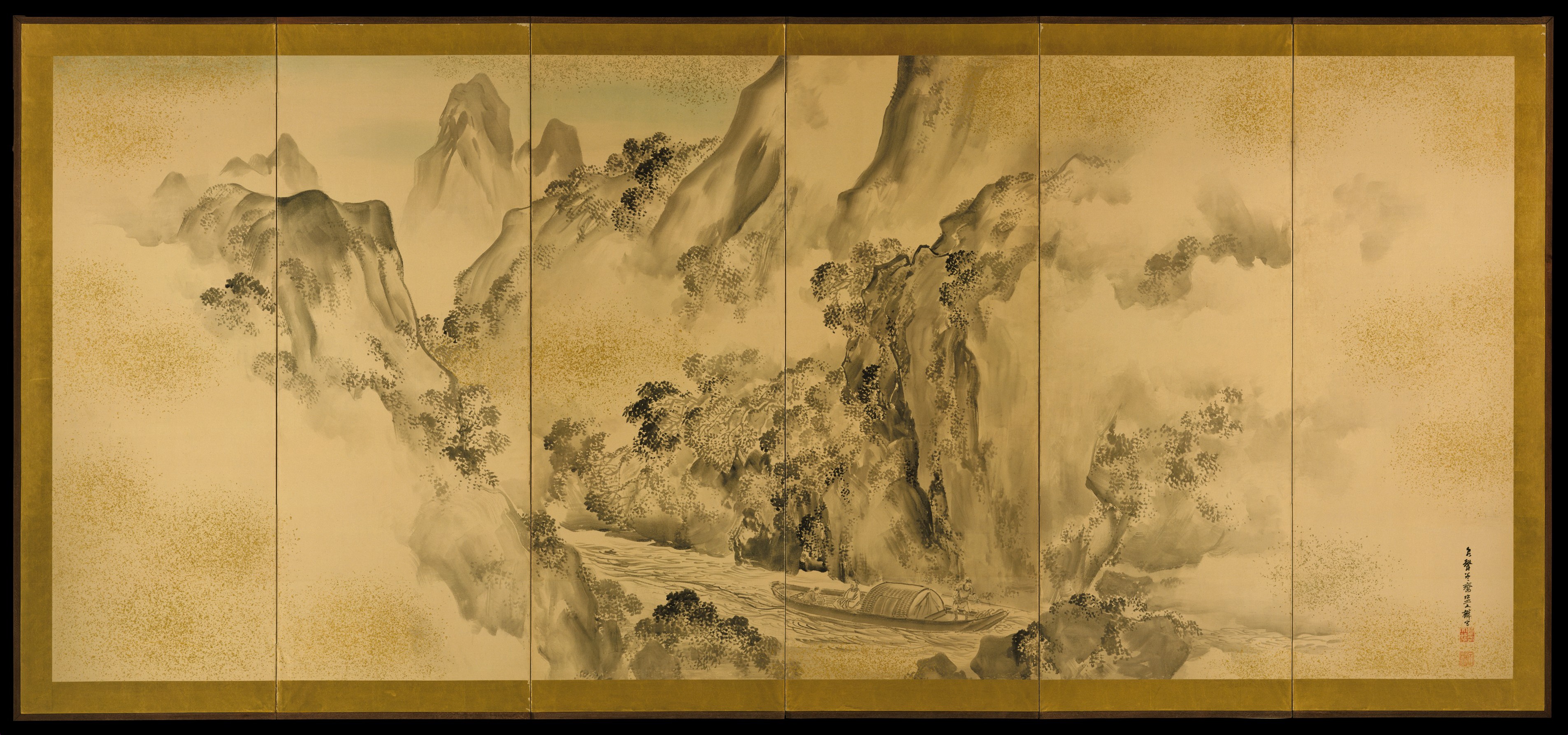
The Poet Li Bo's Visit to Mount Emei
1875
Pair of six-panel folding screens; ink and gold on paper
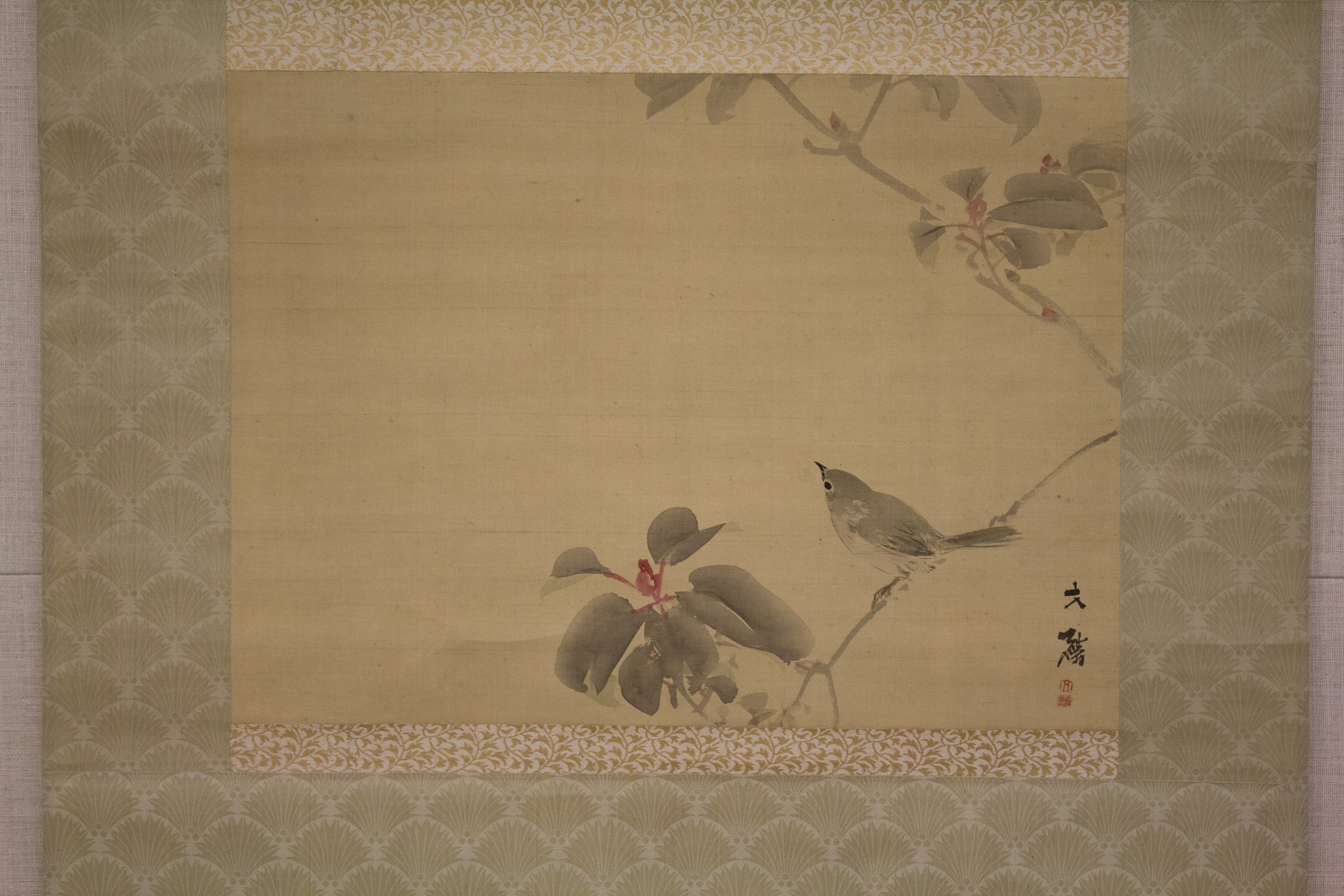
Bird on a Branch
Edo period (1615-1868)
Hanging scroll; ink and color on silk
Frequently Asked Questions
Surimono with Nanten Berries was created by Shiokawa Bunrin (塩川文麟) in 1853.