
Scene No. 1 (1)
- Source:
- ukiyo-e.org
Description
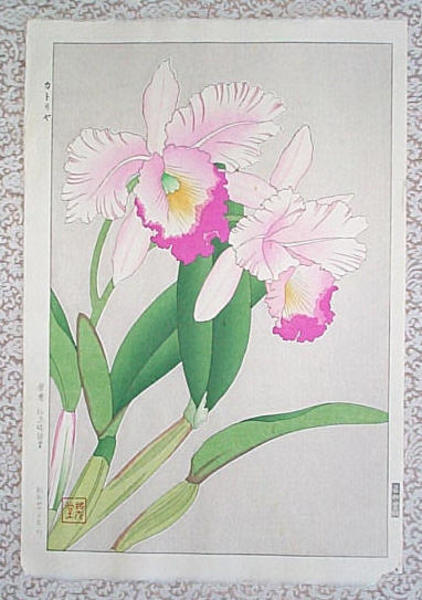
Scene No. 1 (1) is a woodblock print by Shodo Kawarazaki (1889-1973), recorded by ukiyo-e.org as part of his Floral Calendar of Japan series, a sustained shin-hanga kacho-e project in which Kawarazaki worked his way through the flowers associated with successive seasons of the Japanese year. The Floral Calendar suite is one of his most ambitious undertakings and reflects a long-standing convention in Japanese visual culture, in which the passage of months is marked less by numbers than by the plants that come into bloom: plum and camellia in late winter, cherry and wisteria in spring, iris and hydrangea in early summer, and so on through the chrysanthemums of autumn. By organizing his prints around this seasonal cycle, Kawarazaki aligned his work with the saijiki tradition that has shaped poetry and painting in Japan for centuries. The print is published by Unsodo, the Kyoto house that became the most important twentieth-century steward of collaborative woodblock kacho-e and whose shin-hanga program kept the Edo-era workshop model alive into the postwar decades. Each sheet in the calendar is printed from multiple carved blocks using water-based pigments on washi paper, with subtle gradations that capture the particular light and atmosphere of its month. Although the specific flower depicted in this catalog entry is not titled beyond Scene No. 1 (1), it belongs to the same disciplined visual vocabulary that defines the rest of the series: a single botanical subject, an uncluttered ground, and careful color registration. For collectors of shin-hanga kacho-e, the Floral Calendar of Japan demonstrates Kawarazaki's commitment to seasonal observation as the organizing principle of his print practice. Image source: ukiyo-e.org.
More Prints by Shodo Kawarazaki
Featured in Collections
Curated cross-cuts that include this print.
Frequently Asked Questions
Scene No. 1 (1) was created by Shodo Kawarazaki (河原崎奨堂).