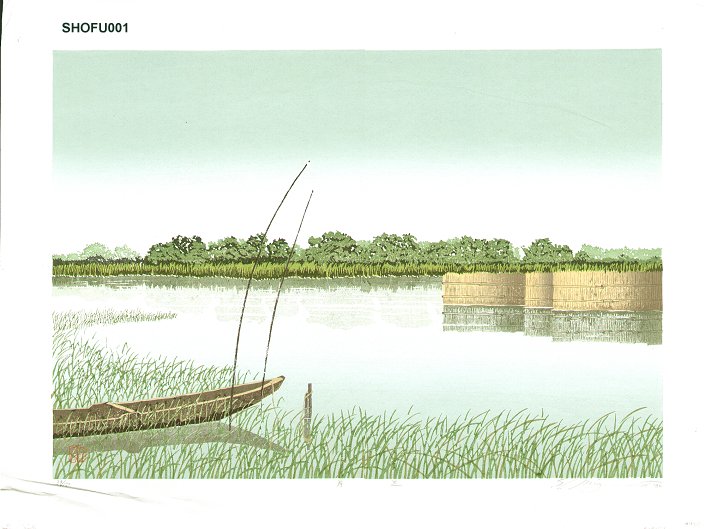
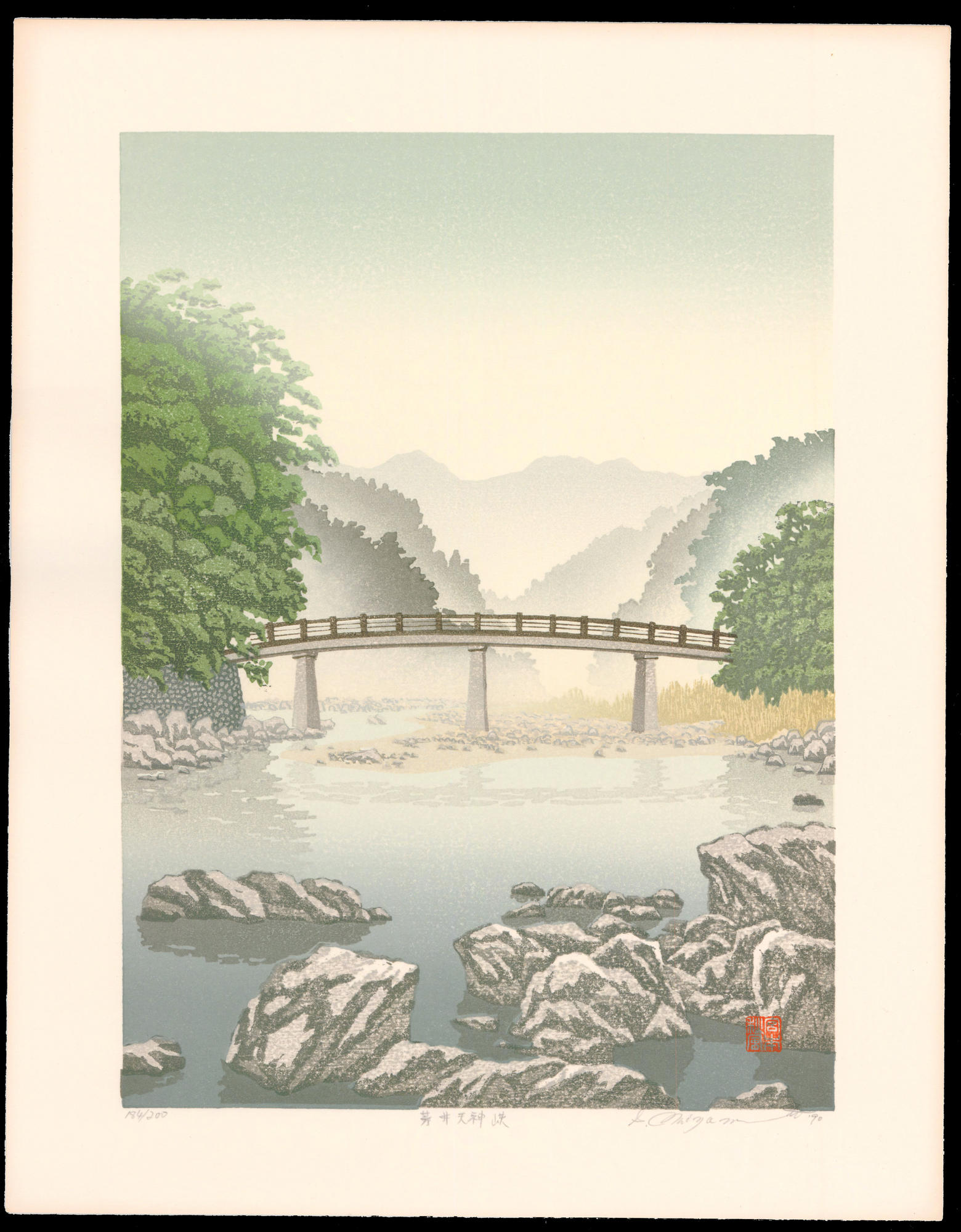
Riverside
- Medium:
- Woodblock print
- Source:
- wbp
Description
This woodblock print depicts a riverside scene, with the waterway and its banks providing the compositional framework for Miyamoto Shufu's atmospheric treatment. The title's simplicity suggests a generic rather than specific location, allowing the print to function as an archetype of the Japanese riverside landscape. Shufu's rendering likely emphasizes the transitional zone where land meets water, a boundary that shifts with the river's level and the season's character. Trees, grasses, or structures along the bank may provide vertical elements against the river's horizontal flow. The water's surface serves as Shufu's primary canvas for atmospheric effects, reflecting sky conditions and carrying the ambient light that gives each time of day its particular visual identity. The print belongs to a long tradition of riverside subjects in Japanese art, from Heian-era screen paintings to modern shin-hanga.
More Prints by Miyamoto Shufu
More Landscapes Prints

Lake Kugushi in Wakasa Province (Wakasa Kugushiko), from the series Souvenirs of Travel I (Tabi miyage dai isshu)"
Wakasa Kugushiko
1920
Color woodblock print; oban
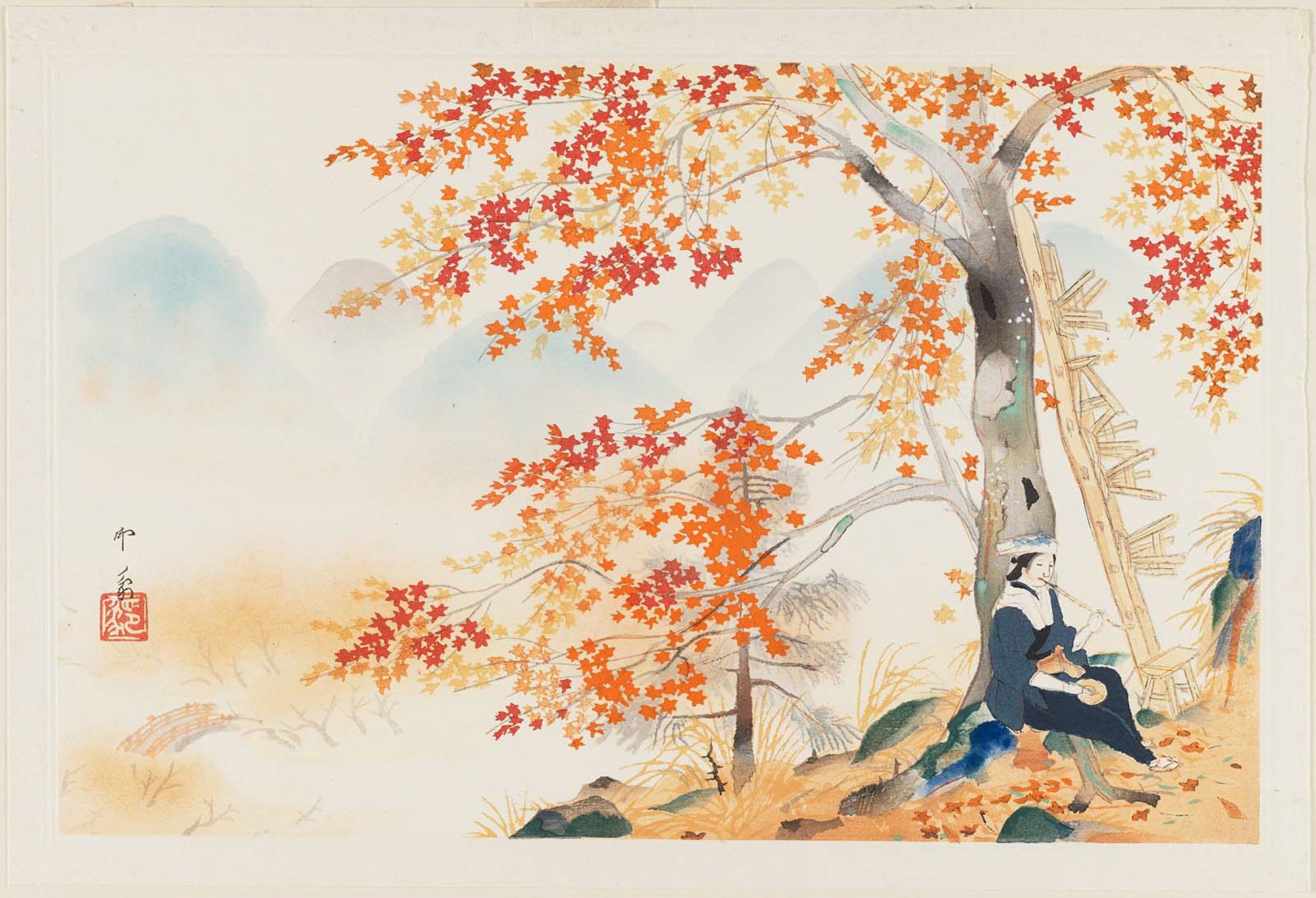
Autumn Maple Leaves at Takao, from the album Eight Views of Kyoto (Kyôto hakkei)
Woodblock print

The Beach at Kaiganji in Sanuki Province (Sanuki Kaiganji no hama), from the series "Collection of Views of Japan II, Kansai Edition (Nihon fukei shu II Kansai hen)"
1934
Color woodblock print; oban

Tea Kettle, section of a sheet from the series "Mirror of Stone Rubbings of Views of the Provinces" (Kohon meihitsu ishizuri kagami)
n.d.
Woodblock print; ishizuri-e, section of harimaze sheet
Featured in Collections
Curated cross-cuts that include this print.
Frequently Asked Questions
Riverside was created by Miyamoto Shufu (宮本秋風).
Riverside depicts landscapes and rivers & lakes.