
Woman and Lute
- Source:
- ukiyo-e.org
Description
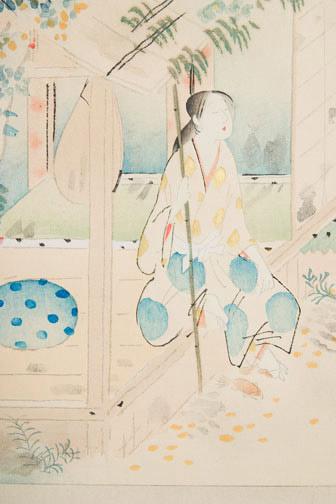
Woman and Lute is a Japanese woodblock print by Suga Tatehiko, a figure associated with the bijin-ga (pictures of beautiful women) tradition that flowered within shin-hanga and its surrounding currents during the early-to-mid twentieth century. The composition centers on a seated female figure cradling a stringed instrument identified in the English title as a lute, a designation that in Japanese print iconography commonly stands in for the biwa or a related plucked instrument long associated with elegance, courtly leisure, and the quiet interior arts. Suga Tatehiko organizes the scene around the soft diagonal of the woman's body and the answering curve of the instrument, allowing the resting hand on the strings to anchor the eye and direct attention to the contemplative tilt of the head. As a Japanese woodblock print in the shin-hanga lineage, the sheet relies on the collaboration between designer, carver, and printer that defined the movement: the carver translates Suga's drawn line into the controlled keyblock that outlines hair, collar, and instrument body, while the printer layers transparent and opaque pigments to model the kimono's pattern and the skin's matte warmth. Shin-hanga prints of this subject typically pair a restrained, almost photographic attentiveness to a single sitter with the decorative flatness inherited from earlier ukiyo-e bijin-ga, and Woman and Lute fits comfortably within that idiom. The impression catalogued through ukiyo-e.org, which aggregates holdings from museum and dealer partners, preserves the print's tonal balance between the figure and its quiet ground. Museum-source documentation on ukiyo-e.org records the work under Suga Tatehiko's name; date, publisher, and series information are not specified in that listing, so this description avoids attributing a specific year or commissioning house. Within Suga Tatehiko's broader output, Woman and Lute exemplifies the shin-hanga interest in the modern bijin as both an heir to Edo-period beauty prints and a fully twentieth-century studio subject.
More Prints by Suga Tatehiko

Frequently Asked Questions
Woman and Lute was created by Suga Tatehiko (須賀建彦).