
cityscape
- Source:
- ukiyo-e.org
Description
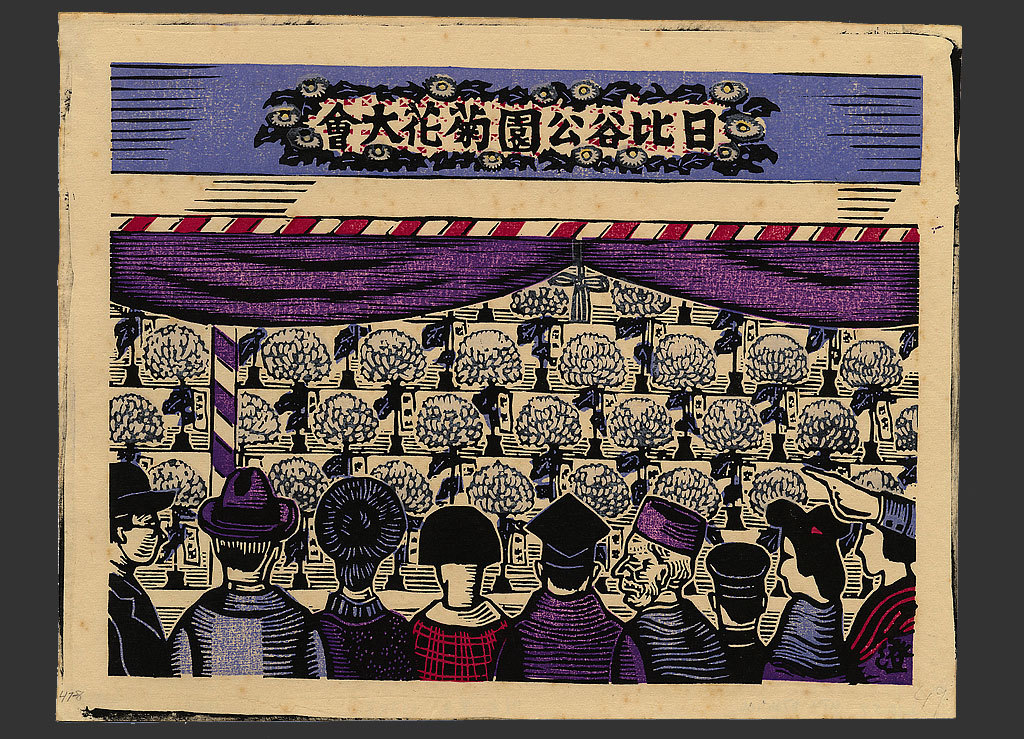
Cityscape by Sumio Kawakami brings the artist's folk-rooted sensibility to bear on the modern urban landscape, a subject that occupied many sosaku-hanga printmakers as Japan rebuilt and transformed itself across the twentieth century. Kawakami was a central, if unconventional, figure in the sosaku-hanga (creative print) movement, which insisted that the artist personally design, carve, and print each block rather than delegating those tasks to specialist craftsmen as had been done in the traditional ukiyo-e system. His mature style, visible in this view of buildings and streets, retains a deliberate roughness: blocky architectural masses, hand-cut outlines, and a restricted palette that gives the city a woodblock-honest weight rather than photographic polish. Kawakami is best known for his namban-influenced prints, which mined Japan's sixteenth- and seventeenth-century encounter with Portuguese and Spanish visitors for imagery of ships, foreigners, and exotic goods; that historical vocabulary informs even his contemporary scenes, lending his rooftops and skylines a faintly archaic, storybook quality. The composition rewards close looking for the way Kawakami balances geometric building shapes against the irregular grain and tool marks of the wood, a tension that is central to the sosaku-hanga aesthetic of the artist's hand made visible. The sheet is documented in the holdings of the Scholten Japanese Art collection, accessible through the ukiyo-e.org research portal, which catalogues Japanese prints from museums, galleries, and private dealers. For collectors of twentieth-century Japanese prints, this Cityscape illustrates how Kawakami's distinctive idiom, forged in the namban tradition, extended naturally into the everyday subjects of modern Japan, contributing to the broader sosaku-hanga project of an art that was at once thoroughly Japanese and thoroughly the work of an individual artist.
More Prints by Sumio Kawakami
![Title unknown [Flowers in a vase] by Sumio Kawakami](https://1.api.artsmia.org/800/135636.jpg)


Featured in Collections
Curated cross-cuts that include this print.
Frequently Asked Questions
cityscape was created by Sumio Kawakami (川上澄生).