
Sofuku Temple in Nagasaki
by Tagawa Ken
- Source:
- ukiyo-e.org
Description
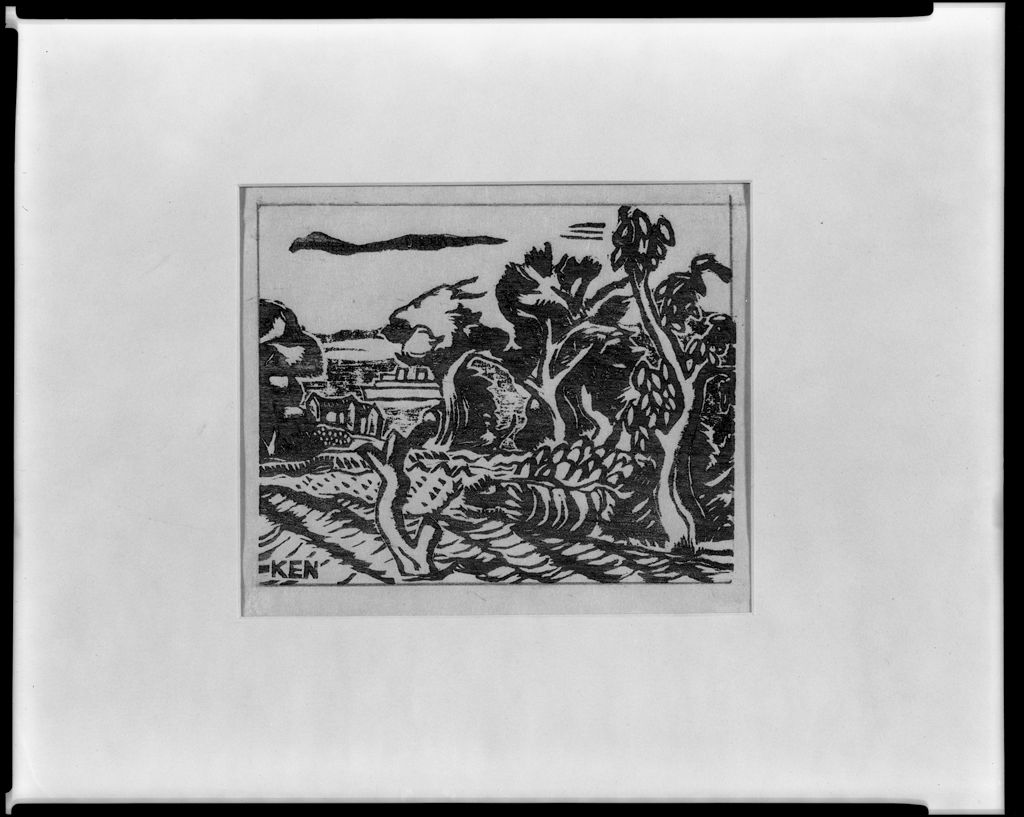
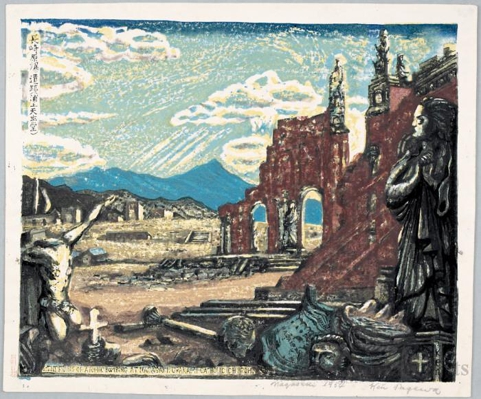
Sofuku Temple in Nagasaki is a Japanese woodblock print by Tagawa Ken depicting one of Nagasaki's most distinctive religious landmarks. Sofukuji, founded in 1629 by Chinese residents of the port city, is a Obaku Zen temple whose architecture preserves the Ming-dynasty Fujianese style that arrived with its first abbot, Chaonian. Its vermilion-painted Daiippomon gate and Daiyuhoden hall, both designated National Treasures, are among the few Ming-style buildings still standing in Japan, and they have long drawn printmakers seeking subjects that bridge Japanese and continental aesthetic traditions. Tagawa Ken treats the temple with the steady, observational eye typical of contemporary mokuhanga, the modern revival of traditional Japanese woodblock printmaking in which the artist often handles design, carving, and printing in a single integrated practice. The composition centers on the temple's distinctive gateway and tiled rooflines, with layered tonal blocks suggesting the warmth of weathered timber, painted plaster, and the dense vegetation of Nagasaki's hillside neighborhood of Teramachi. The print belongs to a long lineage of Nagasaki views in Japanese woodblock art, stretching from the Nagasaki-e of the Edo period through Yoshida Hiroshi and the shin-hanga movement to the sosaku-hanga and contemporary mokuhanga generations. This impression, catalogued through ukiyo-e.org, documents Tagawa Ken's contribution to that tradition: a quietly precise architectural study that registers both the building's foreign origins and its long assimilation into the visual identity of Nagasaki. The image rewards close looking, as the registration of multiple blocks builds depth across the gate, courtyard, and roofline without resorting to dramatic perspective or strong contrast, giving the temple the contemplative stillness that Sofukuji's worshippers and visitors have known for nearly four centuries.
More Prints by Tagawa Ken


Frequently Asked Questions
Sofuku Temple in Nagasaki was created by Tagawa Ken (田川憲).