
Jealousy
- Source:
- ukiyo-e.org
Description
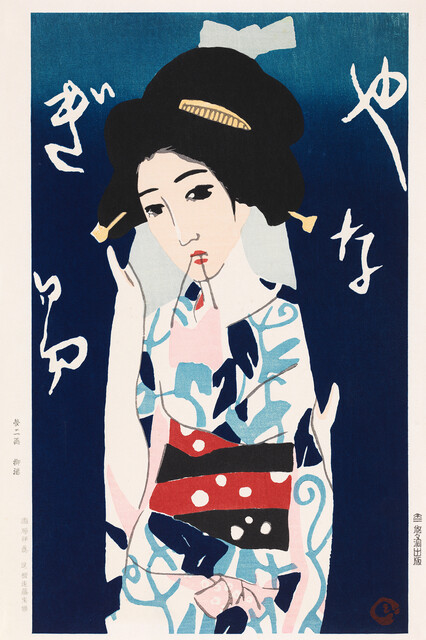
Jealousy, recorded on ukiyo-e.org through The Art of Japan gallery, is a Takehisa Yumeji print in which the artist names an emotion outright and then trusts the image to deliver it through pose and atmosphere alone. The subject is a modern Japanese bijin shown in a moment of quiet suffering, her body language conveying the tension and inward burning that the title makes explicit. Yumeji's emotional vocabulary always tended toward muted registers, but in works like Jealousy he allows the yumeji-shiki style to carry a more dramatic charge: the elongated neck twists slightly, the eyes lower or slide sideways, and the hands take up a position that suggests restraint as much as gesture. Naming a print after an emotion rather than a literary character or season is itself a deeply Taisho roman choice, paralleling the period's fascination with psychological interiority in fiction by writers like Akutagawa and Tanizaki, who together with Yumeji helped define the literary culture of the 1910s and 1920s. The composition is graphically simple, using flat color and economical line in ways that recall European Art Nouveau illustration and Yumeji's own work for popular magazines. By compressing a complex feeling into a single, almost emblematic figure, Jealousy demonstrates how Yumeji extended modern Japanese bijin printmaking beyond conventional types of geisha and seasonal beauty into territory more usually associated with novels, poems, and theater, giving collectors a Taisho-era counterpart to Western fin de siecle psychological portraiture.
More Prints by Takehisa Yumeji

Frequently Asked Questions
Jealousy was created by Takehisa Yumeji (竹久夢二).