
March Skylark
- Source:
- ukiyo-e.org
Description
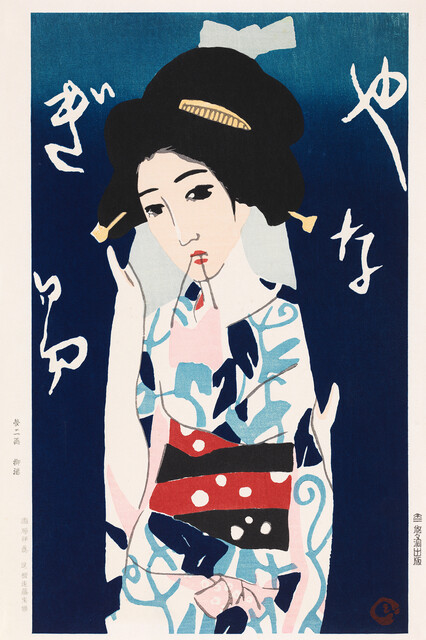
March Skylark belongs to Takehisa Yumeji's poetic seasonal compositions, where Taisho roman atmosphere is built less from explicit narrative than from a single evocative motif. The title points to the hibari, the small lark whose song heralds early spring in Japanese classical poetry and is bound up with waka and haiku traditions celebrating the third lunar month. In Yumeji's hands, the seasonal cue becomes a frame for one of his characteristic modern Japanese bijin: a slender young woman whose elongated proportions, small mouth, and slightly downturned gaze define the so-called yumeji-shiki face. Rather than illustrating the lark literally, Yumeji often uses the season to set a mood of fragile optimism, pairing his figure with delicate pattern, restrained color, and a clear, slightly chilly light suggestive of March. The print's compositional economy, with the figure isolated against largely empty ground, owes more to the graphic flatness of Art Nouveau posters and to Yumeji's own design work for books and sheet music than to the densely layered ukiyo-e bijin-ga of the previous century. This blending of woodblock craft with Western-inflected design is exactly what made Yumeji the central image-maker of Taisho roman culture during the 1910s and early 1920s. Recorded on ukiyo-e.org via The Art of Japan gallery, March Skylark is an attractive example for collectors who are drawn to Yumeji's lyric mode and to the broader story of how modern Japanese bijin imagery absorbed European influence while remaining unmistakably Japanese in line, color, and emotional temperature.
More Prints by Takehisa Yumeji


Frequently Asked Questions
March Skylark was created by Takehisa Yumeji (竹久夢二).