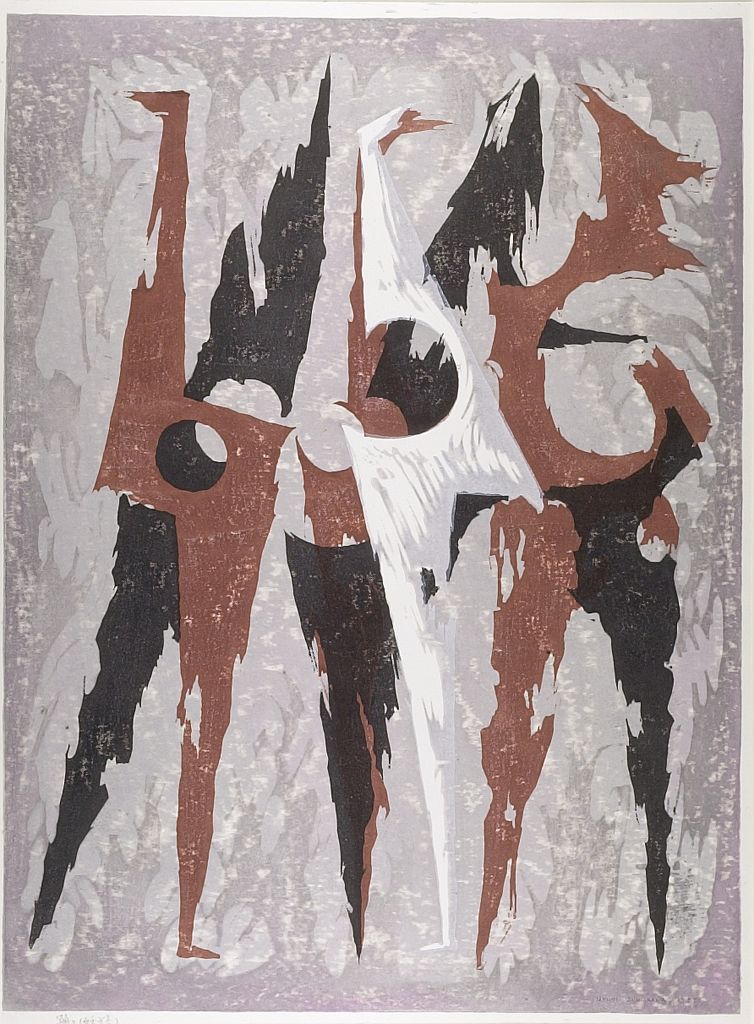
Dance of Death, Shôwa period, dated 1958
- Medium:
- Woodblock print
- Edition:
- Self-printed
- Source:
- Harvard Art Museums
Description
Dated to 1958 during the Showa period, this woodblock print confronts mortality through the lens of dance, invoking the medieval European danse macabre tradition. Shinagawa transposes this Western memento mori concept into the visual language of Japanese printmaking, creating a work that bridges cultural traditions of representing death. The dance of death theme, in which skeletal figures lead the living in a final procession, resonates with Buddhist concepts of impermanence that would have been familiar to a Japanese audience. Shinagawa likely renders the subject with the angular, expressive distortion that characterizes his figurative work, using the stark tonal contrasts available in woodblock printing to heighten the drama. The Showa-period dating places this print in the postwar years when Japanese artists were grappling with collective experiences of destruction and loss.
More Prints by Takumi Shinagawa

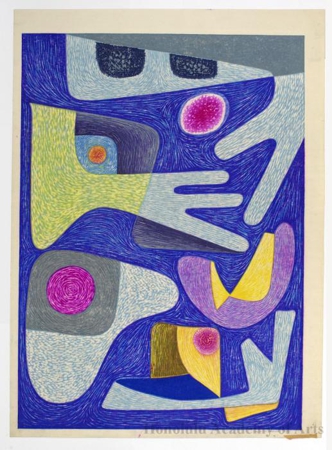

![Music in Spring (Shunfu [Haru no fu]), Shôwa period, mid 20th century by Takumi Shinagawa](https://data.ukiyo-e.org/harvard/images/HUAM-CARP06220.jpg)
More Music Prints
Featured in Collections
Curated cross-cuts that include this print.
Frequently Asked Questions
Dance of Death, Shôwa period, dated 1958 was created by Takumi Shinagawa (品川工).
Dance of Death, Shôwa period, dated 1958 depicts music.