
Takata, from the series "Ten Summer Scenes in Edo (Edo natsu jikkei)"
- Date:
- c. 1787
- Medium:
- Color woodblock print; chuban
- Source:
- Art Institute of Chicago
Description
Takata, from Torii Kiyonaga's series Ten Summer Scenes in Edo (Edo natsu jikkei), is held by the Art Institute of Chicago and dated to about 1782. Takata, located in the northwestern outskirts of the city, was known for its open fields, woods, and the seasonal entertainments of suburban summer - cool evenings, archery contests, and tea served beneath the trees. Kiyonaga uses the location to extend his Edo bijin-ga beyond the inner city into the suburbs that ringed it, placing tall, gracefully proportioned women within a landscape of low trees and grass. The composition gives the figures a measured spacing along the path, their parasols and fans suggesting the slow rhythm of a hot day, while the depth is handled with restrained gradation rather than bold perspectival devices. As leader of the Torii school by this date, Kiyonaga had developed a way of treating outdoor scenes that draws on the workshop's old expertise in clear, theater-ready staging, with each figure legible against the ground. Block printing of the early 1780s, with its careful overprinting of multiple subdued tones, supports both the cool greens of the suburban landscape and the patterned textiles of the women's robes. The series Ten Summer Scenes in Edo as a whole is a notable demonstration of how Kiyonaga's mature Edo bijin-ga mapped urban manners onto the rim of the city, and the Takata sheet at the Art Institute of Chicago is a representative instance.
More Prints by Torii Kiyonaga

Watching the Water Festival from Azuma Bridge, from the series "Eight Precincts of the Kinryuzan Temple in Asakusa (Asakusa Kinruzan hakkei)"
c. 1782
Color woodblock print; chuban

Courtesans of Yoshiwara and their attendants viewing the peonies on Nakanocho
c. 1787
Color woodblock print; center and right sheets of oban triptych

A visit to a shrine, from the series "Twelve Scenes of Popular Customs (Fuzoku juni tsui)"
c. 1786
Color woodblock print; koban

A Party Viewing the Moon Across the Sumida River
c. 1787
Color woodblock print; oban triptych
More Summer Prints
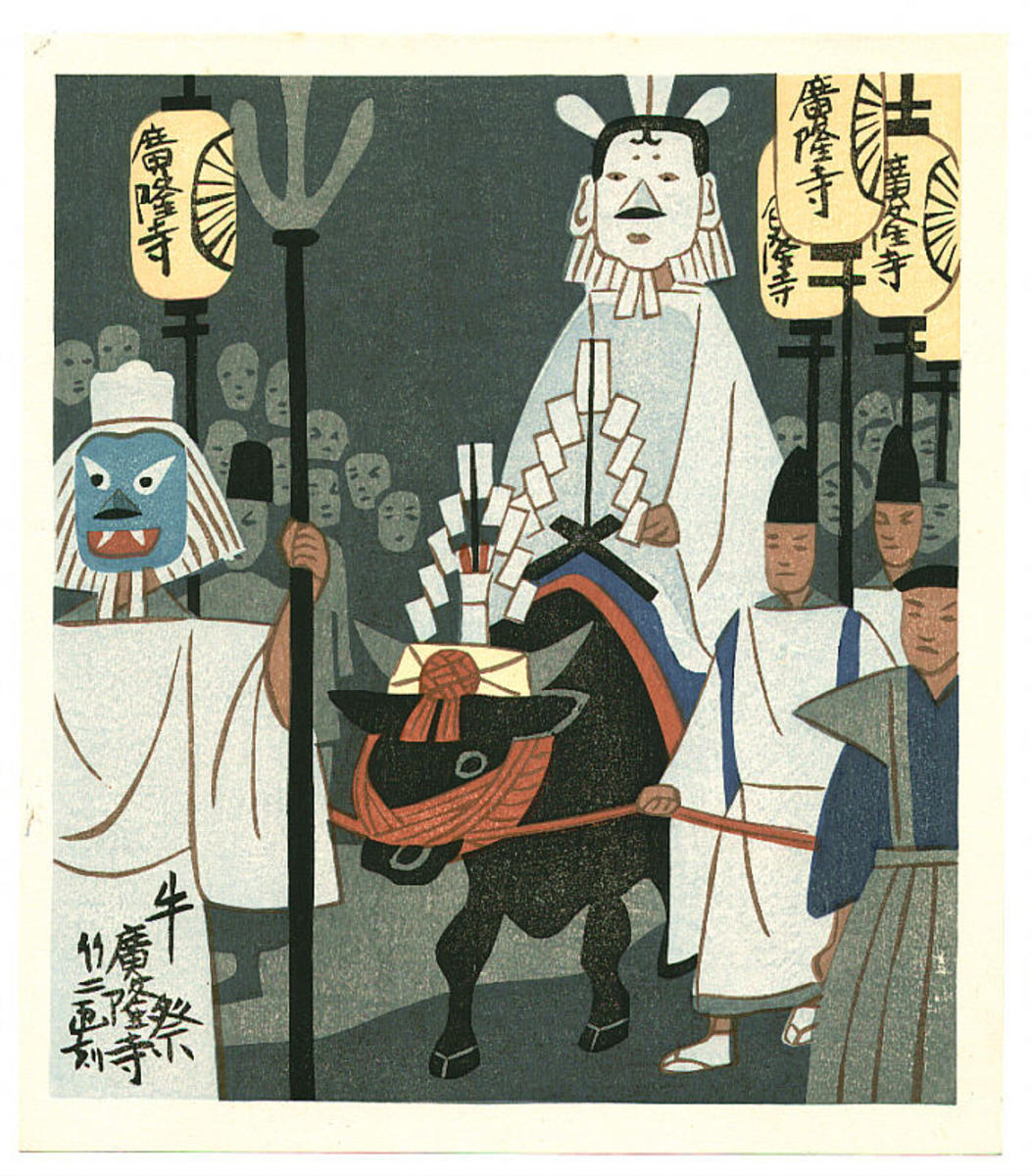
Bull Festival at Koryuji
広隆寺牛祭
Woodblock print
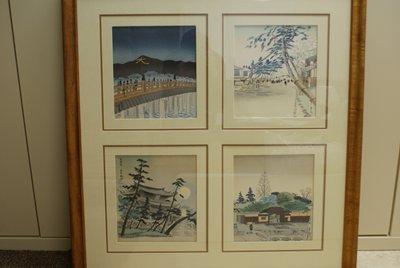
February (The Annual Festival of the Fushimi Inari)
二月 (伏見稲荷大社祭)
second half 20th century
Woodblock print, ink and color on paper

July (Gorgeous Procession of Yama-hoko or the Floats at the Gion Festival)
七月 (祇園祭山鉾巡行)
second half 20th century
Woodblock print, ink and color on paper

August (The Bonfire Festival of the Daimonji Hill Viewed from the Sanjo Bridge)
八月 (三条大橋より大文字)
second half 20th century
Woodblock print, ink and color on paper
Frequently Asked Questions
Takata, from the series "Ten Summer Scenes in Edo (Edo natsu jikkei)" was created by Torii Kiyonaga (鳥居清長) in c. 1787.
Takata, from the series "Ten Summer Scenes in Edo (Edo natsu jikkei)" depicts summer.