
BARA- roses
by Toru Mabuchi
- Source:
- ukiyo-e.org
Description
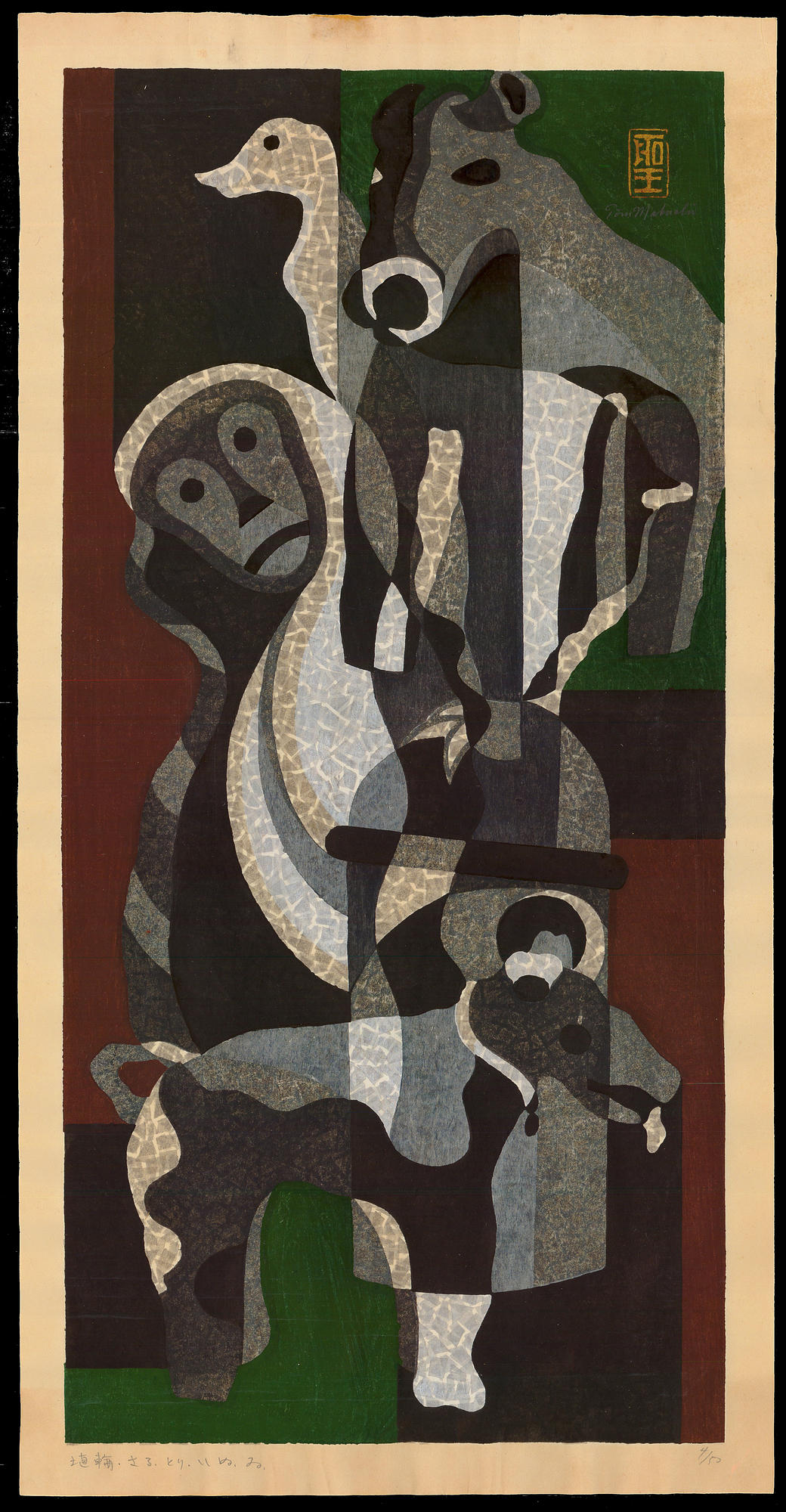
Bara (Roses) is a Japanese woodblock print by Toru Mabuchi, a postwar artist closely associated with the sosaku-hanga (creative print) movement that redefined Japanese printmaking in the twentieth century. As a sosaku-hanga artist, Mabuchi cut his own blocks and pulled his own impressions, treating each stage of the process as part of a unified artistic statement rather than dividing the labor among designer, carver, and printer in the older ukiyo-e workshop tradition. In this composition, roses are presented with the quiet directness that runs through much of Mabuchi's still life output: a small cluster of blooms studied for the architecture of their petals and the play of dark and light across the bouquet, rather than for any decorative excess. The Japanese woodblock medium gives the petals a soft, slightly granular edge where the carving meets the paper, and Mabuchi exploits that quality to keep the flowers feeling tactile and handmade rather than slick. Like many sosaku-hanga prints of the Showa era, Bara turns a familiar Western subject, the cut rose, into a vehicle for Japanese printmaking values: a restricted palette, balanced negative space, and an emphasis on the surface character of the paper and ink. The work documented here is recorded through ukiyo-e.org's aggregated print database, which links to a Japanese Art Open Database (JAODB) auction archive listing for the impression, providing a public reference point for cataloguers and collectors tracing Mabuchi's still lifes. For viewers approaching Toru Mabuchi for the first time, this rose study is a useful entry point into a body of work that consistently distills domestic and natural subjects into clean, deliberate woodblock images.
More Prints by Toru Mabuchi


Featured in Collections
Curated cross-cuts that include this print.
Frequently Asked Questions
BARA- roses was created by Toru Mabuchi (馬渕徹).