
A Lady Visiting a Shrine Followed by a Boy with Kite
- Date:
- early 19th century (possibly 1822 or 1834)
- Medium:
- Color woodblock print; surimono
- Source:
- Art Institute of Chicago
Description
Totoya Hokkei's 1822 surimono of a lady visiting a shrine followed by a boy with a kite, held by the Art Institute of Chicago, gathers several auspicious motifs of the Edo New Year season into a single quiet scene. Shrine visits (hatsumode) at New Year were among the most important rituals of the urban calendar, and the kite carried by the attendant child evokes both the seasonal pastime of kite-flying and the broader association of children with renewal and good fortune. Such subjects were favored in the Edo kyoka-e milieu, where surimono frequently functioned as season's greetings between members of poetry clubs. As a leading pupil of the Hokusai school, Hokkei was practiced at translating contemporary urban customs into refined small-format designs, drawing on Katsushika Hokusai's broad repertoire of Edo life and ritual. The surimono format encouraged deluxe printing effects — embossing on the lady's robes, metallic pigments for accessories, graded color for the sky — that gave each impression a richly tactile presence. Kyoka verses inscribed alongside the image would have personalized the print for its original recipients, turning a generic seasonal scene into a particular New Year's greeting. The Art Institute of Chicago's example places Totoya Hokkei's design within a major institutional collection of Edo surimono, where its place in the broader Hokusai school can be readily traced.
More Prints by Totoya Hokkei

Potted Plant (Ueki), from the series "Eighteen Illustrations of the Ladder of Ancient Words (Kogentei juhachiban tsuzuki)"
1831
Color woodblock print; shikishiban, surimono
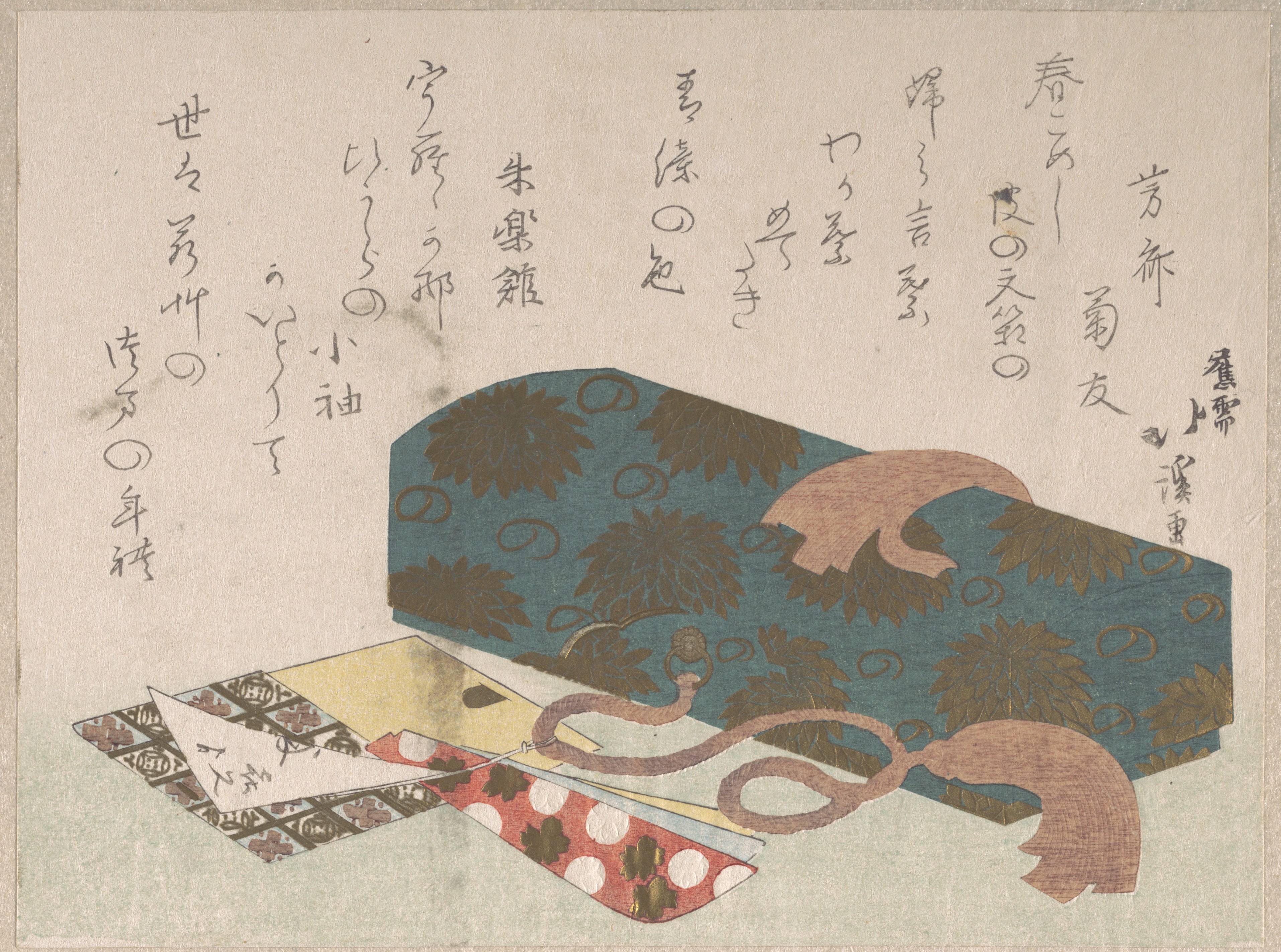
Letter-box and Toothpick Holders
19th century
Part of an album of woodblock prints (surimono); ink and color on paper

Illustration of a Chinese poem, from the series "Picture Book of Chinese Poems (Toshi gafu no uchi)"
c. 1830/44
Color woodblock print; chuban

Kyōka Verse Anthology of Elegant Friends (Kyōka gayū shū) 狂歌雅友集
1826 (Bunsei 9)
Woodblock printed book; ink and color on paper
More Children Prints
Frequently Asked Questions
A Lady Visiting a Shrine Followed by a Boy with Kite was created by Totoya Hokkei (魚屋北渓) in early 19th century (possibly 1822 or 1834).
A Lady Visiting a Shrine Followed by a Boy with Kite depicts children.