
A painting of Daoist immortal Huang Chuping (Jp: Ko Shohei)
- Date:
- 1823
- Medium:
- Color woodblock print; shikishiban, surimono
- Source:
- Art Institute of Chicago
Description
Totoya Hokkei's 1823 surimono of the Daoist immortal Huang Chuping (Jp: Ko Shohei), held by the Art Institute of Chicago, draws on a well-known legend in which a Daoist sage transforms a herd of white sheep — or, in some accounts, a flock of stones — by magical incantation. Within the broader pictorial tradition of immortals (sennin) shared between China, Korea and Japan, Huang Chuping was a familiar figure, his iconography blending the rustic and the miraculous. Edo kyoka-e clubs prized such subjects for the cultivated, slightly antique tone they lent their commissions, and Hokkei, as a senior pupil of the Hokusai school, was well prepared to depict them: Katsushika Hokusai had himself produced numerous designs of Daoist immortals, and his pupils inherited a confident vocabulary for their robes, attributes and otherworldly settings. The surimono medium allowed deluxe printing effects — embossing, mica and metallic pigments, graded color — to suggest both the rough fabric of the sage's garments and the magical aura of his miracle. With kyoka verses inscribed alongside the figure, the sheet would have functioned both as a connoisseur's object and as a vehicle for literary play. Within Hokkei's surimono output, Huang Chuping stands as a representative example of how the Hokusai school engaged with the cosmopolitan world of East Asian immortal-lore.
More Prints by Totoya Hokkei

Potted Plant (Ueki), from the series "Eighteen Illustrations of the Ladder of Ancient Words (Kogentei juhachiban tsuzuki)"
1831
Color woodblock print; shikishiban, surimono
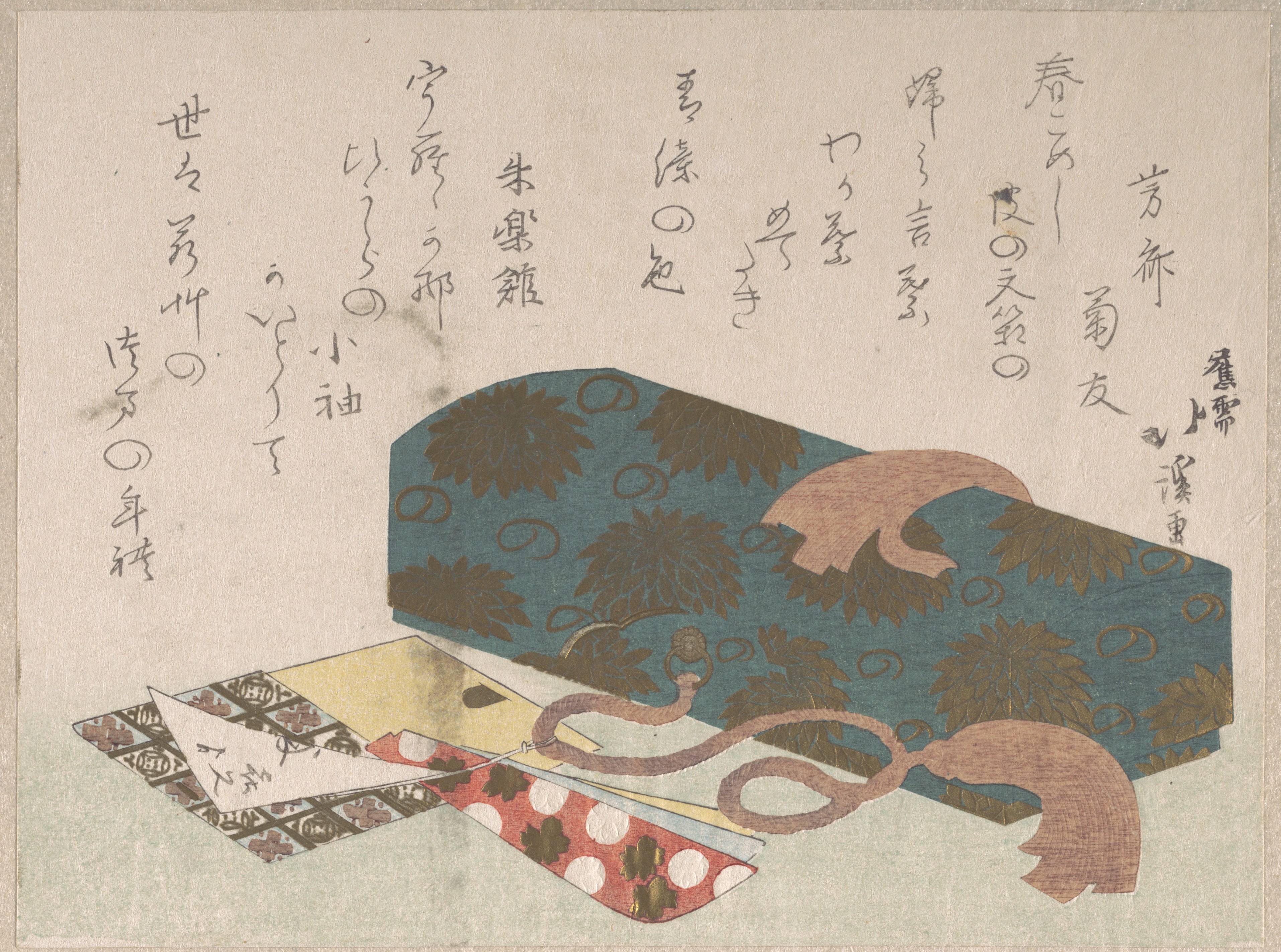
Letter-box and Toothpick Holders
19th century
Part of an album of woodblock prints (surimono); ink and color on paper

Illustration of a Chinese poem, from the series "Picture Book of Chinese Poems (Toshi gafu no uchi)"
c. 1830/44
Color woodblock print; chuban

Kyōka Verse Anthology of Elegant Friends (Kyōka gayū shū) 狂歌雅友集
1826 (Bunsei 9)
Woodblock printed book; ink and color on paper
Frequently Asked Questions
A painting of Daoist immortal Huang Chuping (Jp: Ko Shohei) was created by Totoya Hokkei (魚屋北渓) in 1823.