
A View of Takanawa
- Date:
- 19th century
- Medium:
- Color woodblock print; surimono
- Source:
- Art Institute of Chicago
Description
This Art Institute of Chicago surimono presents a view of Takanawa, the cliff-side district at the southwestern edge of Edo where the Tokaido road met the city and where travelers paused to take in the sweeping view across the bay toward Shinagawa and beyond. Takanawa was a celebrated meisho - a famous place - and its view appeared frequently in commercial prints; the surimono treatment of the subject by Hokkei would have engaged kyoka poets familiar with both the topography and the literary lineage of meisho imagery. Hokkei compresses the view into the small shikishiban format, probably featuring a portion of the cliff, a stretch of bay, perhaps boats on the water and travelers on the road - the kind of compositional shorthand at which surimono designers excelled. The inscribed kyoka verses would have engaged the geography and its associations with travel, departure, or the auspicious sunrise that often illuminates the Takanawa view in classical descriptions. The Art Institute's impression preserves the refined printing and saturated color that distinguish surimono from contemporary commercial landscape prints of the same Edo subjects.
More Prints by Totoya Hokkei

Potted Plant (Ueki), from the series "Eighteen Illustrations of the Ladder of Ancient Words (Kogentei juhachiban tsuzuki)"
1831
Color woodblock print; shikishiban, surimono
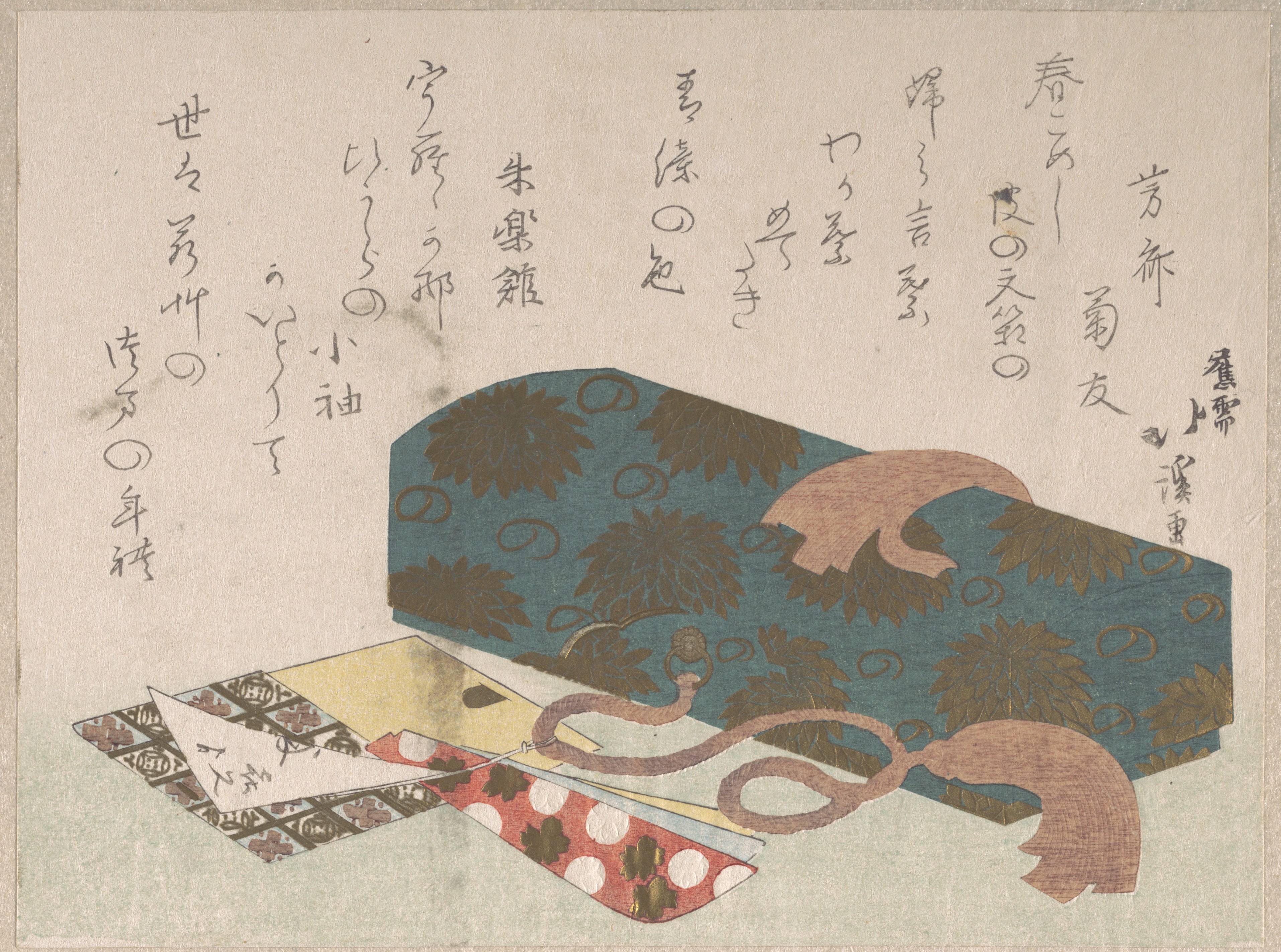
Letter-box and Toothpick Holders
19th century
Part of an album of woodblock prints (surimono); ink and color on paper

Illustration of a Chinese poem, from the series "Picture Book of Chinese Poems (Toshi gafu no uchi)"
c. 1830/44
Color woodblock print; chuban

Kyōka Verse Anthology of Elegant Friends (Kyōka gayū shū) 狂歌雅友集
1826 (Bunsei 9)
Woodblock printed book; ink and color on paper
Frequently Asked Questions
A View of Takanawa was created by Totoya Hokkei (魚屋北渓) in 19th century.